What is Vacuum Tube Amplifier?什么是 Vacuum Tube Amplifier?
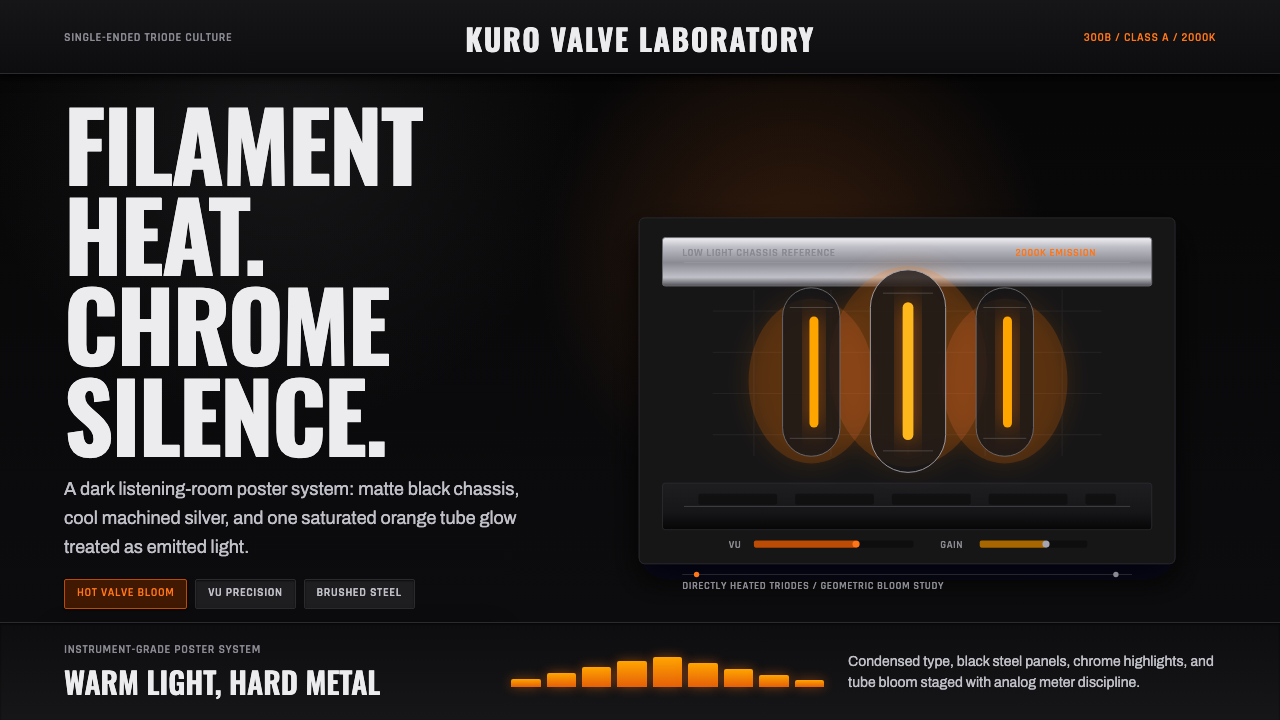
Vacuum Tube Amplifier style turns heat into precision — a matte-black chassis, polished chrome, and the hot orange bloom of a glowing valve staged in a darkened listening room.「电子管功放」风格把热度化为精密——哑光黑机箱、抛光铬面,以及真空管在漆黑听音室里绽放的炽热橙光。
Vacuum Tube Amplifier in briefVacuum Tube Amplifier 速览
Vacuum Tube Amplifier style is drawn from the physical and visual world of the high-end audiophile valve amplifier — a matte-black steel chassis crowned with polished chrome fittings, glass vacuum tubes glowing a hot orange in a darkened listening room. This is the specific aesthetic of audiophile valve gear built around directly-heated triodes such as the 300B and its many Japanese Hi-Fi descendants, an equipment culture that treats the amplifier itself as an object worthy of display rather than a component to be hidden inside a cabinet.「电子管功放」风格取材自高端发烧友胆机的物理与视觉世界——哑光黑钢制机箱,顶部饰以抛光铬件,玻璃真空管在漆黑的听音室里泛着炽热的橙光。这是围绕直热式三极管(例如300B及其众多日本Hi-Fi后继型号)打造的发烧胆机设备文化所特有的美学——一种把功放本身当作值得展示的物件、而非藏于机柜之内的部件的设备文化。
The system stages everything around a single central contrast: warm, saturated filament light set against cool silver metal and deep, matte black. This is not a broad, colorful palette — it is a near-monochrome stage lit by exactly one source of color, the glowing tube itself, so that the eye is drawn precisely to the place where heat becomes visible light.整套系统的核心,是围绕一处关键对比来铺陈:温暖饱和的灯丝光,对峙冷冽的银色金属与深邃的哑光黑。这不是一套宽泛、色彩缤纷的色板——而是一个近乎单色的舞台,仅由一个色彩来源打光——真空管本身的辉光——使视线精准地被吸引到热度转化为可见光的那个位置。
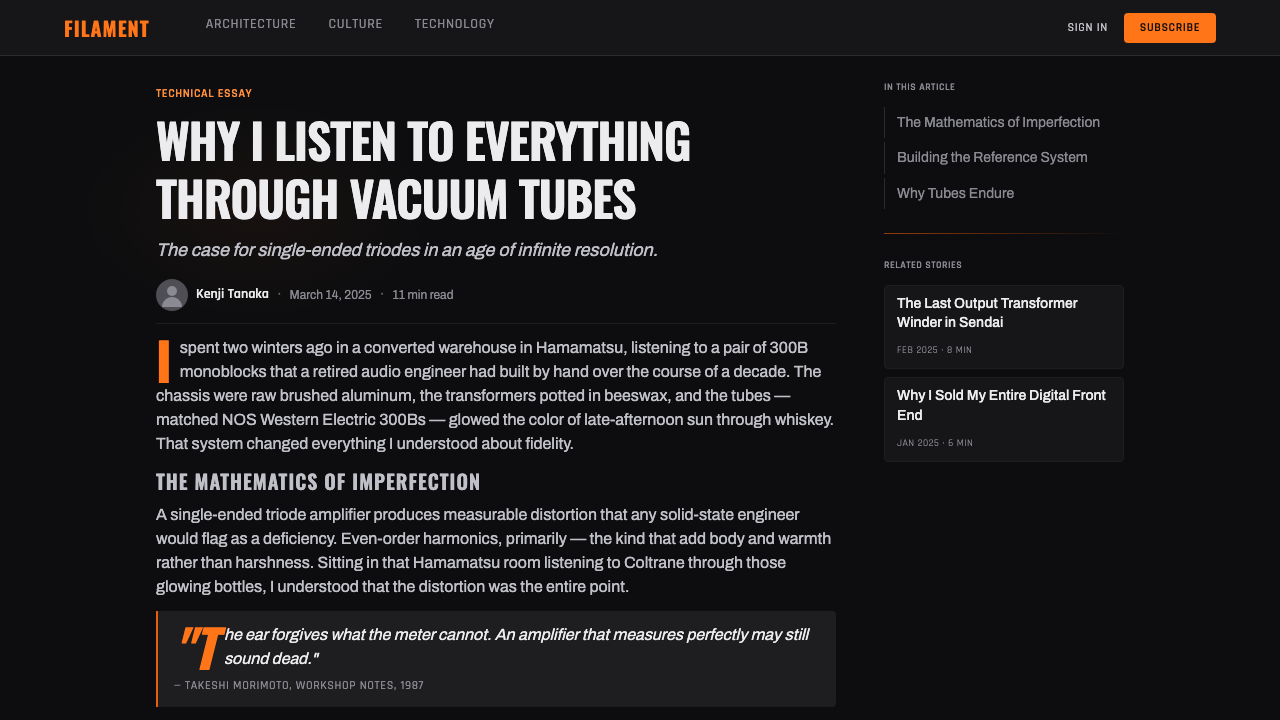
Supporting this central contrast are the conventions of instrument-grade industrial design: condensed technical typography borrowed from equipment labeling, VU-meter precision in the arrangement of dials and indicators, brushed specular highlights on metal surfaces, and the soft radial bloom that surrounds a lit tube rather than a hard-edged glow. Together these details give the system its unmistakable, instrument-grade character — precise, warm, and specifically mechanical rather than generically luxurious.支撑这一核心对比的,是仪器级工业设计的种种惯例:借自设备标签的紧缩技术字体,表盘与指示器排布中VU表般的精密感,金属表面的拉丝镜面高光,以及点亮的真空管周围那圈柔和的径向辉光,而非硬边的光晕。这些细节共同赋予这套系统独一无二的、仪器级的气质——精密、温暖,且是一种具体的机械感,而非泛泛的奢华感。
See the Vacuum Tube Amplifier design system查看 Vacuum Tube Amplifier 完整设计系统
Where does Vacuum Tube Amplifier come from?Vacuum Tube Amplifier 从何而来?
Vacuum-tube amplification dominated audio electronics from the early twentieth century until solid-state transistor amplifiers began displacing it commercially in the 1960s and 1970s. Rather than disappearing, tube amplification survived and eventually flourished within a specialized audiophile niche that valued its distinctive sonic warmth, giving rise to a dedicated high-end valve-amp era running roughly from the 1950s through the 1990s.真空管放大技术在二十世纪初主导了音频电子领域,直至1960至70年代,固态晶体管放大器才开始在商业上将其取代。但电子管放大技术并未就此消失,而是在一个专门的发烧友细分市场中存续,并最终蓬勃发展,这个市场看重它独特的音色暖度,由此孕育出一个大致从1950年代延续至1990年代的专门的高端胆机时代。
Central to that culture is the directly-heated triode, and among directly-heated triodes none carries more prestige than the Western Electric 300B, a tube originally developed for telephone and cinema sound applications decades earlier and later adopted almost as an icon by audiophile amplifier designers for its particular combination of measured performance and subjectively praised tonal character. The 300B and tubes like it became the centerpiece around which entire amplifier chassis were designed, often left visibly exposed rather than hidden, so that the glowing glass envelope itself became part of the product's presentation.这一文化的核心是直热式三极管,而在众多直热式三极管之中,没有哪一款比西方电气公司(Western Electric)的300B更负盛名——这款电子管最初是数十年前为电话与电影院音响应用而开发的,后来几乎被发烧友功放设计师奉为图腾,因其兼具测量性能与主观口碑称道的音色特质。300B及其同类电子管,成为整个功放机箱围绕设计的核心,往往被刻意裸露而非隐藏,使发光的玻璃管壳本身成为产品呈现的一部分。
This single-ended triode, or SET, culture found a particularly devoted home in East Asia, and specifically in Japan, where manufacturers such as Luxman and Sansui built reputations on precisely machined, chrome-finished amplifier chassis paired with exposed valve technology. Japanese Hi-Fi culture brought a specific rigor to the industrial design of these amplifiers — brushed metal surfaces, condensed technical labeling, and instrument-panel precision — that elevated the amplifier from a purely functional device to an object of connoisseurship, displayed openly in a dedicated listening room rather than concealed.这种单端三极管(SET)文化在东亚、尤其是在日本找到了尤为忠实的归宿,Luxman、Sansui等厂商凭借精密加工、铬面饰的功放机箱,搭配裸露的电子管技术而建立起声誉。日本Hi-Fi文化为这些功放的工业设计带来了一种特定的严谨——拉丝金属表面、紧缩的技术标注、仪表盘般的精密感——把功放从纯功能性设备提升为一种鉴赏对象,公然陈列于专门的听音室中,而非被隐藏起来。
This tradition experienced a pronounced revival beginning in the 1990s and continuing to the present, as digital audio technology made high-fidelity playback broadly accessible and, in reaction, a dedicated community of listeners sought out the specific warmth, visible mechanism, and ritual of tube-based single-ended triode systems as a deliberate alternative to increasingly invisible digital audio hardware.自1990年代起,这一传统经历了一次显著的复兴,并延续至今——数字音频技术让高保真播放变得普遍可及,而作为反应,一批忠实的听众群体转而追求管机单端三极管系统那种特有的暖意、可见的机械结构与仪式感,将其作为对日益隐形化的数字音频硬件的一种刻意的替代选择。
What defines the Vacuum Tube Amplifier look?Vacuum Tube Amplifier 的视觉特征是什么?
Matte Black Chassis哑光黑机箱
The foundational material color is a deep, non-reflective matte black steel, functioning as the stage on which chrome fittings and glowing tubes are set. Its matte quality is essential — a glossy black would compete with the chrome highlights rather than recede behind them.基础材料色是一种深邃、不反光的哑光黑钢材,充当铬件与发光管所置身的舞台。它的哑光质感至关重要——若是光泽黑,就会与铬面高光相互争夺注意力,而非退居其后。
Polished Chrome Fittings抛光铬件
Cool, brushed or polished silver metal appears in structural fittings, dials, and trim, providing the system's only cold counterpoint to the warm tube glow. Its specular highlights should be treated as brushed and directional rather than a flat mirror sheen, echoing genuine machined metal.冷冽的拉丝或抛光银色金属出现在结构件、表盘与镶边之中,为这套系统提供了对峙温暖管光的唯一冷色调对照。其镜面高光应处理成拉丝式、有方向性的效果,而非平面的镜面光泽,以此呼应真实的机加工金属。
Hot Orange Tube Glow炽热橙色管辉
A single warm orange-to-amber glow, evoking the color temperature of a heated tube filament, is the system's sole source of saturated color and its emotional center. It should appear rarely and deliberately, surrounded by a soft radial bloom rather than a hard-edged light source.唯一一处从橙色过渡到琥珀色的暖色辉光,唤起加热灯丝的色温,是这套系统唯一的饱和色彩来源,也是其情感核心。它应审慎而克制地出现,周围环绕一圈柔和的径向晕染,而非硬边的光源。
Darkened Stage暗色舞台
The overall environment is treated as a darkened listening room rather than a brightly lit showroom. Deep black or near-black backgrounds throughout the composition are what allow the tube glow and chrome highlights to read with their full contrast and intensity.整体环境被当作一间昏暗的听音室来处理,而非明亮的展示厅。整个构图中深黑或近黑的背景,正是让管辉与铬面高光得以以全部对比度与强度呈现出来的原因。
Condensed Instrument Typography紧缩仪器字体
Labels and technical text borrow directly from equipment-panel typography — narrow, upright, precise, and unadorned. This typography should feel etched or silk-screened onto a metal panel rather than set as generic display type.标签与技术性文字直接借鉴自设备面板的字体排印——窄体、竖直、精确、不加修饰。这种字体应给人一种蚀刻或丝印在金属面板上的感觉,而非作为泛泛的展示字体来排布。
VU-Meter PrecisionVU表般的精密
Dials, indicators, and any measurement-like element should follow the precision and restraint of a classic VU meter — a needle, a scale, a small controlled arc of motion — rather than a decorative gauge. This precision reinforces the instrument-grade character of the whole system.表盘、指示器以及任何测量类元素,都应遵循经典VU表那种精密与克制——一根指针、一道刻度、一段受控的小弧度运动——而非一个装饰性的仪表。这种精密感强化了整套系统仪器级的气质。
Radial Bloom径向辉光晕染
Light from the glowing tube should soften outward in a gentle radial gradient rather than terminate in a hard edge, mimicking the way light physically blooms around a hot glass envelope in a dark room. This soft bloom is what separates an authentic tube-glow effect from a flat colored circle or badge.发光管发出的光应以柔和的径向渐变向外扩散,而非在硬边处骤然终止,模拟光线在暗室中围绕炽热玻璃管壳物理绽放的方式。这种柔和的晕染,正是区分真实管辉效果与一个扁平色圆或徽章的关键。
See the Vacuum Tube Amplifier design system查看 Vacuum Tube Amplifier 完整设计系统
Who shaped Vacuum Tube Amplifier?谁塑造了 Vacuum Tube Amplifier?
Originally developed for telephone and cinema sound applications, the 300B directly-heated triode became the centerpiece of high-end single-ended amplifier design, its glowing glass envelope treated as a visible, almost sculptural feature rather than a hidden component.最初为电话与电影院音响应用而开发的300B直热式三极管,成为高端单端功放设计的核心,其发光的玻璃管壳被当作一个可见的、近乎雕塑般的特征来处理,而非隐藏起来的部件。
A Japanese Hi-Fi manufacturer whose precisely machined, chrome-finished amplifier chassis paired with exposed valve technology helped define the instrument-grade industrial design language this style draws from, elevating the amplifier to an object of display and connoisseurship.一家日本Hi-Fi制造商,其精密加工、铬面饰的功放机箱搭配裸露的电子管技术,帮助确立了这种风格所借鉴的仪器级工业设计语言,将功放提升为一种展示与鉴赏的对象。
Another Japanese Hi-Fi manufacturer central to the single-ended triode revival, Sansui's amplifier designs reinforced the brushed-metal, condensed-labeling aesthetic that separates authentic audiophile valve gear from generic vintage electronics styling.另一家在单端三极管复兴中举足轻重的日本Hi-Fi制造商,Sansui的功放设计强化了拉丝金属与紧缩标注的美学,将真正的发烧胆机设备与泛泛的复古电子产品风格区分开来。
How do you use Vacuum Tube Amplifier today?今天怎么用 Vacuum Tube Amplifier?
Vacuum Tube Amplifier style suits any product or communication that wants to feel precise, warm, and instrument-grade rather than casually digital. Applying it well means treating the tube glow as a single, deliberate accent rather than scattering warm color throughout the composition.「电子管功放」风格适合任何想要显得精密、温暖、仪器级,而非随意数字化的产品或传播物料。用好它的关键,是把管辉当作一处审慎、唯一的强调,而非在整个构图中散布暖色。
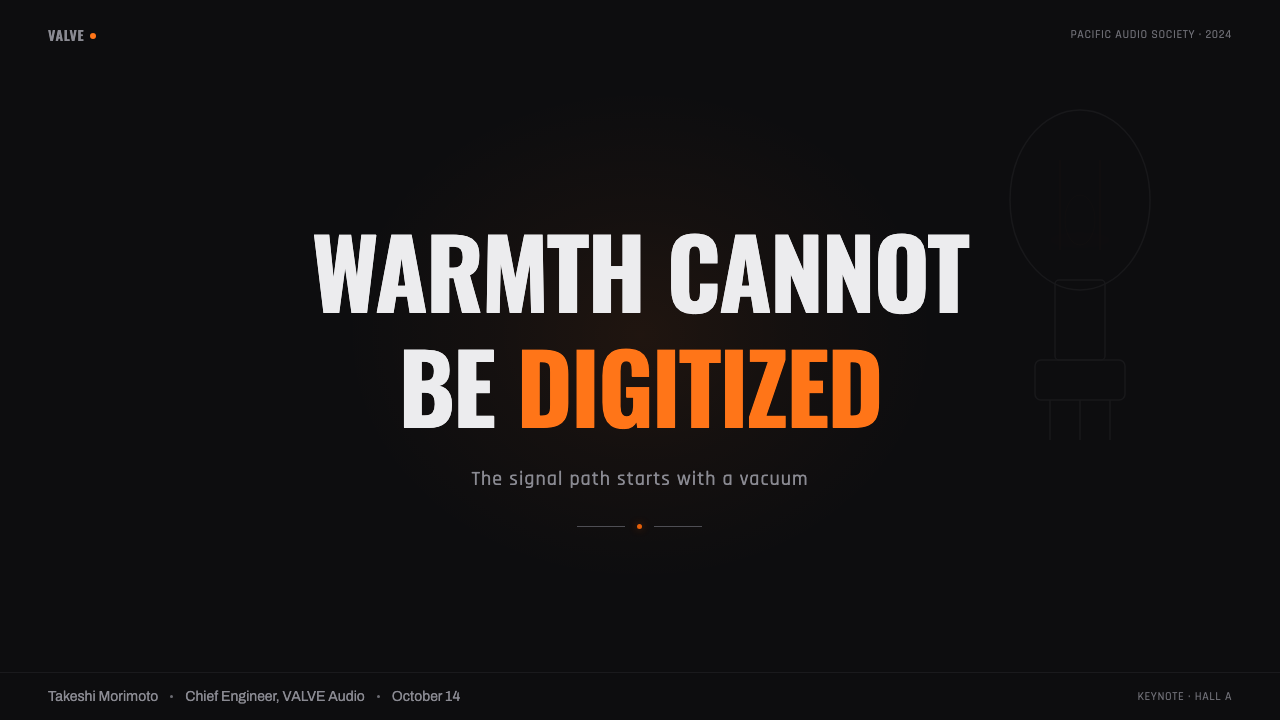
For presentation slides, a cover slide can commit to the darkened-stage treatment — a near-black field with a single radial bloom of orange light and chrome-trimmed title type set in condensed instrument lettering. Content slides should keep the palette restrained to black, chrome, and the single orange accent, while data slides benefit from the VU-meter precision idea: needle-like indicators, small controlled arcs, and condensed technical labeling on axes and legends.在演示文稿中,封面页可以完全采用暗色舞台的处理手法——近黑色画面配上一处径向绽放的橙色辉光,铬面镶边的标题以紧缩仪器字体呈现。内容页应把色板克制在黑色、铬色与唯一的橙色强调之内,数据页则适合运用VU表般精密的理念:指针式的指示器、受控的小弧度运动,以及坐标轴与图例上紧缩的技术标注。
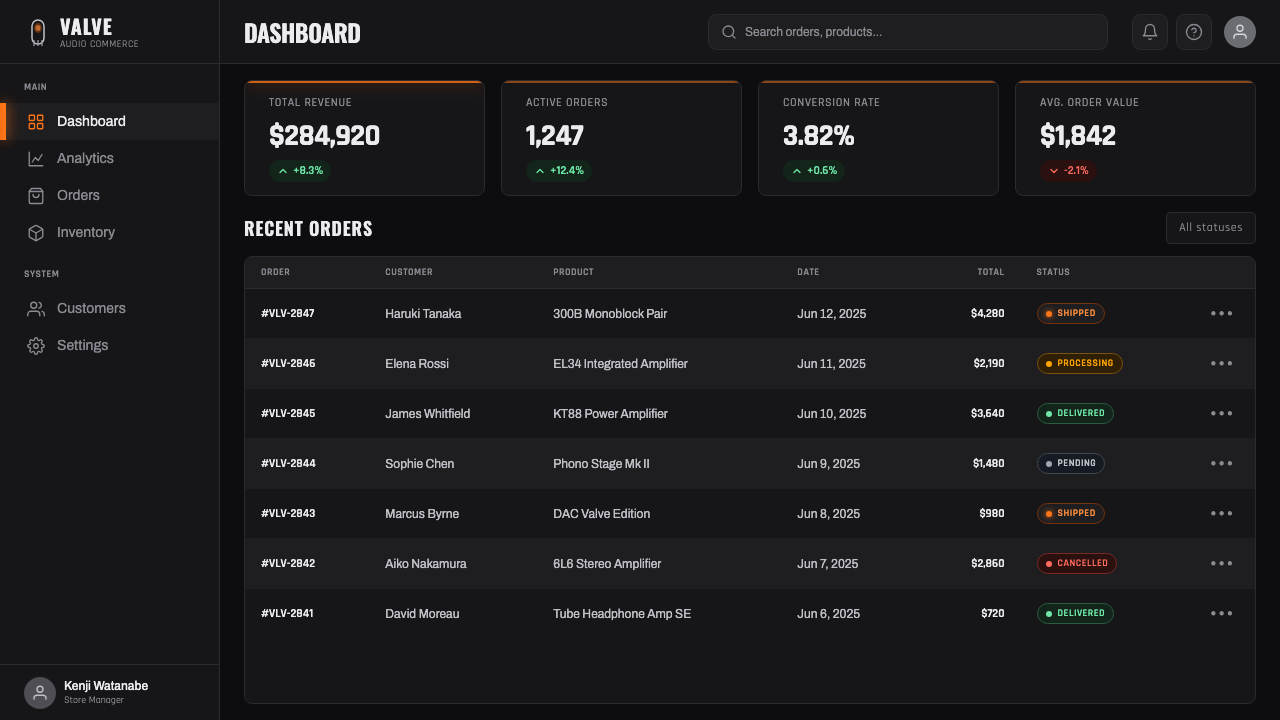
For web interfaces, the style is well-suited to audio-gear, premium hardware, and any product positioning itself around craftsmanship and precision engineering rather than mass-market convenience. Dark-mode dashboards benefit from reserving the orange glow exclusively for active or primary states, with chrome-toned borders and dividers doing the rest of the structural work. Pricing pages should treat the recommended tier the way a chassis treats its tube — a single warm glowing element among otherwise cool, dark surfaces.对于网页界面,这种风格适合音响设备、高端硬件,以及任何以工艺与精密工程为核心定位、而非大众化便利为卖点的产品。深色模式的仪表板适合把橙色辉光专门保留给激活或主要状态,铬色调的边框与分隔线承担其余的结构性工作。定价页面应把推荐档位当作机箱对待其电子管的方式来处理——在其余冷峻、深色的表面中,那唯一一处发光温暖的元素。
For editorial and marketing work, the register suits audio journalism, premium electronics, and craftsmanship-focused brand storytelling. Full-bleed dark sections with a single glowing accent work well as chapter breaks or hero imagery; marketing pages should resist the temptation to brighten the overall palette, since the darkness is what makes the glow legible as heat rather than as decoration.对于编辑与营销内容,这种调性适合音响类新闻报道、高端电子产品,以及以工艺为核心的品牌叙事。整版铺满、配以唯一发光强调的深色区块,适合作为章节分隔或主视觉图;营销页面应抵住把整体色板调亮的诱惑,因为正是这份暗色,才让辉光读来是热度,而非装饰。
The most common mistake is treating the orange glow as a generic warm accent color usable anywhere, rather than as a specific, singular light source tied to one focal point per composition. A second frequent error is using a glossy, mirror-like chrome rendering instead of a brushed, directional metal finish, which reads as generic "metallic UI" rather than authentic instrument-grade hardware.最常见的错误,是把橙色辉光当作一种泛泛的、可随处使用的暖色强调,而非与每个构图中唯一一处焦点绑定的特定光源。第二个常见错误,是使用光泽、镜面式的铬面渲染,而非拉丝、有方向性的金属质感,这样读来只是泛泛的"金属感界面",而非真正的仪器级硬件。
See the Vacuum Tube Amplifier design system查看 Vacuum Tube Amplifier 完整设计系统
Vacuum Tube Amplifier — FAQVacuum Tube Amplifier · 常见问题
Why is the tube glow limited to a single point rather than distributed across the design?为什么管辉被限定在单一一点,而非分布在整个设计之中?
Because in the physical object this style references, the glowing tube is a single, specific source of heat and light within an otherwise cool, dark chassis. Distributing warm glow throughout a composition would misrepresent that physical reality and dilute the exact contrast — one hot point of light against cool metal and deep black — that gives the style its impact.因为在这种风格所指涉的实体物件中,发光的电子管是一个单一、具体的热度与光源,置身于其余冷峻、深色的机箱之中。若在整个构图中分布暖色辉光,就会误呈这一物理现实,稀释掉赋予这种风格冲击力的那种确切对比——冷峻金属与深邃黑色之中,唯一一处炽热的光点。
Is this the same as a general "vintage electronics" or steampunk aesthetic?这和泛泛的"复古电子产品"或蒸汽朋克美学是一回事吗?
No. Steampunk and generic vintage-electronics styling typically layer brass, gears, and Victorian-era ornament for atmosphere. Vacuum Tube Amplifier style is far more restrained and specific — it references a particular mid-to-late twentieth-century audiophile equipment culture, with a narrow black-chrome-orange palette and an instrument-panel precision that has no interest in decorative Victorian machinery.不是。蒸汽朋克与泛泛的复古电子产品风格通常叠加黄铜、齿轮与维多利亚时代的装饰以营造氛围。「电子管功放」风格则远为克制而具体——它指涉的是二十世纪中后期一种特定的发烧音响设备文化,色板收窄为黑、铬、橙三色,并带有一种仪表盘般的精密感,对维多利亚式的装饰性机械毫无兴趣。
Can this style work on a light or white background?这种风格能否用在浅色或白色背景上?
It resists a light-ground adaptation because the darkened listening room is central to its identity — the tube glow only reads as dramatic and precise against deep black. On a white background, the same orange tone would read as a generic warm accent rather than a specifically hot, glowing light source, losing the physical logic the style depends on.它很难适配浅色底面,因为昏暗的听音室是其身份认同的核心——管辉只有在深黑色背景下,才能读来充满戏剧性与精密感。在白色背景上,同样的橙色调只会读作一种泛泛的暖色强调,而非一个特定的、炽热发光的光源,从而失去这种风格所依赖的物理逻辑。
How should chrome or metal surfaces be rendered to feel authentic rather than generic?铬面或金属表面应如何渲染,才能显得真实而非泛泛?
Authentic chrome in this style is brushed and directional — highlights run along a consistent grain direction rather than appearing as a single flat mirror reflection. Precision matters more than shine: the metal should look machined, with clean edges and controlled highlights, rather than simply glossy or reflective in a generic sense.在这种风格中,真实的铬面是拉丝、有方向性的——高光沿着一致的纹理方向延伸,而非呈现为单一平面的镜面反射。精密感比光泽更重要:金属应看起来经过机加工,边缘干净、高光受控,而非泛泛意义上的光泽或反光。
Where does this style struggle or feel out of place?这种风格在哪些场景中会显得格格不入?
It struggles in bright, playful, or mass-consumer contexts — children's products, casual social apps, or brands built on approachability rather than craftsmanship. Its darkness and precision can read as cold, exclusive, or overly serious in settings where users expect warmth and simplicity rather than instrument-grade rigor. It performs best when the product genuinely trades on precision engineering, craftsmanship, or premium hardware positioning.在明亮、轻松或大众消费的语境中,它会显得格格不入——儿童产品、休闲社交类应用,或建立在亲和力而非工艺感之上的品牌。在用户期待温暖与简单、而非仪器级严谨的场景中,它的暗色与精密感可能被解读为冷峻、排他或过于严肃。当产品真正的卖点是精密工程、工艺或高端硬件定位时,它表现最好。
Related design styles相关设计风格
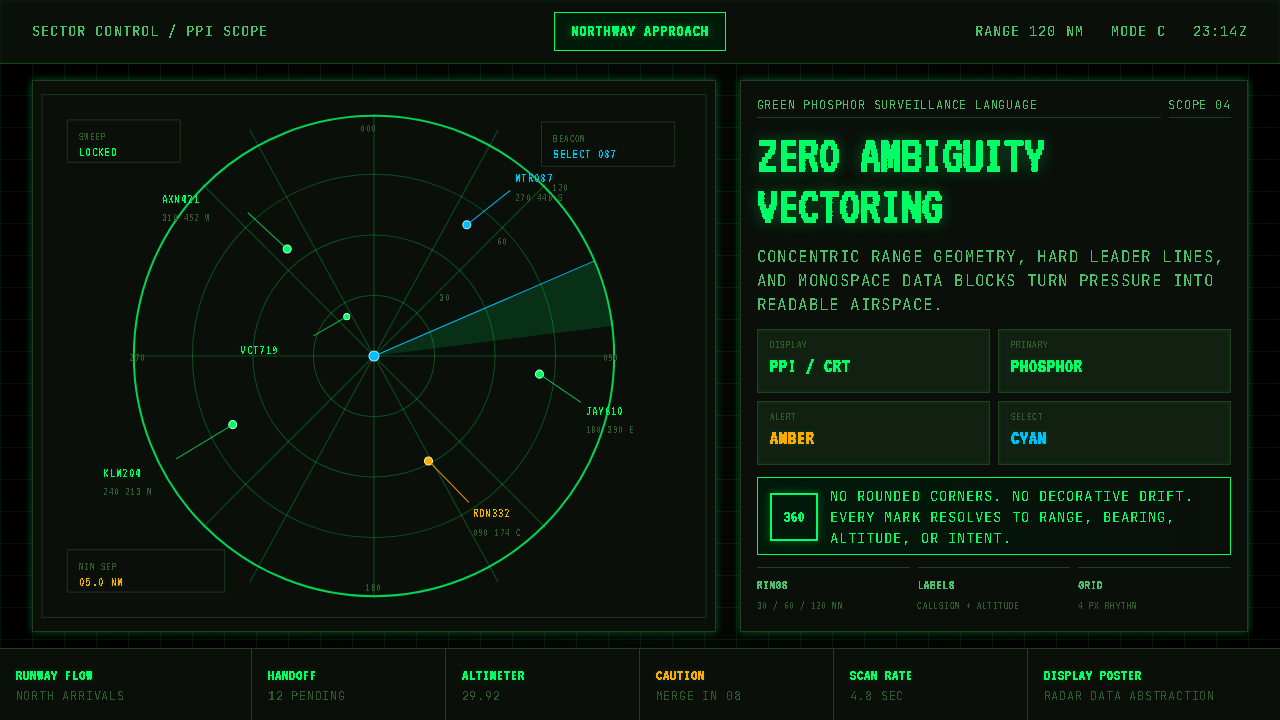 Air Traffic Control RadarOperational gravity. Phosphor green rings, sweep wedges, and monospace blips…军工级冷静:磷光绿同心环、扫描扇面与等宽光点建立零歧义。
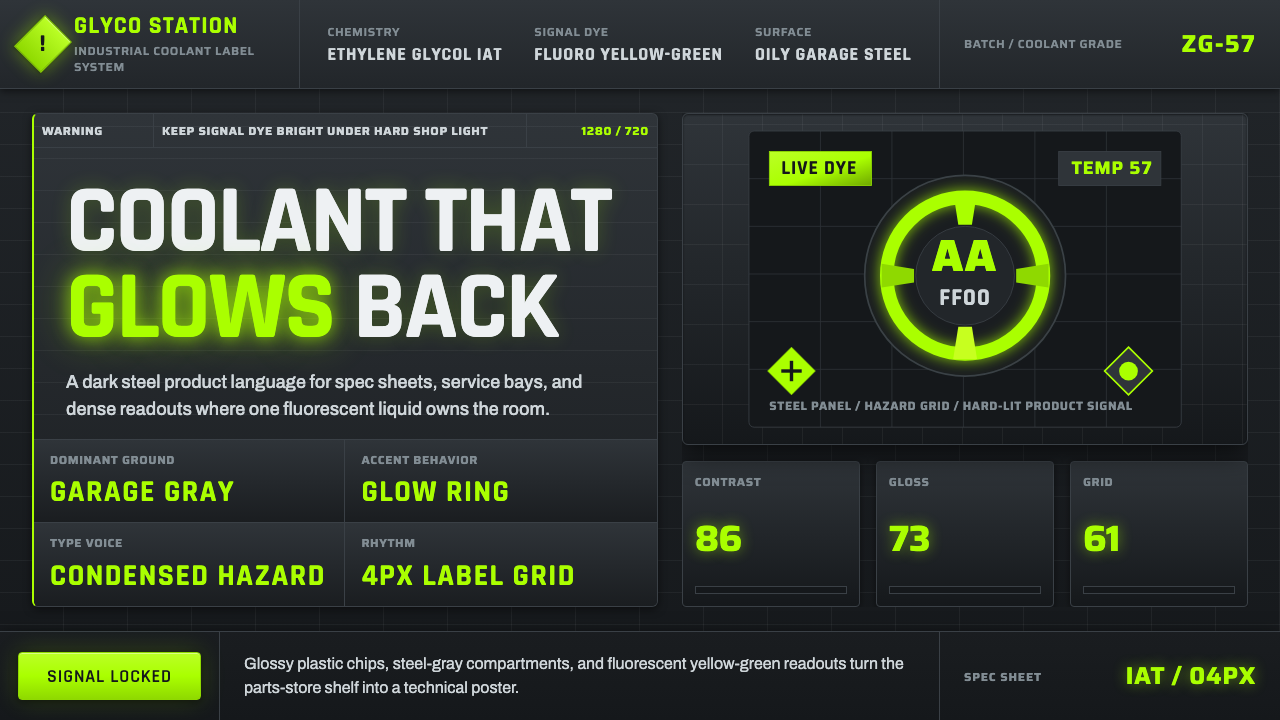 Fluorescent Antifreeze GreenCoolant becomes hazard signal. Fluoro green burns through steel-gray label gr…冷却液成为危险信号。荧光绿刺穿钢灰标签网格。
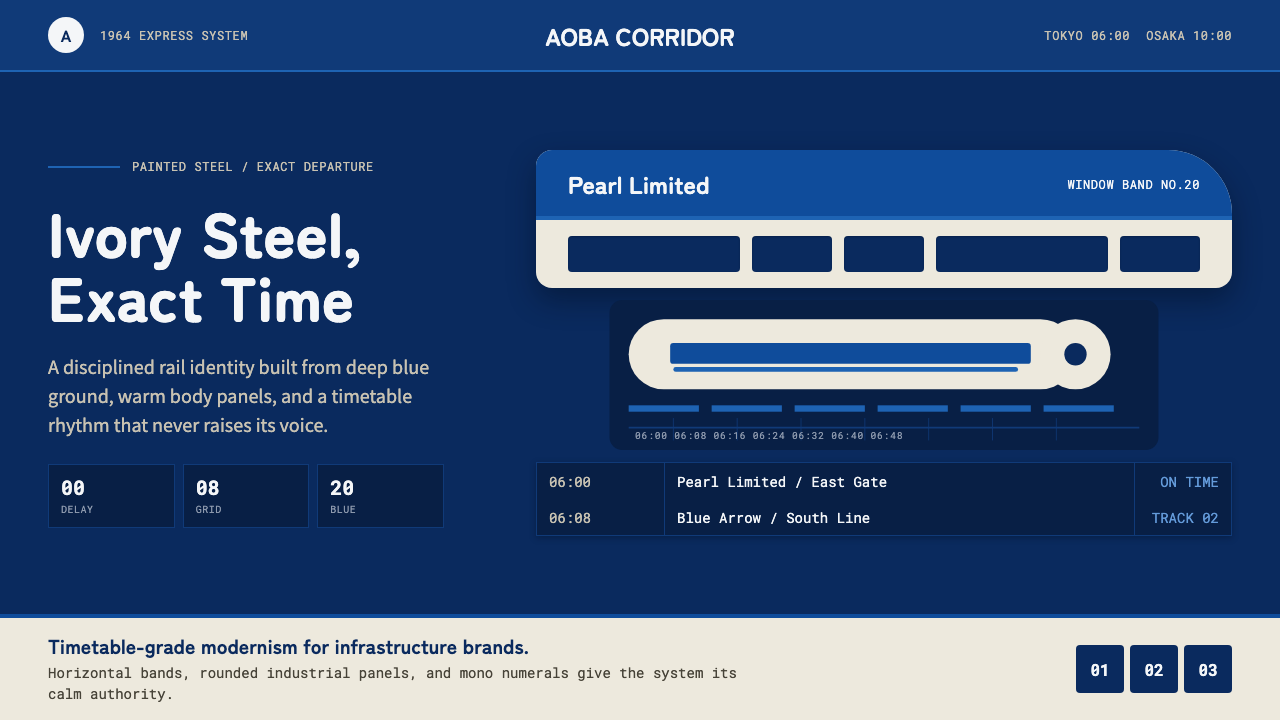 Shinkansen BulletTimetable authority. Ivory steel bands and Bullet Blue grids move with exact…时刻表般的权威:象牙钢色车身与深蓝网格,克制而精准。
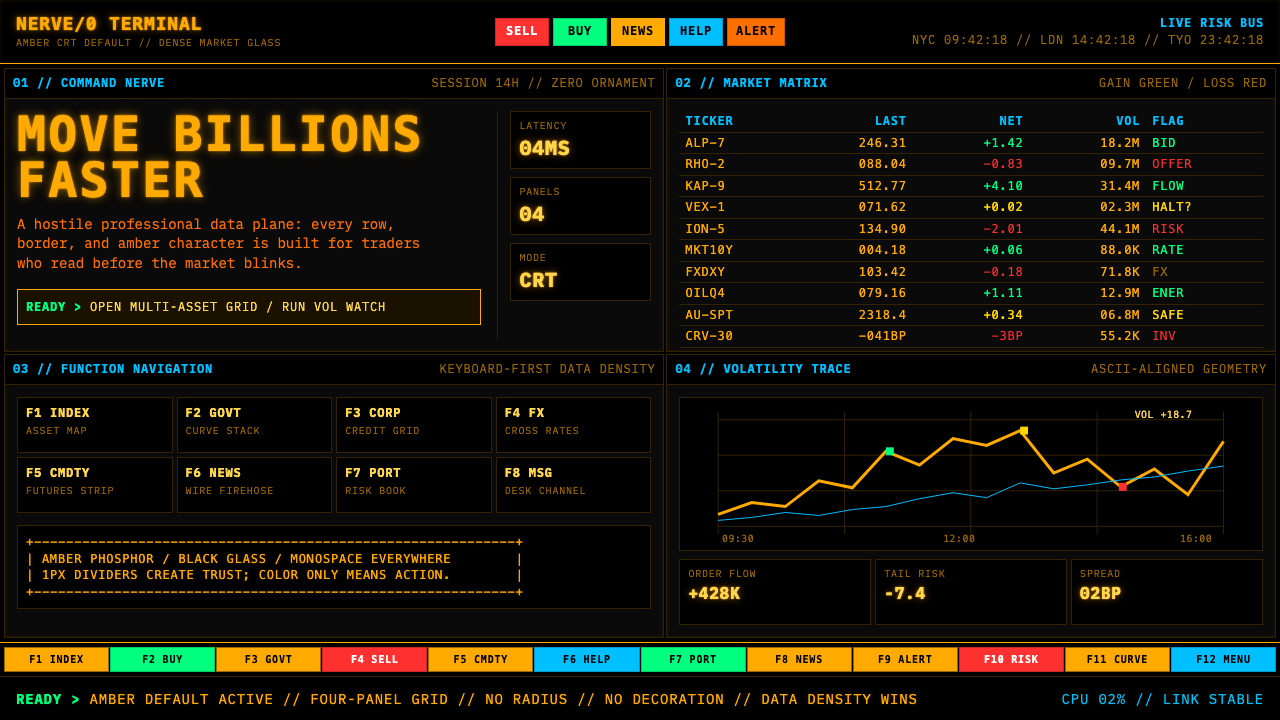 Bloomberg Terminal (Amber CRT)Hostile data authority. Amber mono grids and four hard panels make black glas…强硬的数据权威。琥珀等宽字与四格硬边框,让黑玻璃像市场神经。
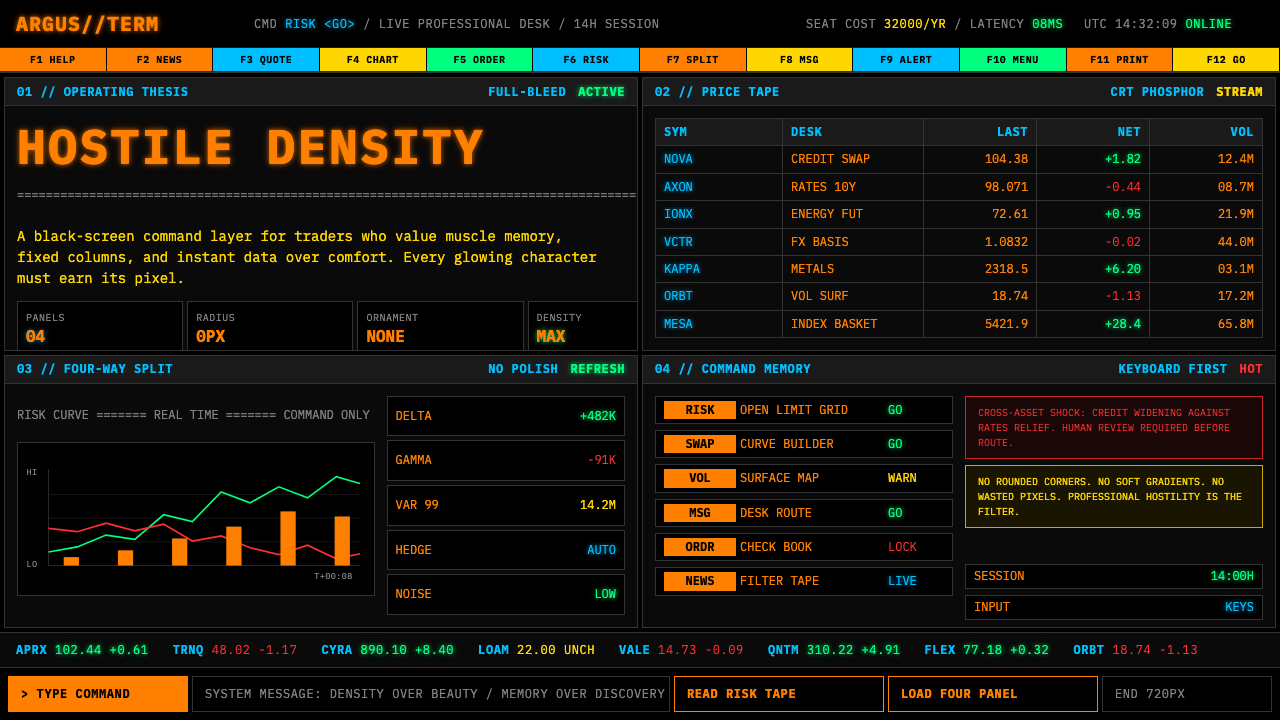 Bloomberg Terminal (CRT Green)Hostile density wins. Orange CRT mono, black grids, and four-panel data walls.敌意密度取胜:橙色CRT等宽字、黑底四分屏数据墙。
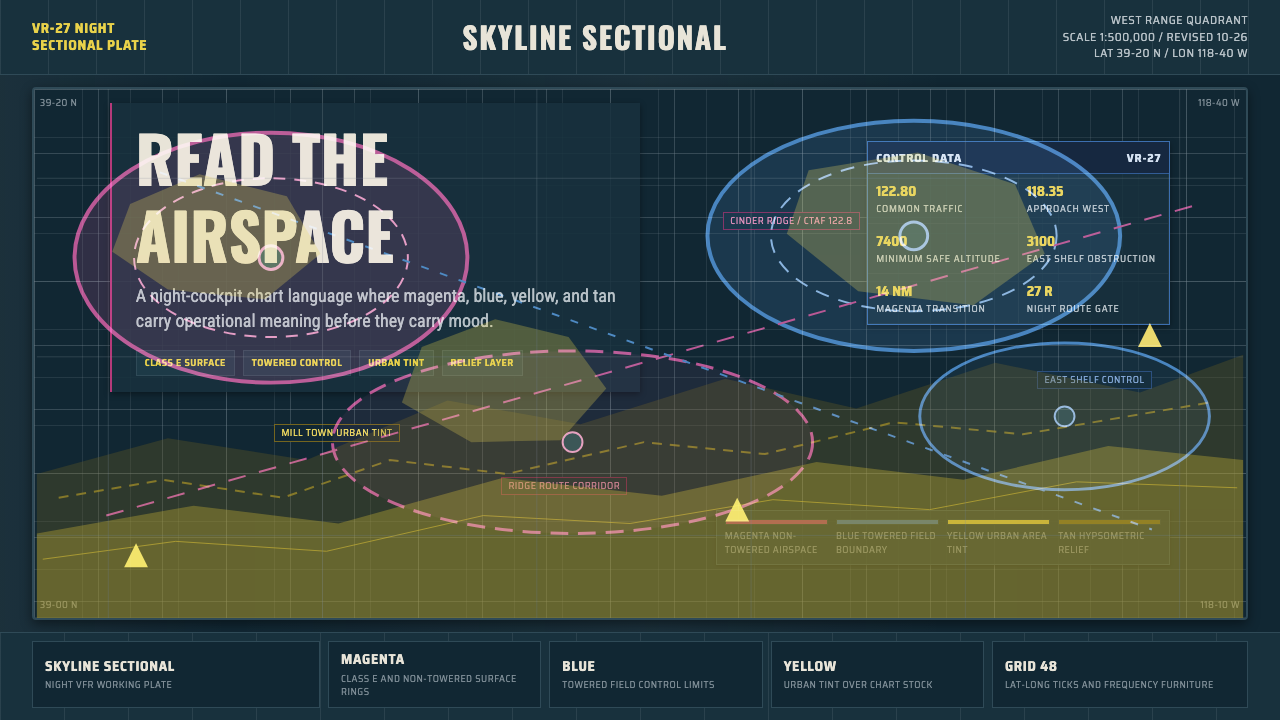 Aeronautical ChartReads like cockpit data. Magenta-blue airspace rings cut through dense dark-c…像座舱数据般可读:品红与蓝色空域环切入深色密集网格。