What is Vespa Mint Scooter?什么是 Vespa Mint Scooter?
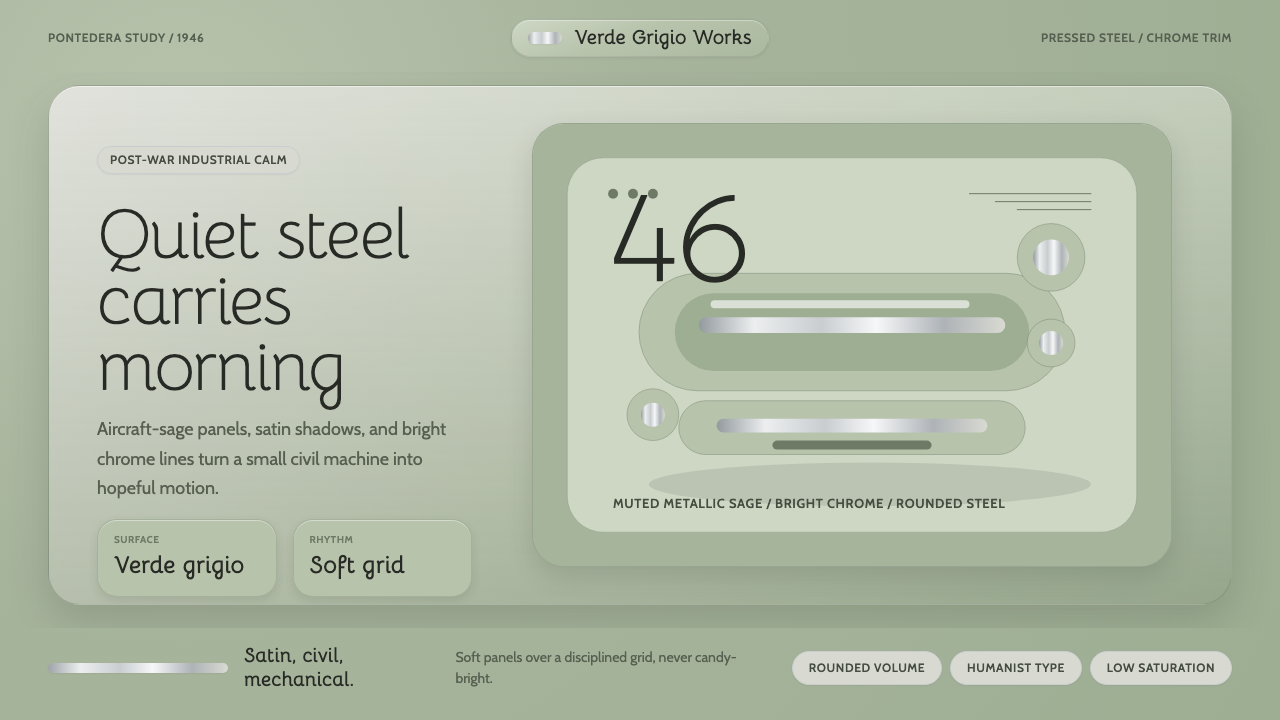
In a bombed-out Italian aircraft factory in 1946, a small scooter painted the muted grey-green of surplus wartime paint became the quiet visual proof that a country could move again.1946年,一座在战火中被炸毁的意大利飞机厂里,一辆漆着战争剩余物资灰绿色的小小踏板车,成了一个国家能够重新上路的安静证明。
Vespa Mint Scooter in briefVespa Mint Scooter 速览
Vespa Mint Scooter is a design system drawn from the original 1946 Vespa 98, the very first Vespa scooter produced by the Italian manufacturer Piaggio. Its defining visual trait is a muted, metallic sage-grey-green — described in the source material as verde grigio — applied to a pressed-steel monocoque body, offset by bright chrome trim that catches light along edges, handlebars, and mirror mounts. Unlike louder mid-century Italian design languages, this style is defined by restraint: soft, rounded volumes and a quiet, hopeful optimism rather than bold color or ornamental flourish.Vespa薄荷绿踏板车是一套取材于1946年最初款Vespa 98的设计系统——这是意大利制造商比亚乔生产的第一款韦士柏踏板车。它最显著的视觉特征,是一种柔和的金属灰绿色——源材料中称之为“verde grigio”——被涂装在一体冲压钢制车身上,配以在边缘、车把与后视镜座上迎光闪耀的明亮镀铬饰件。与更为张扬的中世纪意大利设计语言不同,这种风格由克制所定义:柔和圆润的体量,一种安静而充满希望的乐观主义,而非大胆的色彩或装饰性的花哨笔触。
The visual logic follows directly from the object it describes. The scooter's body was formed from pressed sheet steel rather than a welded tube frame, giving it smooth, continuous, load-bearing curves rather than sharp mechanical angles — a monocoque construction borrowed from aircraft engineering. This produces a design vocabulary built from soft, confident curves rather than straight lines, with chrome reserved for specific functional and decorative accents — handlebar fittings, trim strips, mirror housings — rather than spread broadly across the composition.这套视觉逻辑直接源自它所描绘的实物。这辆踏板车的车身由冲压钢板一体成型,而非焊接管状车架,因而拥有平滑、连续、承重的曲面,而非尖锐的机械棱角——这种一体式车身构造借鉴自航空工程。由此产生了一套由柔和、笃定的曲线构成、而非直线构成的设计词汇,镀铬则被保留用于特定的功能性与装饰性点缀——车把配件、饰条、后视镜壳——而非大面积铺陈于整个构图之上。
The overall mood the style aims for is understated hope rather than either wartime austerity or later, more saturated 1960s pop optimism. It sits at a very specific emotional register: the quiet, dignified relief of a society beginning to rebuild, expressed through an object designed to be affordable, practical, and unpretentiously elegant rather than a symbol of luxury or excess.这种风格所追求的整体气质,是含蓄的希望感,而非战时的紧缩感,也非后来1960年代那种更为饱和的波普乐观主义。它落在一个非常特定的情感区间:一个社会开始重建时那种安静、有尊严的宽慰感,通过一件被设计得实惠、实用、不张扬地优雅、而非奢华或过剩之物的产品,得以表达出来。
See the Vespa Mint Scooter design system查看 Vespa Mint Scooter 完整设计系统
Where does Vespa Mint Scooter come from?Vespa Mint Scooter 从何而来?
In the aftermath of the Second World War, Piaggio — an Italian company that had produced aircraft during the war and consequently saw its factories heavily targeted by Allied bombing — found itself with damaged industrial facilities and a country in urgent need of affordable transportation. Italy's roads were in poor condition, fuel and materials were scarce, and existing motorcycles were often too expensive, too heavy, or too impractical (requiring riders to straddle an exposed engine and chain) for a population rebuilding from wartime devastation.第二次世界大战结束后,比亚乔——这家战时曾生产飞机、因而其工厂遭到盟军猛烈轰炸的意大利企业——面对的是受损的工业设施,以及一个亟需实惠交通工具的国家。意大利的道路状况不佳,燃料与材料稀缺,而现有的摩托车往往对于一个正从战争创伤中重建的民众而言,要么太贵、太重,要么不够实用(骑手需要跨坐在裸露的发动机与链条之上)。
Enrico Piaggio, who had taken over leadership of the family company, commissioned aeronautical engineer Corradino D'Ascanio to design a solution. D'Ascanio, notably, disliked motorcycles and approached the brief with an aircraft engineer's mindset rather than a motorcycle designer's: the result eliminated the exposed frame and chain of a traditional motorcycle, enclosed the engine, protected the rider's legs and clothing from mud and grease, and used a stamped, load-bearing steel body rather than a separate frame — a direct transfer of monocoque aircraft-fuselage construction techniques into a civilian vehicle.接手家族企业领导权的恩里科·皮亚乔,委托航空工程师科拉迪诺·达斯卡尼奥设计一套解决方案。值得一提的是,达斯卡尼奥并不喜欢摩托车,他是以一位航空工程师的思维、而非摩托车设计师的思维来应对这项任务的:最终成果去掉了传统摩托车裸露的车架与链条,将发动机包裹起来,保护骑手的双腿与衣物免受泥浆与油污侵扰,并采用冲压成型、可承重的钢制车身,而非独立车架——这是航空一体式机身构造技术向民用车辆的直接移植。
The name Vespa, Italian for 'wasp,' is said to have come from Enrico Piaggio himself upon seeing the prototype, reportedly remarking on its wasp-like shape — a narrow waist between the seat and the front, with a rounded rear body. The scooter's paint color, verde grigio, is closely associated with surplus military aircraft paint left over from Piaggio's wartime aviation production, giving the vehicle's civilian debut a visual continuity with its manufacturer's industrial past even as its purpose shifted entirely toward peacetime rebuilding.Vespa在意大利语中意为“黄蜂”,据说这个名字来自恩里科·皮亚乔本人——他在见到样车时,据说曾评价它形似黄蜂:座位与前部之间是纤细的“蜂腰”,后车身则圆润饱满。这辆踏板车的漆色——verde grigio——与比亚乔战时航空生产遗留的剩余军用飞机涂料密切相关,这让这辆车的民用首秀,在其用途已全然转向和平时期重建的同时,仍与制造商的工业过往保持着视觉上的延续性。
The Vespa 98 debuted in 1946 and was manufactured in that original configuration through roughly 1947 before evolving into later, more widely produced models. Its combination of low cost, ease of use — including a design that allowed women in skirts to ride comfortably, expanding its appeal beyond a purely male motorcycling audience — and Piaggio's manufacturing capacity meant it rapidly became one of the defining consumer objects of Italy's postwar recovery, closely tied in later decades to the cultural mood that would come to be known as la Dolce Vita.Vespa 98于1946年问世,以最初的配置生产至约1947年,此后演变为更为广泛量产的后续车型。它低廉的成本、便捷的使用方式——包括让穿裙子的女性也能舒适骑乘的设计,将其吸引力扩展到了纯男性摩托骑行群体之外——加上比亚乔的制造能力,使它迅速成为意大利战后复苏时期最具代表性的消费物件之一,在其后的几十年里,与后来被称为“甜蜜生活”的文化情绪紧密相连。
What defines the Vespa Mint Scooter look?Vespa Mint Scooter 的视觉特征是什么?
Verde Grigio灰绿色(verde grigio)
The signature color is a muted, metallic sage-grey-green, deliberately restrained rather than vivid or saturated. Its metallic quality is essential — this is not a flat pastel mint but a color with the slight sheen of painted steel, carrying an implied material weight that a flat digital pastel lacks.标志性颜色是一种柔和的金属灰绿色,刻意保持克制而非鲜艳或饱和。它的金属质感至关重要——这不是一种扁平的粉彩薄荷绿,而是一种带有涂装钢材微光质感的颜色,蕴含着扁平数字粉彩色所欠缺的隐含材料重量感。
Pressed-Steel Monocoque Form冲压钢一体成型形态
Volumes are soft, rounded, and continuous, reflecting the load-bearing stamped-steel body of the original scooter rather than a welded frame with separate panels. In visual terms, this means shapes flow into one another without hard seams or sharp angular breaks — every curve reads as structural rather than purely decorative.体量柔和、圆润、连续,反映的是原型踏板车那种承重冲压钢车身,而非焊接车架配独立面板的结构。在视觉层面,这意味着形状彼此流畅衔接,没有硬接缝或尖锐的转折——每一道曲线读起来都是结构性的,而非纯粹装饰性的。
Chrome as Precise Accent镀铬作为精准点缀
Bright chrome trim appears only at specific functional points — handlebar fittings, mirror housings, trim strips along body seams — never as a general surface treatment. This precision keeps the chrome feeling earned and mechanical, catching light as a highlight rather than overwhelming the muted body color.明亮的镀铬饰件只出现在特定的功能性节点——车把配件、后视镜壳、车身接缝处的饰条——绝不作为通用的表面处理。这种精准感让镀铬显得来之不易且富有机械感,作为高光点缀迎光闪耀,而非压过柔和的车身色彩。
Restrained Optimism克制的乐观
The mood is hopeful but quiet — closer to a dignified sense of relief than to loud celebration. This distinguishes the style from later, more saturated mid-century Italian design languages; the palette and forms here are calm and humane rather than exuberant, reflecting a specific postwar emotional register rather than pure joy or spectacle.整体气质是充满希望却安静的——更接近一种有尊严的宽慰感,而非高声的庆祝。这让这种风格区别于后来更为饱和的中世纪意大利设计语言;这里的色板与形态是平静而富有人情味的,而非张扬奔放的,反映的是一种特定的战后情感基调,而非纯粹的欢腾或奇观。
No Nostalgia Kitsch拒绝廉价怀旧感
Despite being a historical style, the system deliberately avoids the softened, candy-colored kitsch often associated with vintage scooter nostalgia in contemporary marketing. Surfaces stay industrial and considered — flat sage-green steel and precise chrome — rather than rounded into cartoonish softness or overlaid with faux-aged texture.尽管这是一种历史风格,这套系统刻意避免了当代营销中常与复古踏板车怀旧感联系在一起的那种软化的、糖果色的俗气感。表面保持工业感与考究——平面的灰绿钢材与精准的镀铬——而非被圆润化为卡通式的柔软,或叠加上仿旧的做旧纹理。
Aircraft-Derived Precision源自航空的精准感
Because the underlying construction technique came from aeronautical engineering, the style carries an implicit sense of engineered precision rather than purely decorative styling — surfaces feel considered and functional, as if every curve serves a structural purpose even in a flat, two-dimensional application.由于其底层构造技术源自航空工程,这种风格隐含着一种工程化的精准感,而非纯粹的装饰性造型——即便在扁平的二维应用中,表面也感觉经过深思熟虑且功能明确,仿佛每一道曲线都服务于某个结构目的。
See the Vespa Mint Scooter design system查看 Vespa Mint Scooter 完整设计系统
Who shaped Vespa Mint Scooter?谁塑造了 Vespa Mint Scooter?
Enrico Piaggio led the family company's postwar pivot from aircraft manufacturing to civilian consumer transportation, commissioning the Vespa project and reportedly naming the scooter upon seeing its wasp-like silhouette. His decision to redirect a bombed-out aircraft factory toward an affordable civilian product is the business origin point of the entire aesthetic.恩里科·皮亚乔主导了家族企业战后从飞机制造向民用消费交通工具的转型,委托了Vespa项目,据说也是他在见到样车形似黄蜂的轮廓后为其命名。他将一座被炸毁的飞机厂转向一款实惠民用产品的决定,正是整套美学的商业起点。
D'Ascanio, an aeronautical engineer who reportedly disliked conventional motorcycles, designed the Vespa 98's distinctive form. His background in aircraft engineering directly explains the scooter's pressed-steel monocoque construction and enclosed, protective bodywork — a design solution that came from outside motorcycle-design convention entirely.达斯卡尼奥是一位据说不喜欢传统摩托车的航空工程师,他设计了Vespa 98这一独具特色的形态。他的航空工程背景,直接解释了这辆踏板车冲压钢一体成型的构造与包裹式、防护性的车身——这是一个完全来自摩托车设计常规之外的设计方案。
How do you use Vespa Mint Scooter today?今天怎么用 Vespa Mint Scooter?
Vespa Mint Scooter suits products and brands that want to communicate calm, humane optimism, accessibility, and understated good design rather than luxury excess or loud energy — travel and lifestyle brands, mobility or transportation products, or any brand building on postwar Italian design heritage and its associated values of practicality and quiet elegance.Vespa薄荷绿踏板车适合那些想要传达平静、富有人情味的乐观主义、亲和力与含蓄好设计感、而非奢华过剩或张扬能量的产品与品牌——旅行与生活方式品牌、出行或交通类产品,或是任何建立在战后意大利设计传承及其所代表的实用与安静优雅价值观之上的品牌。
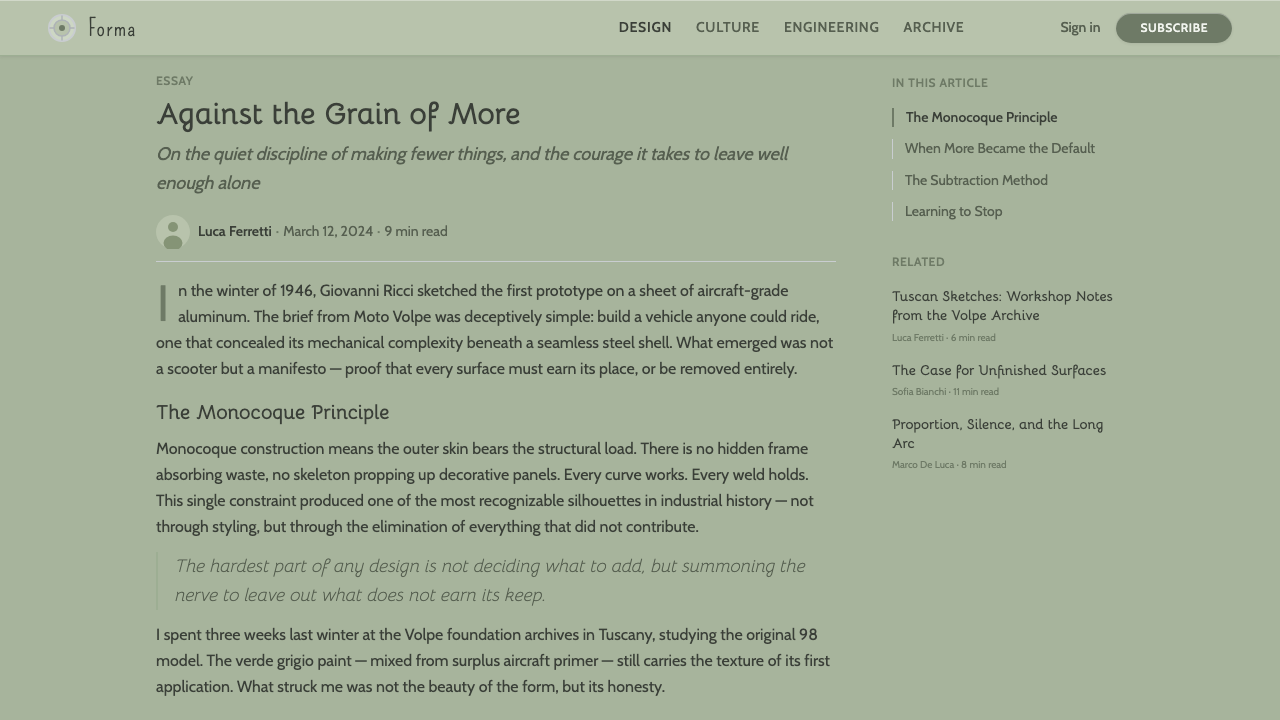
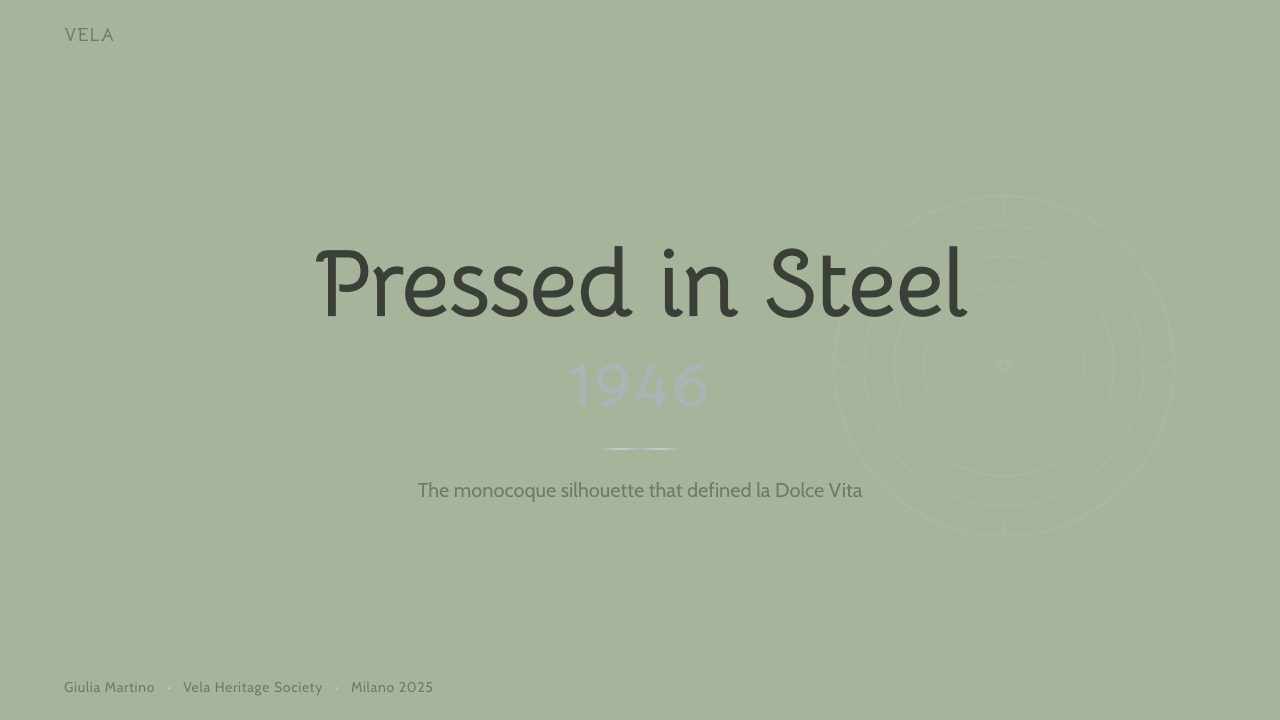
For presentation slides, a cover slide benefits from a single confident color block in the sage-grey-green with a chrome-accented divider line, keeping composition calm rather than busy. Content slides should use the color sparingly as an accent against a lighter neutral ground, reserving the metallic chrome treatment for emphasis elements like key figures or callouts rather than general decoration.在演示文稿中,封面页适合用一整块笃定的灰绿色色块,配上一道镀铬点缀的分隔线,让构图保持平静而非繁忙。内容页应将这种颜色作为点缀,节制地用在更浅的中性底色之上,把金属镀铬处理留给强调性元素——比如关键数字或引述框——而非泛泛的装饰。
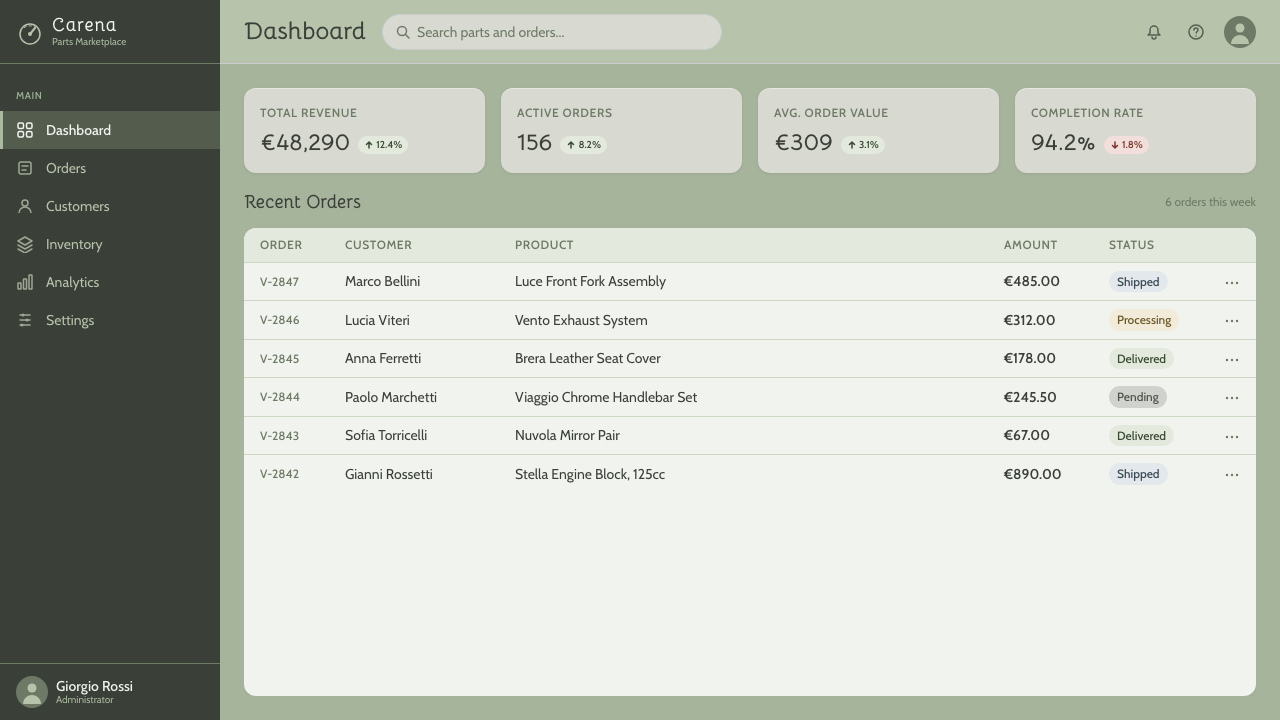
For web interfaces, the palette works well for travel, mobility, and lifestyle dashboards where a calm, trustworthy, humane tone is desired over a high-energy or corporate one. Rounded card components and buttons echo the scooter's soft volumes; chrome-inspired highlight treatments work well for active states or selected items, mirroring how chrome trim marks specific functional points on the original object.在网页界面中,这套色板非常适合旅行、出行与生活方式类仪表板,这类场景需要的是平静、可信、富有人情味的基调,而非高能量或企业化的语气。圆润的卡片组件与按钮呼应着踏板车柔和的体量;受镀铬启发的高光处理,非常适合用于激活状态或被选中的项目,映照着镀铬饰条在原型车上标记特定功能节点的方式。
For editorial and marketing work, the style supports storytelling about postwar recovery, Italian design heritage, or mobility and independence more broadly. A full-bleed sage-green hero section with a single chrome-accented headline captures the same quiet confidence as the original scooter's presentation; body copy should sit on a lighter neutral tone to keep the saturated color reserved for moments of emphasis.在编辑与营销内容中,这种风格支持关于战后复苏、意大利设计传承,或更广泛意义上的出行自由的叙事。铺满灰绿色的通栏主视觉区域,配上一句镀铬点缀的标题,捕捉的正是原型踏板车展示时那种安静的自信感;正文文字应置于更浅的中性色调之上,把饱和的颜色留给强调时刻使用。
A common mistake is treating this as a generic 'pastel mint' palette and losing the metallic, industrial quality that distinguishes it from candy-colored nostalgia design. Another frequent error is spreading chrome treatment broadly across a composition rather than reserving it for precise accent points, which dilutes its impact and undermines the restrained, considered mood the style depends on.一个常见的错误,是把这套色板当作泛泛的“粉彩薄荷绿”,丧失了将其与糖果色怀旧设计区分开来的金属工业质感。另一个常见的错误,是把镀铬处理泛泛地铺陈在整个构图上,而非将其保留于精准的点缀节点,这会稀释其冲击力,并瓦解这种风格所依赖的克制、考究的气质。
See the Vespa Mint Scooter design system查看 Vespa Mint Scooter 完整设计系统
Vespa Mint Scooter — FAQVespa Mint Scooter · 常见问题
Why is the color called 'verde grigio' rather than simply 'mint green'?为什么这种颜色被称为“verde grigio”,而不是简单地叫“薄荷绿”?
Verde grigio, Italian for grey-green, describes the color's muted, metallic, slightly desaturated character more precisely than 'mint,' a term that in contemporary usage often implies a brighter, more candy-like pastel. The original color is closely tied to surplus military aircraft paint, giving it an industrial, restrained quality that 'mint green' as commonly used today does not fully capture.Verde grigio在意大利语中意为灰绿色,比“薄荷绿”这个在当代用法中往往暗示更明亮、更糖果感粉彩的词汇,更精确地描述了这种颜色柔和、金属感、略带去饱和的性格。这种原始颜色与剩余军用飞机涂料密切相关,赋予它一种工业感、克制感的质地,而当今常用的“薄荷绿”一词并不能完全捕捉到这一点。
Why does the style emphasize rounded, soft volumes instead of the sharper lines associated with mid-century modernism?为什么这种风格强调圆润柔和的体量,而非中世纪现代主义常见的更锐利的线条?
Because the source object's form came directly from pressed-steel monocoque construction borrowed from aircraft engineering, which naturally produces continuous, load-bearing curves rather than sharp welded angles. The softness is a structural consequence of the manufacturing method, not a purely aesthetic preference, which is why the style's roundedness feels considered and engineered rather than arbitrarily cute.因为原型物体的形态直接来自借鉴航空工程的冲压钢一体成型构造,这种构造自然产生的是连续的、承重的曲线,而非锐利的焊接棱角。这种柔和感是制造方法带来的结构性结果,而非纯粹的美学偏好,这正是为何这种风格的圆润感觉考究、工程化,而非随意的可爱。
How does this style differ from the later Mod Scooter Chrome aesthetic in the same library?这种风格与库中同样以踏板车为原型的“摩德镀铬”美学有何不同?
Vespa Mint Scooter describes the original 1946 postwar Vespa 98 in its factory sage-green finish — calm, restrained, and hopeful. Mod Scooter Chrome describes a later, mid-1960s British subcultural customization of Italian scooters, layered with mirror-mounted spotlamps, deep chrome-steel tones, and bold poster typography. They share a scooter subject but represent entirely different decades, countries, and emotional registers — one is a manufacturer's original quiet optimism, the other a youth subculture's loud, tailored display.Vespa薄荷绿踏板车描绘的是1946年战后原型Vespa 98的出厂灰绿涂装——平静、克制且充满希望。摩德镀铬则描绘的是1960年代中期英国亚文化对意大利踏板车的改装——层层叠加镜面射灯、深邃的铬钢色调与大胆的海报字体。二者共享踏板车这一主题,却代表着截然不同的年代、国家与情感基调——一个是制造商原始的安静乐观主义,另一个则是青年亚文化张扬而讲究的展示。
Does this style require the scooter itself to be depicted, or can it be applied abstractly?这种风格是否要求必须描绘出踏板车实物,还是可以抽象地应用?
The aesthetic works entirely abstractly — its defining qualities are the color, the soft rounded volumes, and the precise chrome accenting, none of which require a literal scooter illustration to read clearly. Applied to interface components, typography, and layout, the style communicates its postwar Italian optimism through color and form language alone.这种美学完全可以抽象地应用——它的核心特质是色彩、柔和圆润的体量与精准的镀铬点缀,这些都不需要具象的踏板车插图才能清晰传达。应用于界面组件、字体排印与版式布局时,这种风格仅凭色彩与形态语言,就能传达出它那种战后意大利乐观主义。
Why does the source material emphasize that this is not luxury design?为什么源材料强调这不是奢华设计?
Because the Vespa 98 was conceived and marketed specifically as an affordable, practical solution for a population with limited means in the aftermath of war — its value proposition was accessibility and dignity, not exclusivity. Applying this style to a product should preserve that democratic, humane spirit rather than dressing it up as a premium or exclusive aesthetic, which would misrepresent the object's actual historical purpose.因为Vespa 98最初正是被构想并营销为面向战后经济能力有限民众的实惠、实用解决方案——它的价值主张是亲和力与尊严,而非排他性。将这种风格应用于某个产品时,应当保留这种平民化、富有人情味的精神,而不是把它包装成一种高端或排他性的美学,那样会曲解这件物品真实的历史初衷。
Related design styles相关设计风格
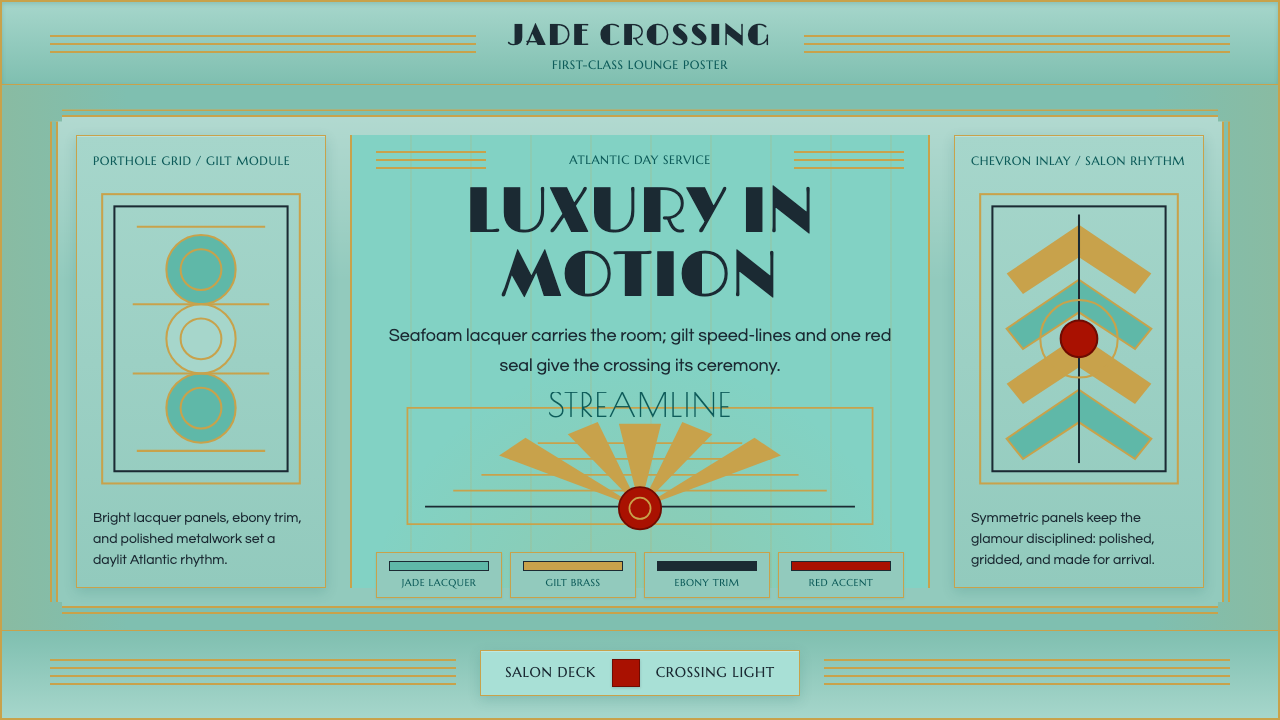 Ocean Liner SeafoamLuxury in motion. Seafoam lacquer, gilt speed-lines, and Deco symmetry frame…流动中的奢华:海沫漆面、鎏金速度线与装饰艺术对称框景。
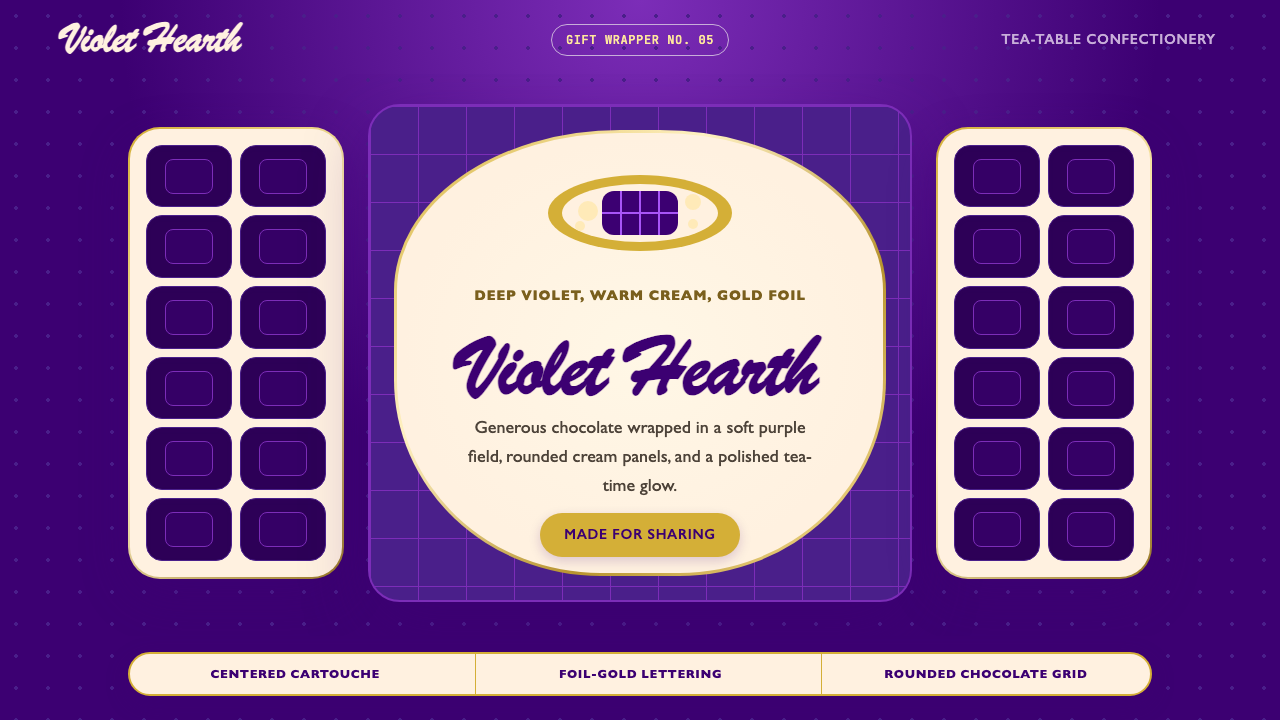 Cadbury Dairy MilkEveryday indulgence feels generous. Deep violet fields cradle cream cartouche…日常甜蜜慷慨包裹。深紫底托起奶油徽章与金箔光。
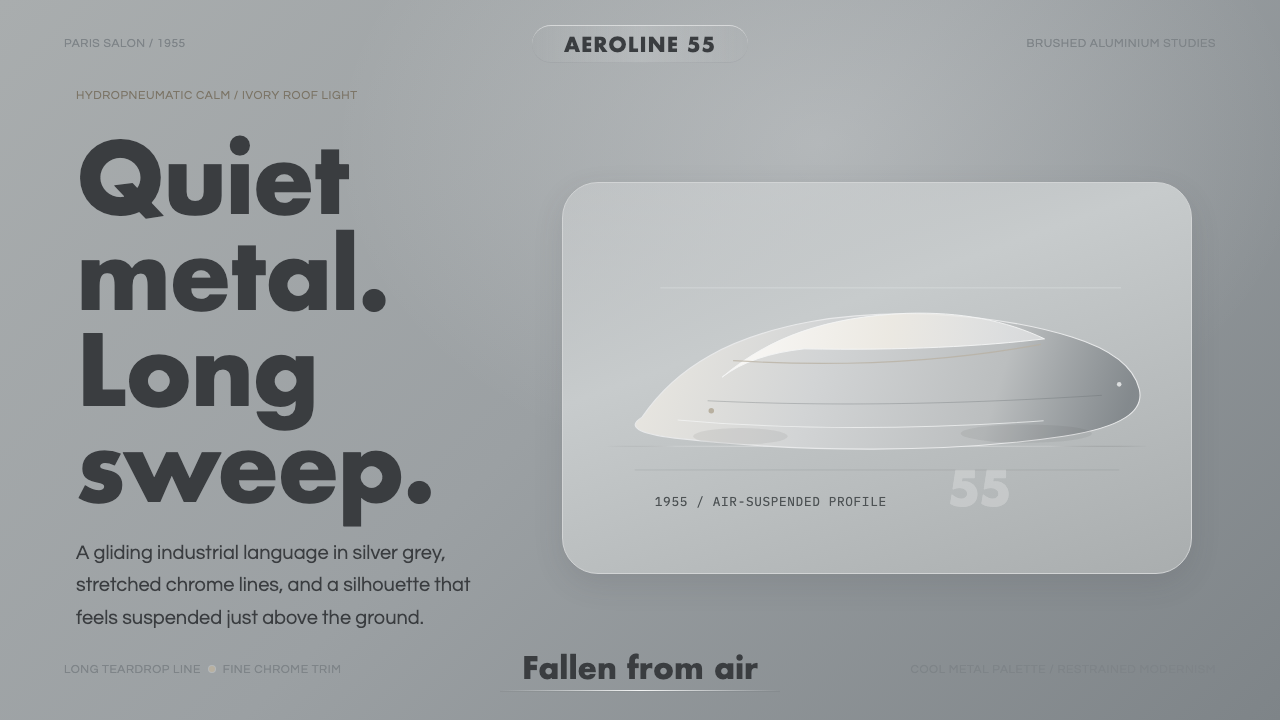 Citroën DSSilence made aerodynamic. Silver-grey ground, chrome hairlines, one long glid…静默即空气动力。银灰底、铬发丝线与长滑行轮廓。
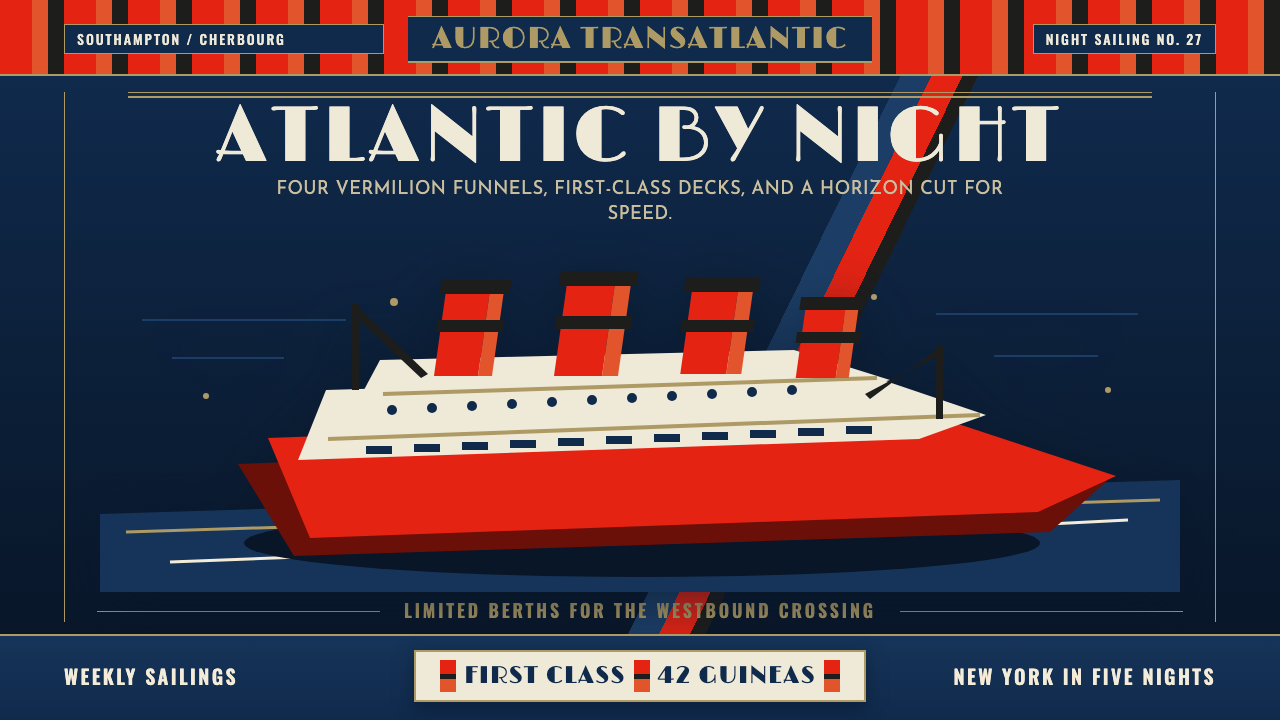 Cunard Liner PosterOceanic grandeur. Vermilion funnels, teak-gold caps, and a marine-blue poster…远洋盛景。朱红烟囱、柚木金大字与深海蓝海报网格。
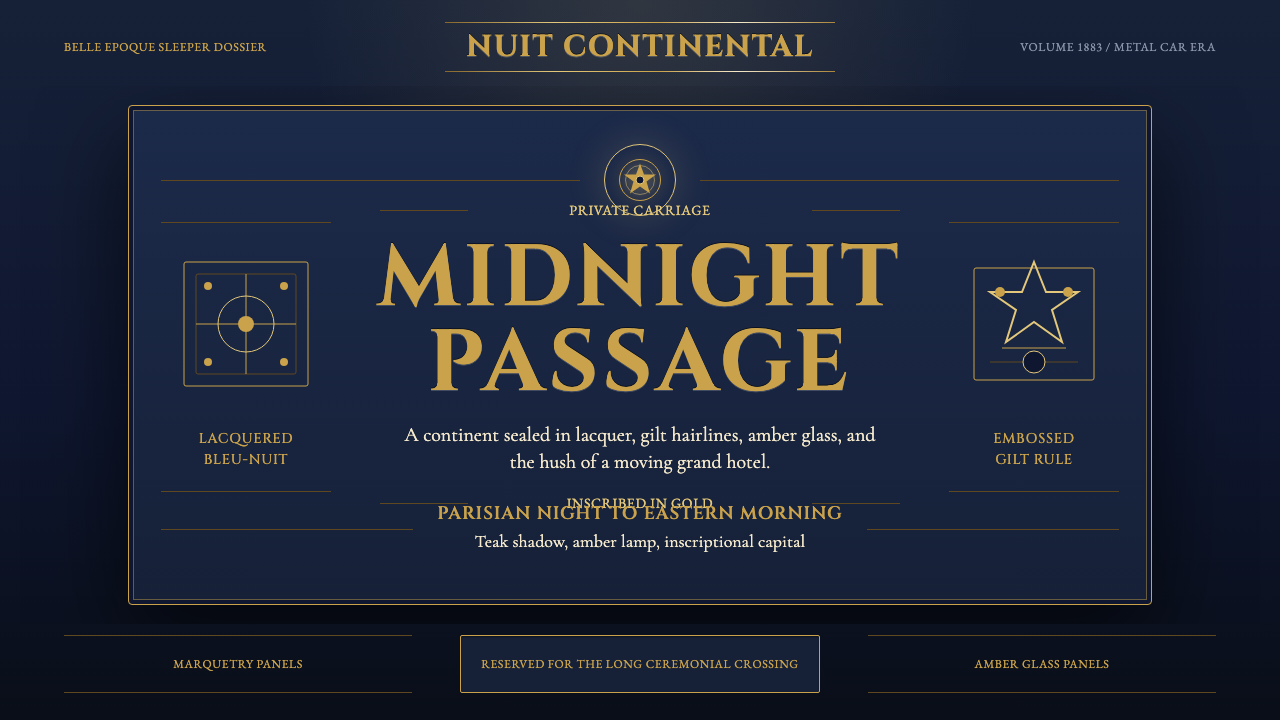 Orient ExpressRegal motion in lacquer. Midnight blue, Cinzel capitals, and gold hairlines f…漆面里的皇家动势。午夜蓝、Cinzel 大写字与金色细线构成车厢式边框。
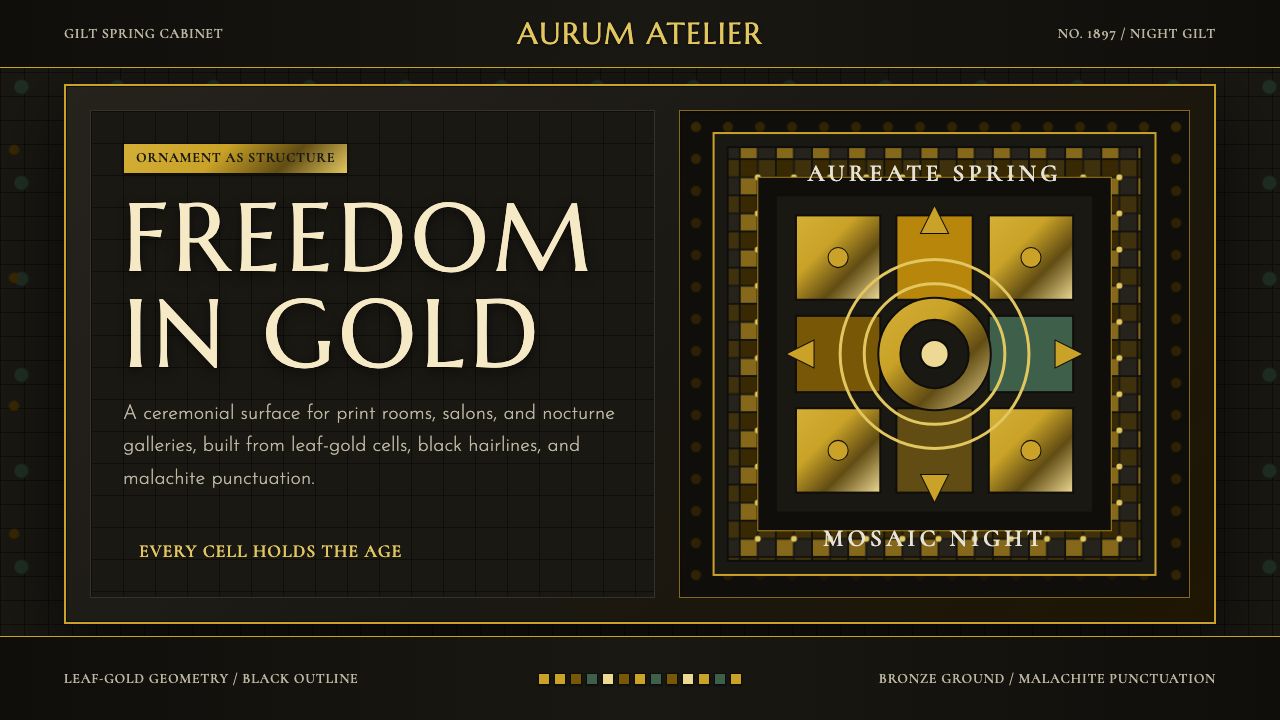 Vienna Secession 1897Ornament is structure. Leaf-gold grids and black hairlines glow on bronze nig…装饰即结构。叶金网格与黑色细线在青铜夜色中发光。