What is Armenian Manuscript Folklore?什么是 Armenian Manuscript Folklore?
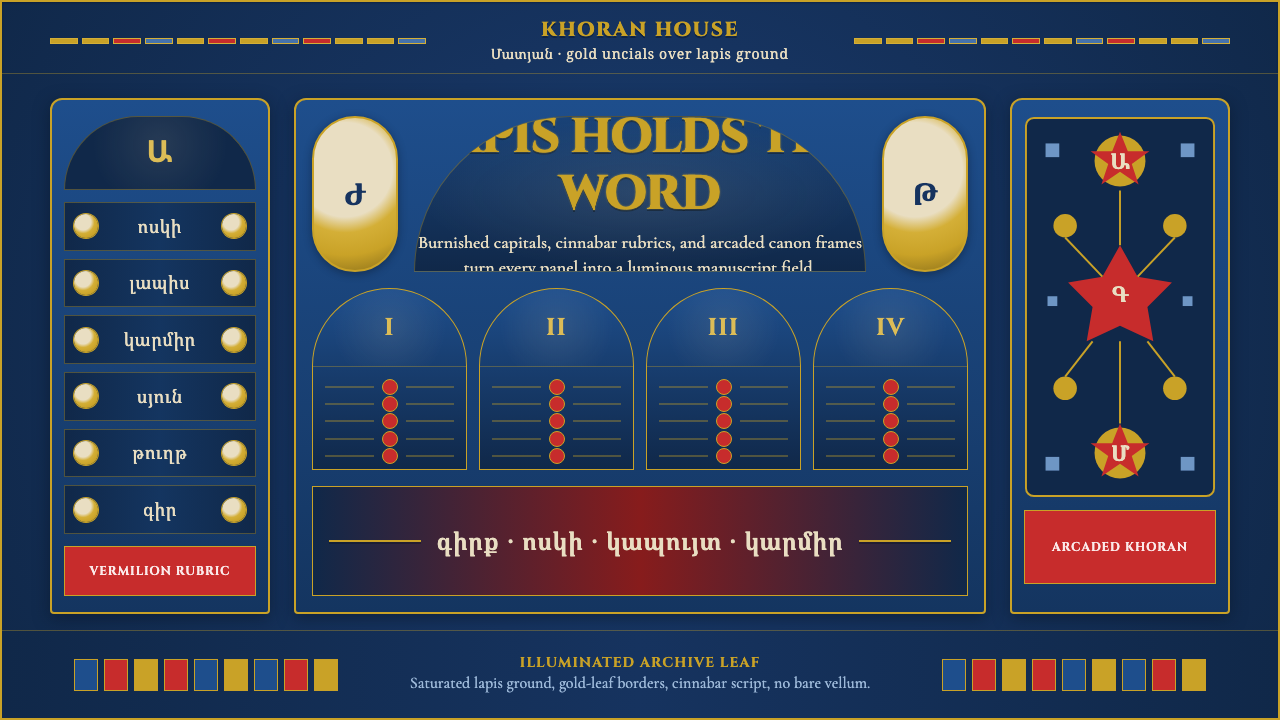
A saturated field of lapis blue, never bare parchment, is what makes the gold and vermilion of Cilician Armenian illumination glow like jewels.一片饱和的青金石蓝,从不留白裸露羊皮纸,正是这种底色,让奇里乞亚亚美尼亚绘饰艺术中的金箔与朱砂,如宝石般熠熠生辉。
Armenian Manuscript Folklore in briefArmenian Manuscript Folklore 速览
Armenian Manuscript Folklore distills the Cilician illumination tradition of Toros Roslin, the thirteenth-century master of the Hromkla scriptorium, with a specific focus on one of that tradition's most striking structural elements: the khoran, the arcaded canon tables that open Armenian gospel books, built on a saturated lapis-lazuli ground rather than bare parchment.亚美尼亚手稿民俗设计提炼了托罗斯·罗斯林——十三世纪赫罗姆克拉缮写室大师——的奇里乞亚绘饰传统,尤其聚焦于这一传统中最引人注目的结构性元素之一:卡农表(khoran),亚美尼亚福音书开篇的拱形回廊表格,建立在饱和的青金石蓝底面之上,而非裸露的羊皮纸。
Jewel-tone tempera miniatures, gold uncial lettering, and gold-leaf halos are worked over this deep blue field within the arcaded columns of the khoran, producing a page that reads as densely inhabited rather than sparse — every available surface carries color, ornament, or figure.宝石色调的蛋彩细密画、金色安色尔(uncial)字体与金箔光晕,绘制在这片深蓝色域之上,位于卡农表的拱形立柱之间,造就了一页读起来密实充盈而非疏朗的书页——每一处可用的表面,都承载着色彩、装饰或人物形象。
Vermilion red and natural ultramarine carry the figures and bird-letter ornament throughout, while pomegranate motifs and fine Cilician decorative detail fill the remaining space. The defining choice is structural: the page itself is a saturated lapis field, never bare parchment, a ground that makes gold and cinnabar glow with a jewel-like intensity no lighter background could produce.朱砂红与天然群青,贯穿始终地承载人物与鸟形字母装饰,而石榴纹样与精细的奇里乞亚装饰细节,填满其余的空间。这一定义性的选择是结构性的:页面本身即是一片饱和的青金石之原野,从不裸露羊皮纸——这样的底色,让金箔与朱砂焕发出任何更浅底色都无法造就的宝石般强度。
See the Armenian Manuscript Folklore design system查看 Armenian Manuscript Folklore 完整设计系统
Where does Armenian Manuscript Folklore come from?Armenian Manuscript Folklore 从何而来?
The khoran — the set of arcaded canon tables placed at the opening of an illuminated gospel book — served a practical scholarly function inherited from earlier Christian manuscript traditions: cross-referencing parallel passages across the four gospels, organized within columns framed by decorative arches. In Armenian manuscript practice, and above all in the hands of Toros Roslin at the Cilician scriptorium of Hromkla in the mid-thirteenth century, this functional apparatus became one of the most lavishly decorated sections of the entire book.卡农表(khoran)——置于泥金福音书开篇的一组拱形回廊表格——承担着一项继承自更早期基督教手抄本传统的实用学术功能:在四福音书之间交叉引用平行章节,以立柱形式组织,以装饰性拱门为框。在亚美尼亚手抄本实践中,尤其是在十三世纪中叶奇里乞亚赫罗姆克拉缮写室托罗斯·罗斯林的笔下,这一功能性装置,成为了整部书中装饰最为奢华的部分之一。
Roslin, active roughly from the 1250s through the 1260s, distinguished his khorans by setting the arcaded columns against a saturated lapis-lazuli ground rather than the bare or lightly tinted parchment more common elsewhere. This was a deliberate escalation of the form's decorative ambition: the deep blue field functions as a kind of jewel setting, against which gold uncial lettering and gold-leaf halos read with maximum luminosity, an effect impossible to achieve on plain vellum.活跃于大致1250至1260年代的罗斯林,通过将拱形立柱置于饱和的青金石蓝底面之上,而非其他地方更常见的裸露或轻微染色的羊皮纸,让他的卡农表与众不同。这是对这一形式装饰野心的一次刻意升级:深蓝色域起到了一种宝石镶座的作用,金色安色尔字体与金箔光晕在其上,以最大的流光感呈现,这种效果在素色羊皮纸上是无法实现的。
Within and around the khoran arcades, Roslin and the broader Cilician school populated the page with jewel-tone tempera miniatures — figures and scenes rendered in saturated pigment rather than the more muted washes of some contemporary traditions — alongside the ornithomorphic bird-letter initials that are among the school's most original inventions. Pomegranate motifs, carrying symbolic associations with fertility and abundance common across the wider Eastern Mediterranean and Near Eastern decorative vocabulary, recur throughout the fine ornamental detail filling the remaining space around the arcades.在卡农表的拱廊内外,罗斯林与更广泛的奇里乞亚画派,以宝石色调的蛋彩细密画布满页面——人物与场景以饱和颜料而非某些同代传统更为柔和的淡彩渲染呈现——同时穿插着该画派最具原创性的发明之一:禽鸟形态的字母首字。石榴纹样——在更广泛的东地中海与近东装饰词汇中承载着丰饶与繁盛的象征联想——反复出现在填满拱廊周围剩余空间的精细装饰细节之中。
This entire visual program situates the Cilician school within the broader family of Eastern Christian manuscript art, a tradition centered geographically in the eastern Mediterranean and reaching toward Central Asian trade and cultural networks, while remaining distinctly Armenian in its specific ornamental choices — the saturated lapis ground chief among them, a structural decision that no bare-parchment tradition shares.整个视觉体系,将奇里乞亚画派置于更广泛的东方基督教手抄本艺术谱系之中——这一传统在地理上以东地中海为中心,同时延伸至中亚的贸易与文化网络——却在具体的装饰选择上,始终鲜明地属于亚美尼亚,其中最突出的正是这种饱和的青金石底面,一个任何裸露羊皮纸传统都不曾采用的结构性决定。
What defines the Armenian Manuscript Folklore look?Armenian Manuscript Folklore 的视觉特征是什么?
Color色彩
The palette is anchored by a deep, saturated lapis-lazuli blue used as a structural ground rather than an accent, against which jewel-tone tempera colors, gold, and vermilion are worked. This is a fuller commitment to blue as the base field than in lighter Cilician work, giving the system its distinctive jewel-box density.色板以深邃、饱和的青金石蓝为锚定,将其作为结构性底色而非强调色使用,宝石色调的蛋彩色、金色与朱砂便绘制其上。这比更浅淡的奇里乞亚作品,对蓝色作为基底色域有着更彻底的投入,赋予了系统特有的珠宝盒般密度。
Gold Uncials金色安色尔字体
Text within the khoran and surrounding ornament is rendered in gold uncial letterforms — a rounded, majuscule script style associated with early Christian manuscript traditions — set directly against the lapis ground so the gold reads with maximum contrast and luminosity.卡农表内及周边装饰的文字,以金色安色尔字形呈现——一种与早期基督教手抄本传统相关联的圆润大写字体风格——直接置于青金石底面之上,使金色以最大对比度与流光感呈现。
Khoran Arcades卡农表拱廊
The arcaded canon-table structure — columns and rounded arches organizing cross-referenced gospel text — is the system's defining compositional device, translating a scholarly reference tool into an ornamental architectural frame filled with color and gold.拱形卡农表结构——立柱与圆拱组织交叉引用的福音书文本——是本系统的核心构图装置,将一件学术性参考工具,转化为一个填满色彩与金箔的装饰性建筑框架。
Jewel-Tone Tempera宝石色调蛋彩
Figures and miniature scenes are painted in saturated, jewel-tone tempera pigment rather than muted wash — reds, blues, and greens at full intensity, chosen to hold their own visual weight against the equally saturated lapis ground rather than receding into it.人物与细密画场景以饱和的宝石色调蛋彩颜料绘制,而非柔和的淡彩——红、蓝、绿都以全饱和度呈现,其选择正是为了在同样饱和的青金石底面上保持自身的视觉分量,而非被其淹没。
Vermilion Figures朱砂人物
Vermilion red carries much of the figural and bird-letter ornament throughout the page, functioning as the system's primary warm counterpoint to the cool lapis ground and providing the sharpest contrast against the gold uncial text.朱砂红在整个页面中承载着大部分人物与鸟形字母装饰,起到本系统中与冷峻青金石底面相对的主要暖色平衡作用,并与金色安色尔文字形成最鲜明的对比。
Pomegranate Ornament石榴纹样
Pomegranate motifs, drawn from a wider Eastern Mediterranean and Near Eastern decorative vocabulary carrying associations of fertility and abundance, recur as fine ornamental detail filling the space between and around the khoran's arcaded columns.石榴纹样取自更广泛的东地中海与近东装饰词汇,承载着丰饶与繁盛的象征联想,作为精细装饰细节,反复填充在卡农表拱形立柱之间及周围的空间之中。
No Bare Ground无裸露底面
The system's most structurally distinctive choice is its refusal of bare parchment: the page itself is a saturated lapis field from edge to edge, a ground so dense with color that gold and cinnabar appear to glow against it, distinguishing this tradition from lighter-ground Cilician and Byzantine illumination alike.本系统在结构上最具区分度的选择,是拒绝裸露羊皮纸:页面本身就是一片从边到边饱和的青金石之原野,色彩之密实,使得金箔与朱砂在其上仿佛熠熠发光——这将这一传统,与更浅淡底面的奇里乞亚及拜占庭绘饰艺术区分开来。
See the Armenian Manuscript Folklore design system查看 Armenian Manuscript Folklore 完整设计系统
Who shaped Armenian Manuscript Folklore?谁塑造了 Armenian Manuscript Folklore?
The Hromkla master whose khoran designs — canon tables set against a saturated lapis-lazuli ground rather than bare parchment — are the direct source of this system's structural approach. Active roughly from the 1250s through the 1260s, his work fused scholarly function with jewel-box density in a way few Cilician illuminators matched.赫罗姆克拉的大师,他所设计的卡农表——置于饱和青金石蓝底面而非裸露羊皮纸之上——正是本系统结构手法最直接的源头。他大致活跃于1250至1260年代,将学术功能与珠宝盒般的密度相融合,这一水准鲜有其他奇里乞亚绘饰家能够比肩。
The wider community of scribes and miniaturists at Hromkla and other Cilician centers developed and shared the khoran's arcaded format, gold-uncial lettering conventions, and pomegranate ornamental vocabulary as part of an institutional manuscript tradition.赫罗姆克拉及其他奇里乞亚中心更广泛的抄写员与细密画家群体,作为一项制度性手抄本传统的一部分,共同发展并共享了卡农表的拱形形制、金色安色尔字体惯例,以及石榴装饰词汇。
The miniature painters working within Roslin's Hromkla workshop applied the jewel-tone tempera technique and ornithomorphic bird-letter initials that populate the khoran arcades and surrounding text, giving the page its dense, richly inhabited character.在罗斯林赫罗姆克拉工坊内工作的细密画家,运用了填满卡农表拱廊及周边文字的宝石色调蛋彩技法与禽鸟形态字母首字,赋予了这一页面密实、丰盈的性格。
How do you use Armenian Manuscript Folklore today?今天怎么用 Armenian Manuscript Folklore?
This system's defining principle — a saturated ground that never goes bare — makes it especially well suited to content where richness and devotional intensity are the goal, and applying it well means resisting the urge to leave any surface empty.这套系统的定义性原则——一片从不裸露的饱和底色——使其尤其适合以丰盈感与奉献性强度为目标的内容,正确应用它,意味着抵制留下任何空白表面的冲动。
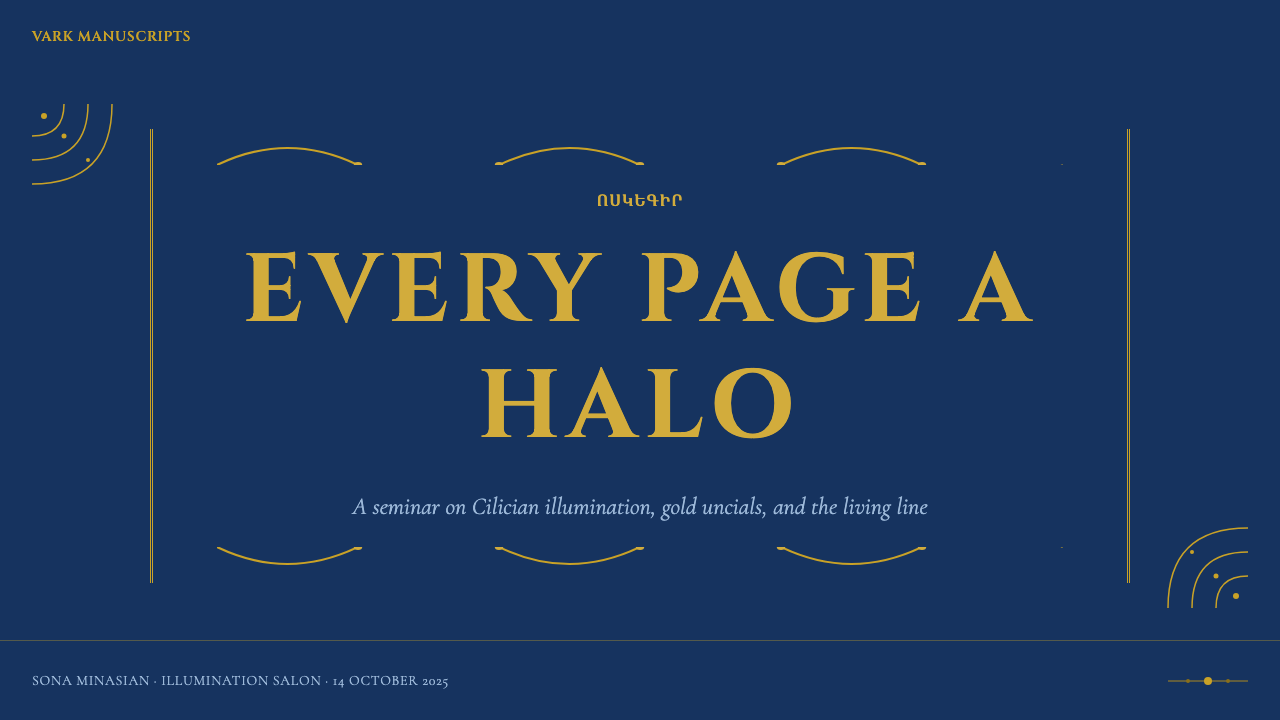
For presentation slides, the style suits heritage, cultural, and premium-brand storytelling. Cover slides benefit from the deep lapis ground filling the entire frame, with a gold-uncial-style title and a vermilion accent detail, while content slides can use arcaded frame devices — a simple column-and-arch border — to organize sections in a way that echoes the khoran structure.在演示文稿中,这种风格适合传承、文化与高端品牌叙事。封面页受益于填满整个画面的深邃青金石底色,配以金色安色尔风格标题与朱砂强调细节;内容页则可以使用拱廊框架装置——一种简单的立柱加拱门边框——以呼应卡农表结构的方式组织章节。
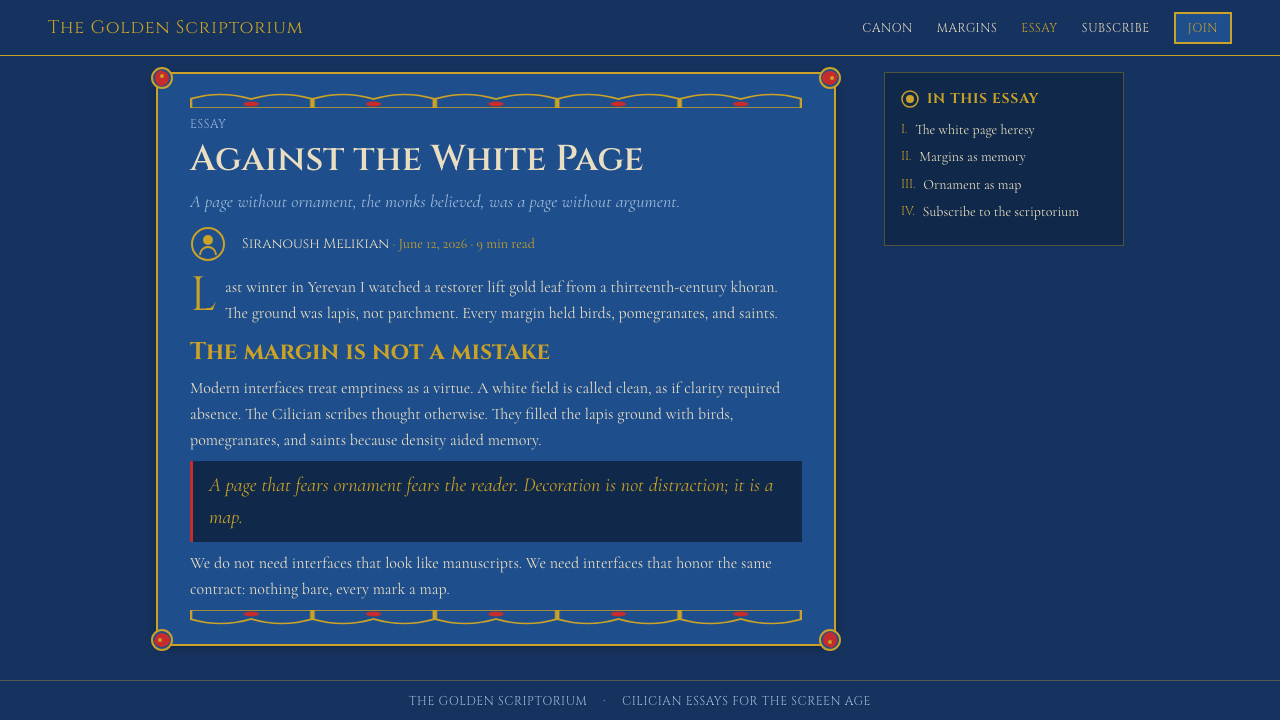
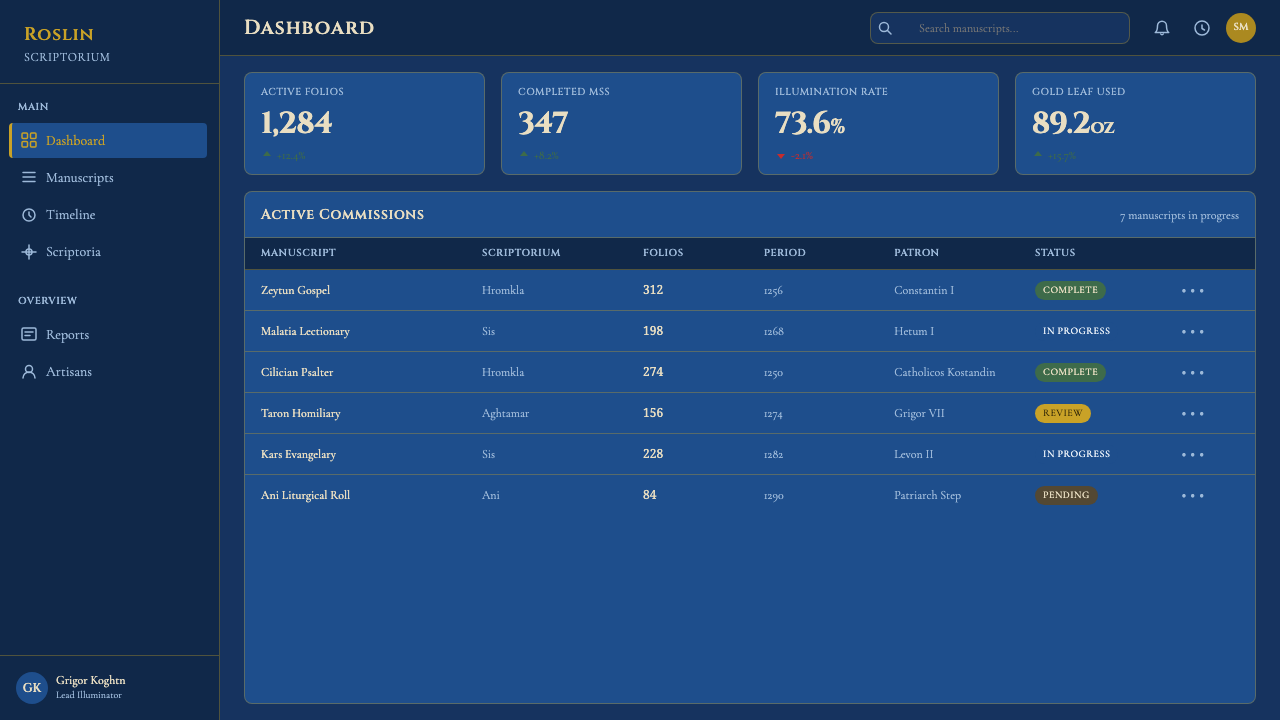
For web interfaces, the palette suits cultural institutions, museum collections, or luxury products seeking jewel-box density rather than airy minimalism. The lapis field should dominate backgrounds rather than appearing only as an accent; gold should carry primary text or key labels; vermilion works well for interactive accents or highlighted figures.对于网页界面,这套色板适合文化机构、博物馆馆藏,或追求珠宝盒般密度而非疏朗极简的奢侈品。青金石色域应主导背景,而非仅作为强调色出现;金色应承载主要文字或关键标签;朱砂适合用于交互强调或突出显示的人物形象。
For editorial and marketing work, the style supports dense, richly illustrated feature layouts — art history content, religious or cultural heritage storytelling, and premium print-inspired digital publications all benefit from the system's willingness to fill every available surface with color and ornament rather than leaving generous negative space.对于编辑与营销内容,这种风格支持密实、图饰丰富的专题版面——艺术史内容、宗教或文化传承叙事,以及受高端印刷启发的数字出版物,都受益于这套系统愿意用色彩与装饰填满每一处可用表面,而非留出大量留白的特质。
A common mistake when applying this system is lightening the lapis ground toward a pale or muted blue to make the layout feel more contemporary — this directly undermines the jewel-setting effect that makes gold and vermilion glow, and is the single most important departure from the source tradition to avoid.应用这套系统时最常见的错误,是把青金石底色调浅或调淡,以让版面显得更当代——这会直接破坏让金箔与朱砂焕发光彩的宝石镶座效果,是最需要避免的、对源传统最重要的偏离。
See the Armenian Manuscript Folklore design system查看 Armenian Manuscript Folklore 完整设计系统
Armenian Manuscript Folklore — FAQArmenian Manuscript Folklore · 常见问题
How does this style differ from the broader Armenian illuminated manuscript style also drawn from Toros Roslin?这种风格与同样源自托罗斯·罗斯林的更广泛亚美尼亚泥金手抄本风格有何不同?
Both draw on the same historical master and school, but this system focuses specifically on the khoran canon tables and their signature saturated lapis-lazuli ground, treating that structural choice as the defining feature. A broader Toros Roslin system covers the full range of his gospel-book decoration; this one zooms in on the jewel-box density of the arcaded canon tables and their never-bare page.两者都取材于同一位历史大师及其画派,但本系统专门聚焦于卡农表及其标志性的饱和青金石底面,将这一结构性选择当作定义性特征。更广泛的托罗斯·罗斯林体系涵盖他福音书装饰的全部范围;本系统则聚焦于拱形卡农表珠宝盒般的密度,以及它从不裸露的页面。
What is the practical function of the khoran, and why does it get such lavish decoration?卡农表的实际功能是什么?为什么它会得到如此奢华的装饰?
The khoran is a scholarly cross-reference tool, organizing parallel passages across the four gospels within columns framed by decorative arches — a structure inherited from earlier Christian manuscript traditions. Because it opens the gospel book and serves a text central to Christian worship, scriptoria like Hromkla invested extraordinary decorative effort into it, turning a reference apparatus into one of the book's most lavish pages.卡农表是一种学术性交叉引用工具,以装饰性拱门为框,在立柱中组织四福音书之间的平行章节——这一结构继承自更早期的基督教手抄本传统。因为它开篇于福音书,并服务于基督教崇拜的核心文本,赫罗姆克拉这样的缮写室为其投入了非凡的装饰心力,将一件参考工具,变成了全书装饰最为奢华的一页。
Why does pomegranate imagery specifically recur in this tradition?为什么石榴图像在这一传统中反复出现?
The pomegranate carries symbolic associations with fertility and abundance found across the wider Eastern Mediterranean and Near Eastern decorative vocabulary, and Cilician Armenian illuminators incorporated it as fine ornamental detail within and around the khoran arcades, alongside their own distinctly Armenian inventions like ornithomorphic bird-letter initials.石榴承载着在更广泛的东地中海与近东装饰词汇中都能找到的、与丰饶及繁盛相关的象征联想,奇里乞亚亚美尼亚绘饰家将其作为精细装饰细节,融入卡农表拱廊内外,与他们自身鲜明的亚美尼亚发明——如禽鸟形态字母首字——并置。
Can this jewel-box density be adapted for a minimalist or restrained brand?这种珠宝盒般的密度,能否为极简或克制的品牌所改造使用?
Not without losing the system's core identity. Its entire visual authority rests on the refusal of bare ground and the accumulation of color, gold, and ornament across every surface; a minimalist adaptation that thins this out would produce a generically 'jewel-toned' palette rather than a genuine reference to this specific manuscript tradition.这样做无法不损害系统的核心身份。它全部的视觉权威,建立在拒绝裸露底面、在每一处表面积累色彩、金箔与装饰之上;若为极简风格而稀释这种密度,产出的将只是一种泛泛的“宝石色调”配色,而非对这一具体手抄本传统的真正引用。
Related design styles相关设计风格
 Islamic Geometric ArtInfinite order, fully tiled. Lapis ground with gold girih lines and turquoise…无限秩序,满幅铺陈。青金石底、金色girih线与绿松石星格。
 Syrian Damascene BrocadeDark silk shimmers. Aubergine ground, Cormorant SC, gold medallion grid.深色丝绸微光:茄紫底、Cormorant SC 与金色奖章网格。
 Uzbek Bukhara Gold ZardoziCourtly density. Ruby velvet, gold Cinzel type, and star medallions leave no…宫廷式密度。红宝石丝绒、金色Cinzel与星章拒绝留白。
 Belarusian Slutsk SashCourtly silk, vitrined. Taupe ground, crimson panels, Cinzel type, antique go…宫廷丝锦入展柜:赭褐底、深红端板、Cinzel 铭文与古金细线。
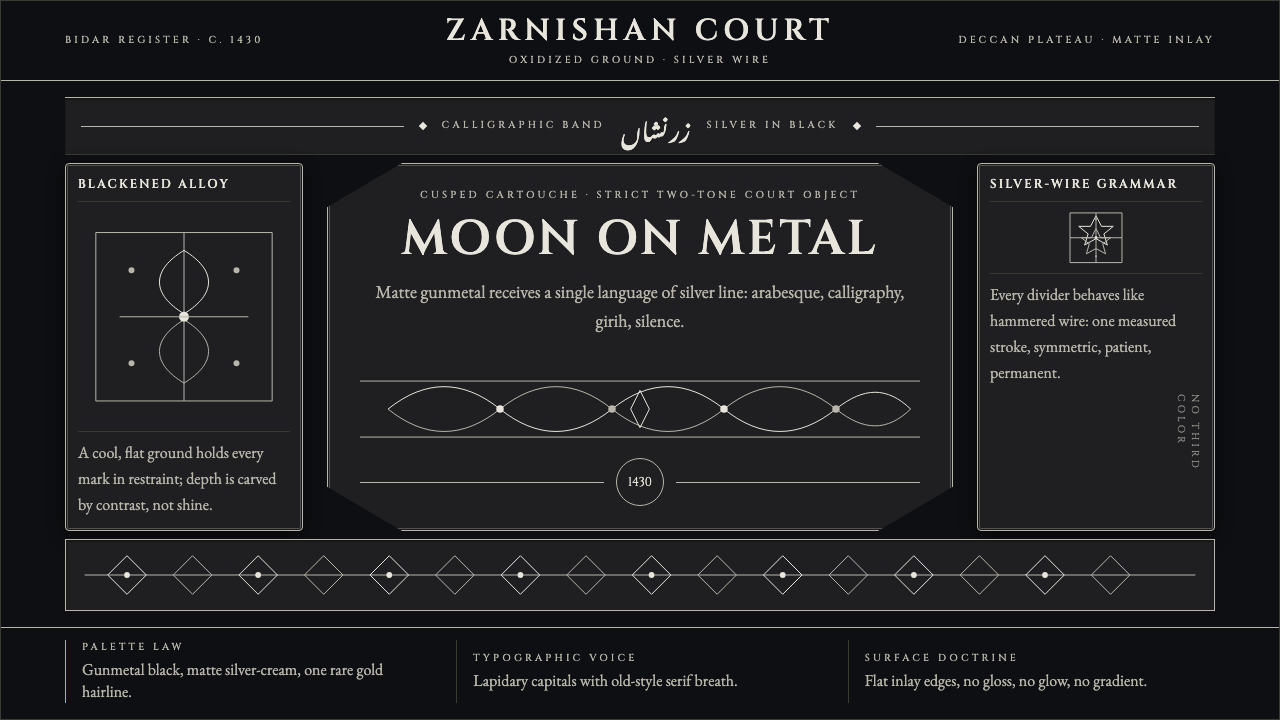 Bidri Deccan MetalworkCourtly darkness, tooled by silver. Cinzel caps and hairline arabesques cut g…宫廷般冷黑。Cinzel 大写与银色藤蔓线切入枪铁黑。
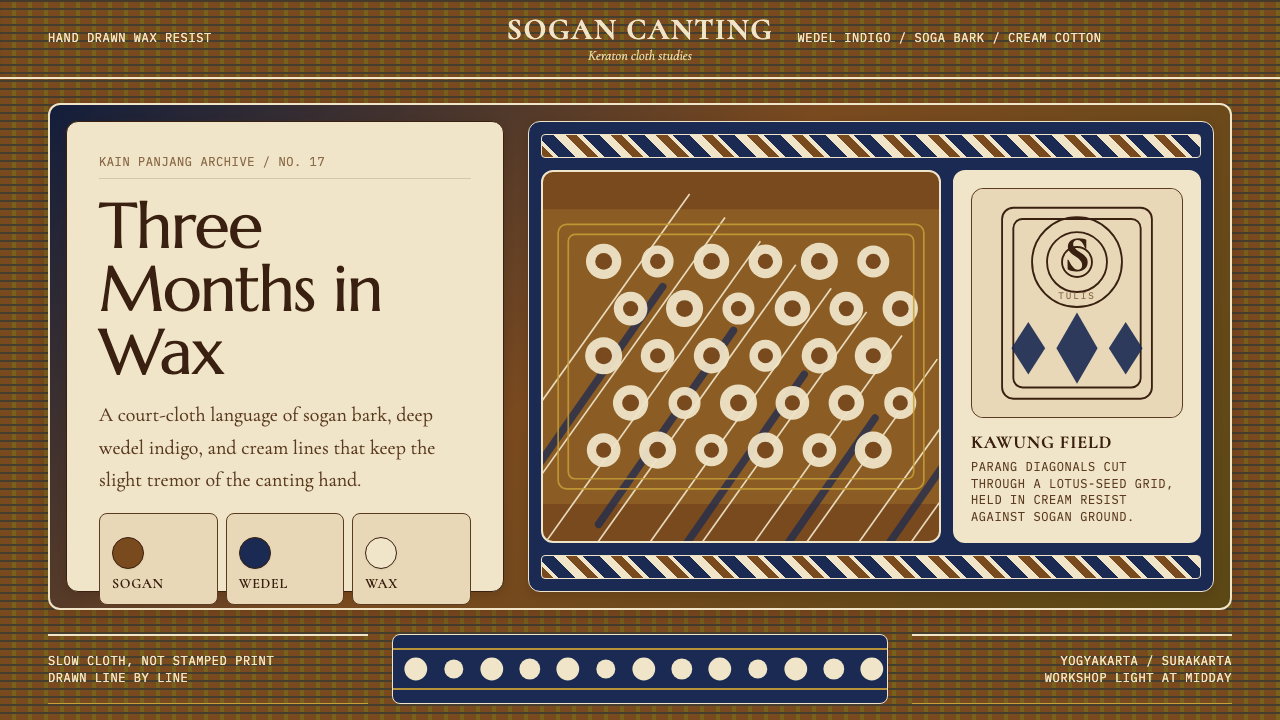 Javanese Batik Tulis (Keraton Sogan)Patience made visible. Sogan brown, indigo, and cream wax-lines form dense co…耐心可见:梭罗褐、靛蓝与奶白蜡线织成密集宫廷网格。