What is Kuchi Nomad Silver Jewelry?什么是 Kuchi Nomad Silver Jewelry?
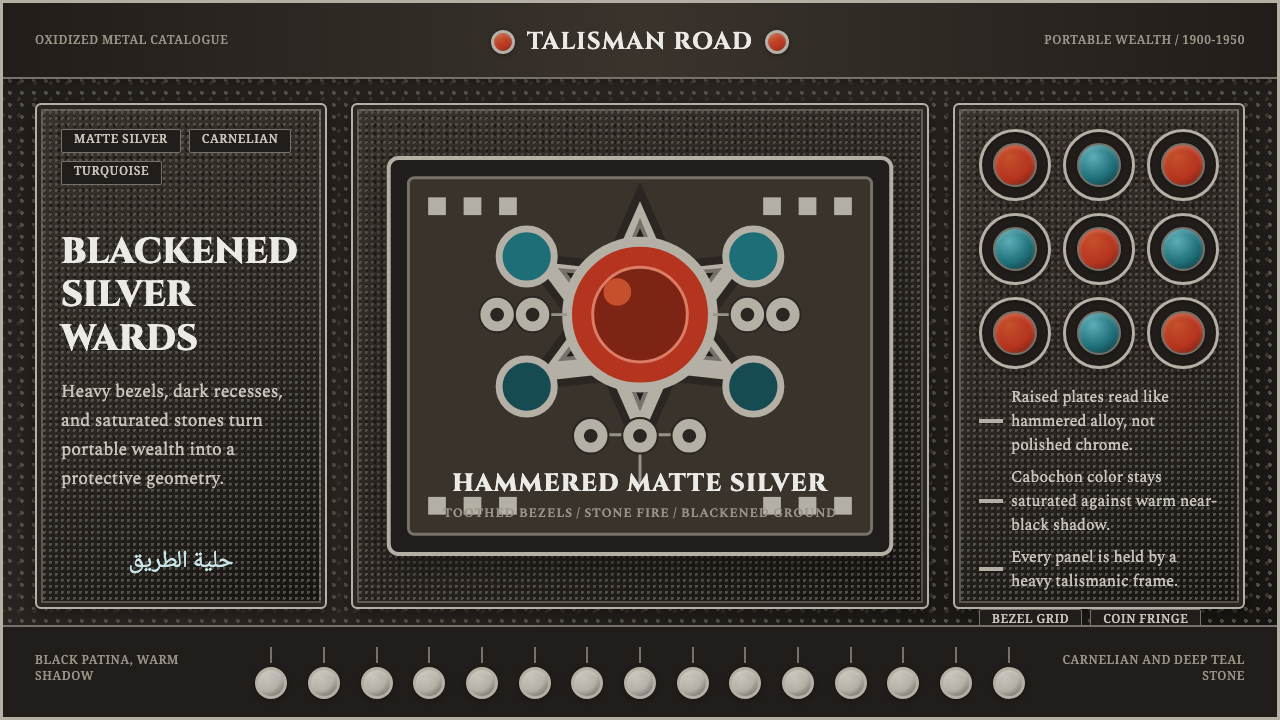
Kuchi Nomad Silver Jewelry turns tribal adornment into interface language — blackened silver, red carnelian, and deep-teal stone, weighted like portable wealth carried across the steppe.「库奇游牧银饰」把部落饰品转化为界面语言——发黑的银、红玉髓与深青绿松石,如同随游牧一路携带的可携财富,沉甸甸地压在身上。
Kuchi Nomad Silver Jewelry in briefKuchi Nomad Silver Jewelry 速览
Kuchi Nomad Silver Jewelry is a design language drawn from the tribal silver adornment of Afghan and Pashtun nomadic peoples, worn and made across Central Asia through the first half of the twentieth century. This jewelry served a dual purpose beyond decoration: it was portable, wearable wealth, a form of savings a nomadic family could carry entirely on the body as it moved with its herds across the region.「库奇游牧银饰」这套设计语言取材于阿富汗与普什图游牧民族的部落银饰,这类饰品在整个二十世纪上半叶于中亚各地被制作与佩戴。这种珠宝除了装饰之外,还承担着双重功能:它是可携带的财富,是一个游牧家庭随牲畜迁徙时,能够完全穿戴在身上的储蓄形式。
The defining material quality is not brightness but darkness: silversmiths deliberately blackened and oxidized their silver-alloy plates, producing a matte, tarnished patina rather than a polished shine. Set into this dark metal were saturated semi-precious stones — carnelian's deep orange-red, turquoise or glass in deep teal — held in toothed, geometric bezel settings, and finished with tasseled coin pendants that would chime and catch light as the wearer moved.其最核心的材质特质不是明亮,而是暗沉:银匠们刻意将银合金板做成发黑氧化的效果,呈现哑光、锈蚀的包浆,而非抛光的光泽。镶嵌在这层暗金属中的,是饱和的半宝石——红玉髓的深橙红色、绿松石或玻璃的深青色——被固定在齿状的几何镶座之中,再缀以流苏钱币吊坠,随佩戴者移动而叮当作响、捕捉光线。
This design system distills that craft into a digital surface language: dark, patinated metal grounds; matte hammered-silver textures; saturated carnelian and teal stones set within heavy geometric frames. The style deliberately avoids the bright, polished-silver look of conventional jewelry design, since tarnish and weight — not shine — are what signal authenticity here.本设计系统将这门工艺提炼为一套数字表面语言:暗沉、带铜绿包浆的金属底色;哑光锤纹银质感;饱和的红玉髓与青色宝石,卡镶于厚重的几何边框之中。这套风格刻意回避常规珠宝设计中那种明亮、抛光的银色外观,因为在这里,铜锈与重量——而非光泽——才是真实感的标志。
See the Kuchi Nomad Silver Jewelry design system查看 Kuchi Nomad Silver Jewelry 完整设计系统
Where does Kuchi Nomad Silver Jewelry come from?Kuchi Nomad Silver Jewelry 从何而来?
The Kuchi are a nomadic and semi-nomadic Pashtun people whose traditional livelihood centered on herding livestock across seasonal migration routes spanning Afghanistan and neighboring regions of Central Asia. For Kuchi women in particular, jewelry functioned as both adornment and bank account — silver pieces represented a family's transportable savings, worn openly rather than stored, and passed down or added to across generations.库奇人是普什图族中的游牧与半游牧群体,其传统生计以沿季节性迁徙路线放牧牲畜为核心,活动范围横跨阿富汗及中亚周边地区。尤其对库奇妇女而言,珠宝兼具装饰与银行账户的功能——银饰代表着一个家庭可携带的储蓄,被公开佩戴而非收藏储存,并世代相传、不断添置。
The silversmithing tradition drew on German-silver and silver-alloy techniques, worked by craftsmen — often itinerant or based in regional bazaar towns — into large, geometric forms: wide cuffs, heavy necklaces, elaborate headpieces, and tasseled pendants. The deliberate blackening of the metal, achieved through oxidation processes, was not a failure to polish but an intentional finish, giving the silver a weighted, aged gravity distinct from the bright polish favored in many other silver-jewelry traditions.这门银匠工艺借鉴了德银与银合金技法,由匠人——常为流动工匠或驻扎在地区集市小镇——打造成大型几何形态:宽大的手镯、厚重的项链、精工细作的头饰,以及流苏吊坠。金属被刻意做黑,这是通过氧化工艺实现的,并非未经打磨的失误,而是一种刻意的成品处理,赋予银饰一种沉甸甸、历经岁月的庄重感,有别于许多其他银饰传统所偏爱的明亮抛光。
Stones set into these pieces were chosen as much for color and symbolic association as for value: carnelian was widely believed across the region to carry protective qualities, while turquoise held similar talismanic associations found throughout Central Asian and Persianate jewelry traditions. Coin pendants, sometimes incorporating actual historical currency, added both further value and an audible, kinetic quality to the finished piece — jewelry made not just to be seen but to move and sound as the wearer walked.镶嵌于这些饰品中的宝石,其选择既考量色彩与象征意义,也考量价值:红玉髓在该地区被普遍认为具有护身功效,而绿松石则拥有与整个中亚及波斯语区珠宝传统中相似的护符般联想。钱币吊坠——有时嵌入真正的历史货币——为成品既增添了价值,也增添了可闻、可动的特质:这样的珠宝不仅为了被看见而制作,也为了随佩戴者行走而摆动、发声。
By the mid-twentieth century, Kuchi jewelry had become a recognized ethnographic and collector category, studied and preserved by museums and craft researchers as a distinctive branch of Central Asian tribal silverwork, even as the nomadic lifestyle that produced it faced increasing pressure from modernization, conflict, and shifting borders across the region.到二十世纪中期,库奇珠宝已成为公认的民族志与收藏类别,被博物馆与工艺研究者作为中亚部落银饰工艺中一个独特分支加以研究与保存,即便催生这门工艺的游牧生活方式,正面临现代化、冲突与该地区不断变动的边界所带来的日益增长的压力。
What defines the Kuchi Nomad Silver Jewelry look?Kuchi Nomad Silver Jewelry 的视觉特征是什么?
Oxidized Metal Ground氧化金属底色
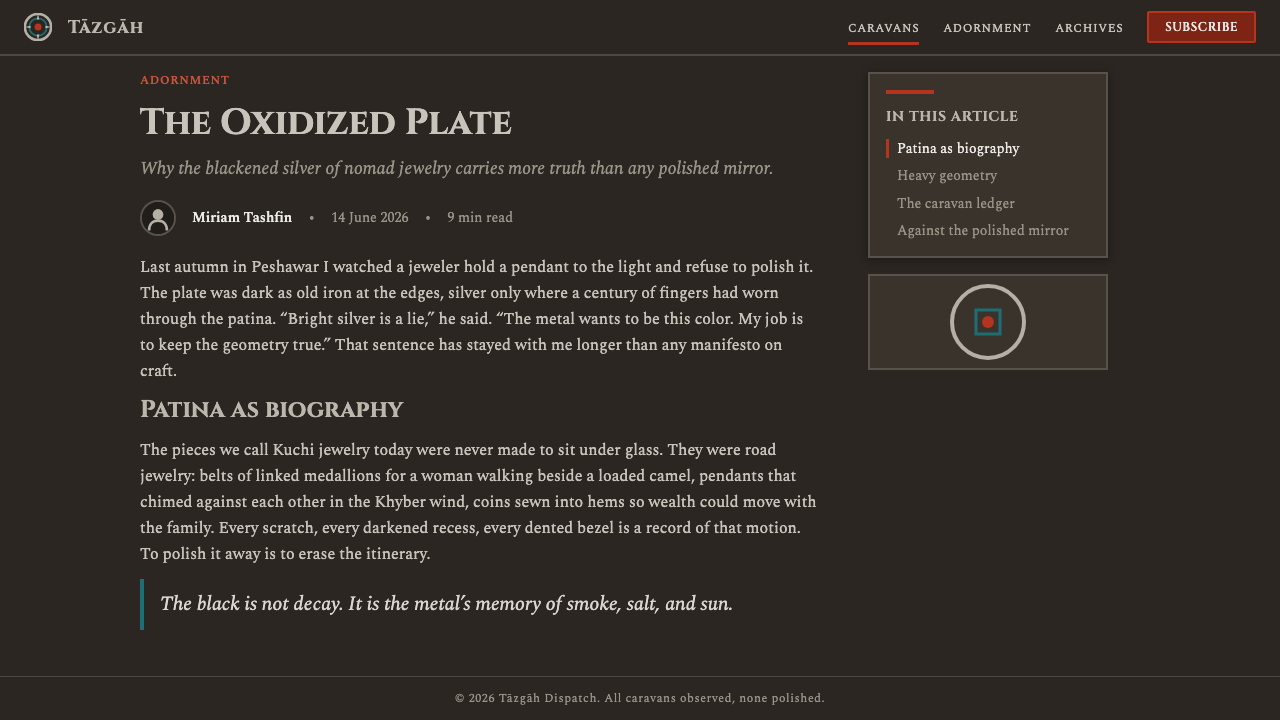
The base metal tone is dark, blackened, and patinated rather than bright silver — this tarnished quality is the single most defining material choice in the entire system and must be preserved wherever metal surfaces appear.底层金属色调是暗沉、发黑、带包浆的,而非明亮的银色——这种锈蚀质感是整套体系中最核心的材质选择,凡出现金属表面之处都必须保留这一特质。
Matte Hammered Texture哑光锤纹质感
Surfaces read as hand-hammered rather than machine-smooth — subtle irregular texture across metal fields evokes the hand-worked quality of tribal silversmithing rather than a precision-manufactured finish.表面读来是手工锤打,而非机械平滑——金属场域中细微不规则的纹理,唤起部落银匠手工打造的质感,而非精密制造的光洁成品。
Carnelian and Teal Stones红玉髓与青色宝石
Saturated carnelian orange-red and deep turquoise-teal are the two signature accent stones, always set as discrete, bezel-framed elements rather than blended into gradients — each stone reads as a distinct object, not a color wash.饱和的红玉髓橙红色与深沉的绿松石青色,是两种标志性的点缀宝石,始终以独立的、卡镶边框的元素呈现,而非融入渐变——每一块宝石都读作一个独立物件,而非一片色彩晕染。
Toothed Geometric Bezels齿状几何镶座
Stones sit within angular, toothed bezel frames rather than smooth circular settings, giving every gem-like accent a distinctly handcrafted, slightly rough-edged silhouette.宝石镶嵌在带棱角、齿状的镶座边框中,而非圆润光滑的托座里,赋予每一处宝石般的点缀一种明显手工、略带粗粝边缘的轮廓。
Talismanic Weight护身符般的重量感
Compositions favor heavy, dense forms over light, airy ones — thick borders, substantial frame widths, and layered elements that suggest the physical heft of real tribal silver rather than delicate contemporary jewelry design.构图偏爱厚重、密实的形态,而非轻盈通透的形态——粗厚的边框、扎实的框架宽度,以及层叠的元素,暗示真实部落银饰的物理分量,而非精巧的当代珠宝设计。
Coin and Tassel Motifs钱币与流苏母题
Circular coin-like discs and hanging tassel or fringe shapes appear as pendant-style ornaments, referencing the movable, chiming elements of real Kuchi jewelry that add kinetic and auditory character to the wearer's movement.圆形的钱币状圆盘与悬垂的流苏或穗状形态,作为吊坠式装饰出现,指涉真实库奇珠宝中那些可动、会发声的元素,为佩戴者的移动增添动态与听觉特质。
Symbolic Restraint象征性的克制
Despite the material richness, compositions maintain restraint in overall color count — the dark metal ground dominates, with carnelian and teal appearing as deliberate, sparing accents rather than a busy multicolor pattern.尽管材质丰富,构图在整体色彩数量上仍保持克制——暗金属底色占主导,红玉髓与青色宝石作为刻意、稀疏的点缀出现,而非繁杂的多色图案。
See the Kuchi Nomad Silver Jewelry design system查看 Kuchi Nomad Silver Jewelry 完整设计系统
Who shaped Kuchi Nomad Silver Jewelry?谁塑造了 Kuchi Nomad Silver Jewelry?
The unnamed craftsmen who worked silver-alloy plates into blackened, oxidized adornment developed the specific matte-metal, geometric-bezel technique that defines this entire visual tradition, transmitted through craft apprenticeship across nomadic communities.这些无名工匠将银合金板打造成发黑氧化的饰品,发展出定义整个视觉传统的哑光金属、几何镶嵌技法,并通过游牧社群间的工艺学徒制代代相传。
Kuchi women who wore and maintained these jewelry pieces as portable family savings shaped the practical logic behind the style's heavy, layered, wearable-wealth aesthetic — jewelry designed to be seen, carried, and passed down rather than stored away.佩戴并保管这些珠宝作为家庭可携带储蓄的库奇妇女,塑造了这套风格背后厚重、层叠、可携财富美学的实际逻辑——这些珠宝的设计初衷是被看见、被携带、被传承,而非被收藏起来。
How do you use Kuchi Nomad Silver Jewelry today?今天怎么用 Kuchi Nomad Silver Jewelry?
Kuchi Nomad Silver Jewelry suits contexts wanting to feel weighted, protective, and rooted in tribal craft heritage rather than polished or corporate. Applying it well means committing to the oxidized, matte-metal ground rather than defaulting to bright silver, and treating carnelian and teal as rare, deliberate accents rather than a broad color scheme.「库奇游牧银饰」适合用在希望传达厚重感、护佑感,以及扎根于部落工艺传承,而非光洁或企业化气质的场景。用好这套风格,需要全情投入氧化的哑光金属底色,而非默认使用明亮银色,并将红玉髓与青色宝石当作稀有、审慎的点缀,而非泛泛的配色方案。
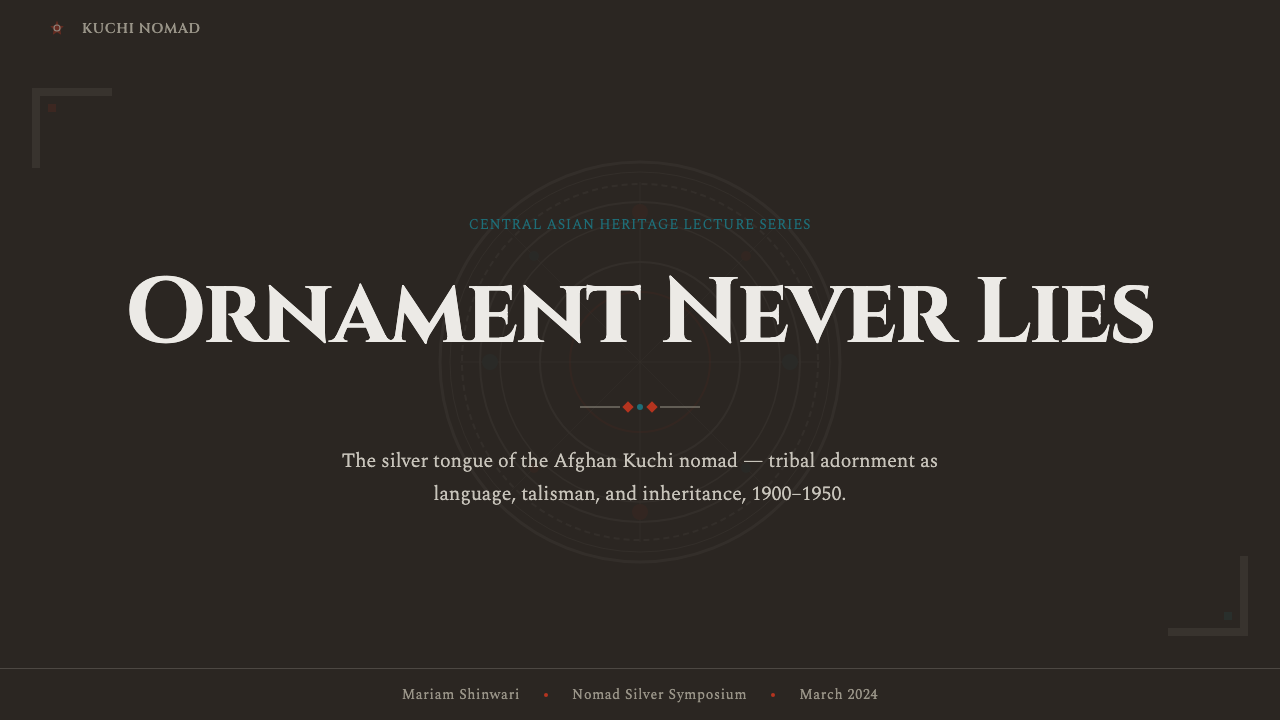
For presentation slides, the style works well for cultural storytelling, craft-heritage, or heritage-brand decks: a cover slide built around a single large bezel-framed stone motif against a dark, patinated ground, with the title set in sturdy type. Content slides should reserve the heavy geometric bezel framing for section headers, keeping body content areas comparatively plain so the ornamental weight doesn't overwhelm dense text.在演示文稿中,这套风格适合文化叙事、工艺传承或传承品牌类内容:封面页可围绕一个大型卡镶宝石母题构建,衬在暗沉包浆底色之上,标题以厚重字体呈现。内容页应把厚重的几何镶座边框保留给章节标题,让正文区域相对朴素,以免装饰性的分量压垮密集的文字。
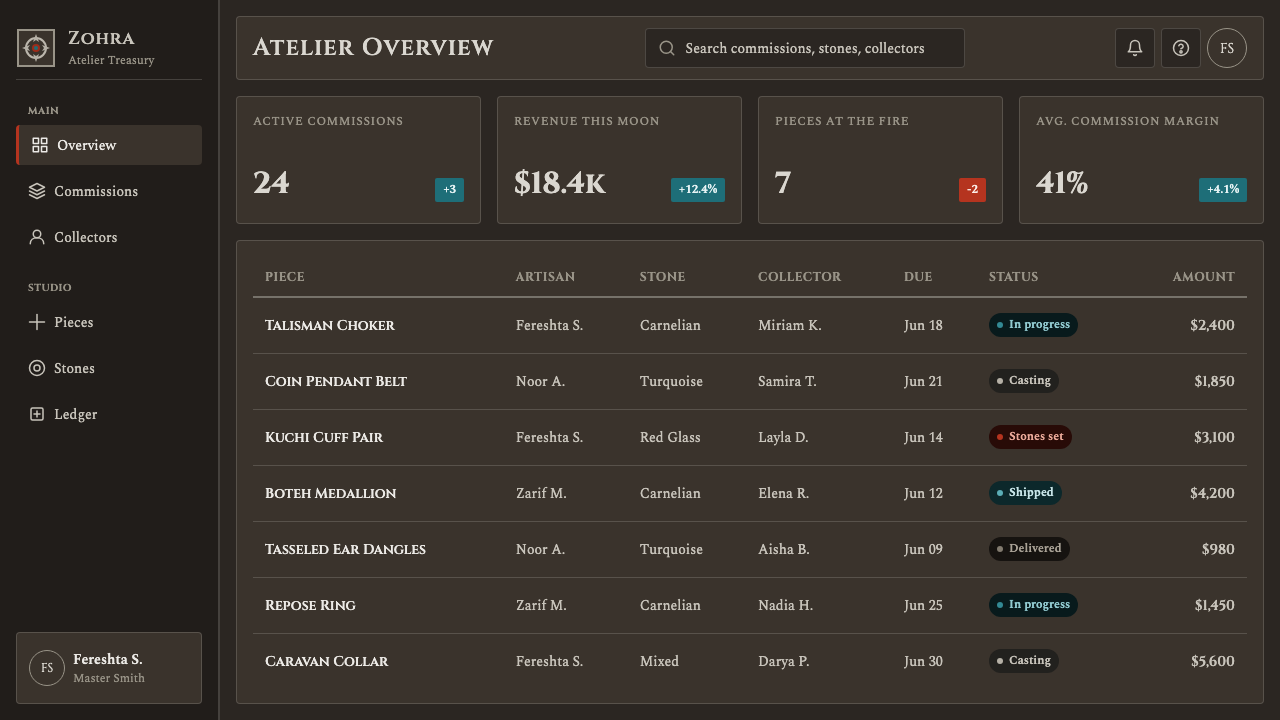
For web interfaces, this style suits artisan marketplaces, cultural or museum platforms, jewelry and craft e-commerce, or heritage travel products. Card borders and key accent elements can carry the toothed-bezel treatment, while carnelian and teal should be reserved for primary actions or highlighted items rather than applied throughout every component.对于网页界面,这套风格适合手工艺人市集、文化或博物馆类平台、珠宝与工艺品电商,或传承旅行类产品。卡片边框与关键点缀元素可以采用齿状镶座处理,而红玉髓与青色则应保留给主操作或重点展示项目,而非应用于每一个组件。
For editorial and marketing work — craft documentaries, cultural features, jewelry brand storytelling — the style provides an immediately tactile, weighted mood: dark patinated-metal section backgrounds, bezel-framed pull quotes, and photography treated with warm, low-key tones consistent with oxidized metal and gemstone color.对于编辑与营销内容——工艺纪录片、文化专题、珠宝品牌故事——这套风格能立刻传达出一种触感强烈、沉甸甸的氛围:暗沉包浆金属板块背景、卡镶边框式的引言,以及经过与氧化金属及宝石色彩一致的暖色、低调处理的摄影图像。
A common mistake is brightening the silver tone to a polished, reflective finish, which erases the tarnished authenticity the entire style depends on. A second common error is spreading carnelian and teal evenly across a layout as a general color scheme rather than concentrating them in discrete, bezel-framed accent points as the source jewelry does.常见的错误,是把银色调亮成抛光反光的效果,这会抹去整套风格所依赖的锈蚀真实感。第二个常见错误,是将红玉髓与青色均匀铺满版面,当作泛泛的配色方案,而非像源头珠宝那样,将它们集中在独立的、卡镶边框的点缀之处。
See the Kuchi Nomad Silver Jewelry design system查看 Kuchi Nomad Silver Jewelry 完整设计系统
Kuchi Nomad Silver Jewelry — FAQKuchi Nomad Silver Jewelry · 常见问题
Why is the metal deliberately blackened rather than bright?为什么金属要刻意做黑,而不是保持明亮?
The blackened, oxidized finish was an intentional craft choice in the historical jewelry this style draws from, not a lack of polish — it gave the silver a weighted, protective, almost armor-like quality distinct from the bright shine of ceremonial or courtly jewelry traditions elsewhere. Preserving that dark patina is what keeps the design language authentic to its tribal source.在本风格所取材的历史珠宝中,发黑氧化的成品是一种刻意的工艺选择,而非缺乏打磨——它赋予银饰一种沉甸甸、护佑般、近乎铠甲般的质感,有别于其他地方礼仪或宫廷珠宝传统中明亮的光泽。保留这种深色包浆,正是让设计语言忠于其部落源头的关键。
How does this differ from generic 'boho' or 'tribal' jewelry design trends?这套风格与泛泛的“波西米亚”或“部落风”珠宝设计潮流有何不同?
Generic boho-tribal aesthetics often borrow loosely from many cultures at once and favor bright, warm-toned metals with pastel or earth-tone stone palettes. This style is specific to one documented craft tradition — Kuchi silverwork — and insists on the blackened metal, saturated carnelian-and-teal stone pairing, and toothed geometric bezels particular to that tradition, rather than a generalized ethnic-inspired look.泛泛的波西米亚部落美学,常常同时从多种文化中松散借鉴,偏爱明亮暖色调金属,搭配柔和或大地色系的宝石色板。这套风格则specific于一种有记录可查的工艺传统——库奇银饰工艺,坚持采用该传统特有的发黑金属、饱和红玉髓与青色宝石搭配,以及齿状几何镶座,而非泛化的“民族风”外观。
Should coin and tassel motifs move or animate in a digital interface?在数字界面中,钱币与流苏母题应该运动或产生动画效果吗?
A restrained, subtle motion — a slight sway or chime-like micro-animation on hover — can honor the kinetic, auditory character of the original jewelry without becoming distracting. Constant or exaggerated motion works against the style's overall sense of weight and gravity.一种克制、微妙的动效——悬停时轻微的摆动或类似叮当声的微动画——可以致敬原始珠宝那种动态、有声的特质,而不至于分散注意力。持续或夸张的动效则会与本风格整体的重量感与庄重感相悖。
Can this style be applied without literal jewelry imagery?不使用具体的珠宝图像,也能运用这套风格吗?
Yes. The core material language — oxidized dark metal, matte hammered texture, bezel-framed carnelian and teal accents — transfers to any surface wanting to evoke tribal craft weight and protection, from packaging to interface panels, without needing literal necklace or bracelet forms.可以。核心的材质语言——氧化暗金属、哑光锤纹质感、卡镶边框的红玉髓与青色点缀——可以迁移到任何希望唤起部落工艺分量感与护佑感的表面上,从包装到界面面板皆可,无需具体的项链或手镯造型。
Does this style suit a lightweight, minimal product?这套风格适合用在轻盈、极简的产品上吗?
It struggles there. The style's entire identity depends on visual and material weight — heavy borders, dense ornament, dark patinated surfaces — which works against a lightweight or minimal design language. It is best reserved for products or content where richness, heritage, and tactile depth are desired qualities.在那类场景中它表现欠佳。这套风格的整体身份依赖于视觉与材质上的分量感——厚重边框、密集纹饰、暗色包浆表面——这与轻盈或极简的设计语言相悖。它最适合用在希望传达丰富感、传承感与触感深度的产品或内容上。
Related design styles相关设计风格
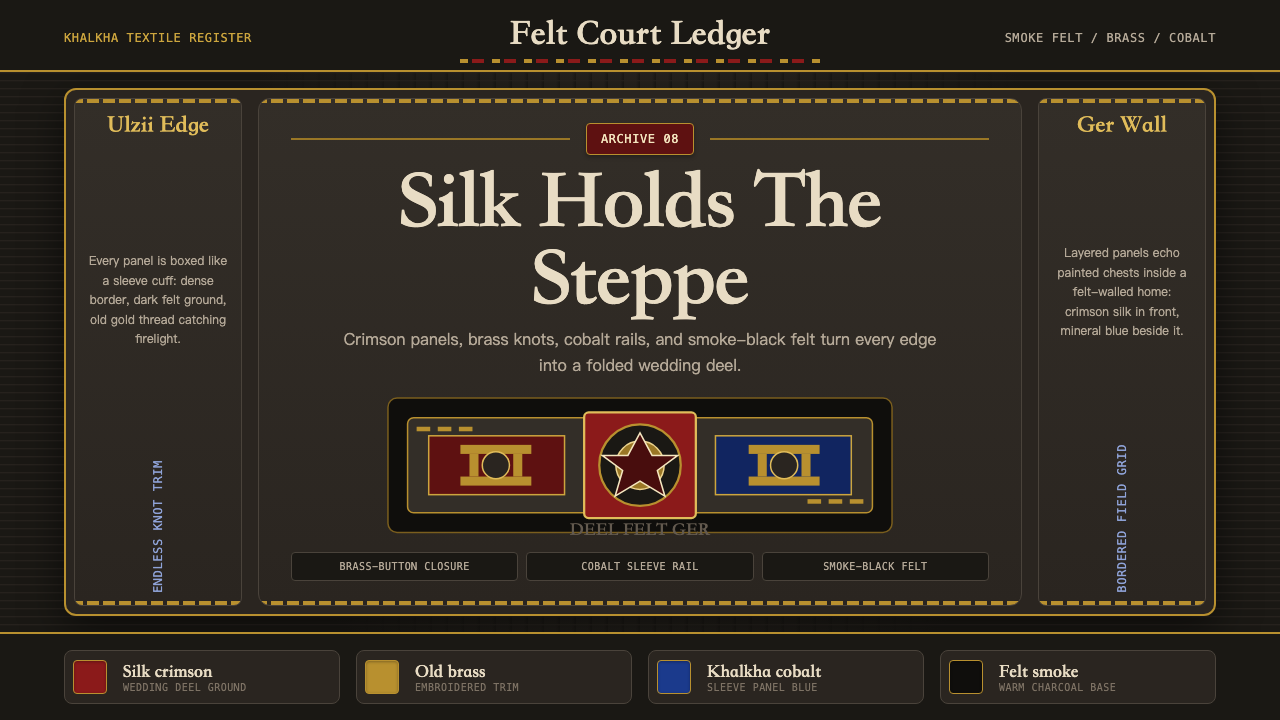 Mongolian Deel & Ger FeltTextile gravity. Smoke-black felt frames crimson silk, brass knot borders, an…织物有重量:烟黑毡面框住绯红丝绸、铜金结纹与钴蓝边轨。
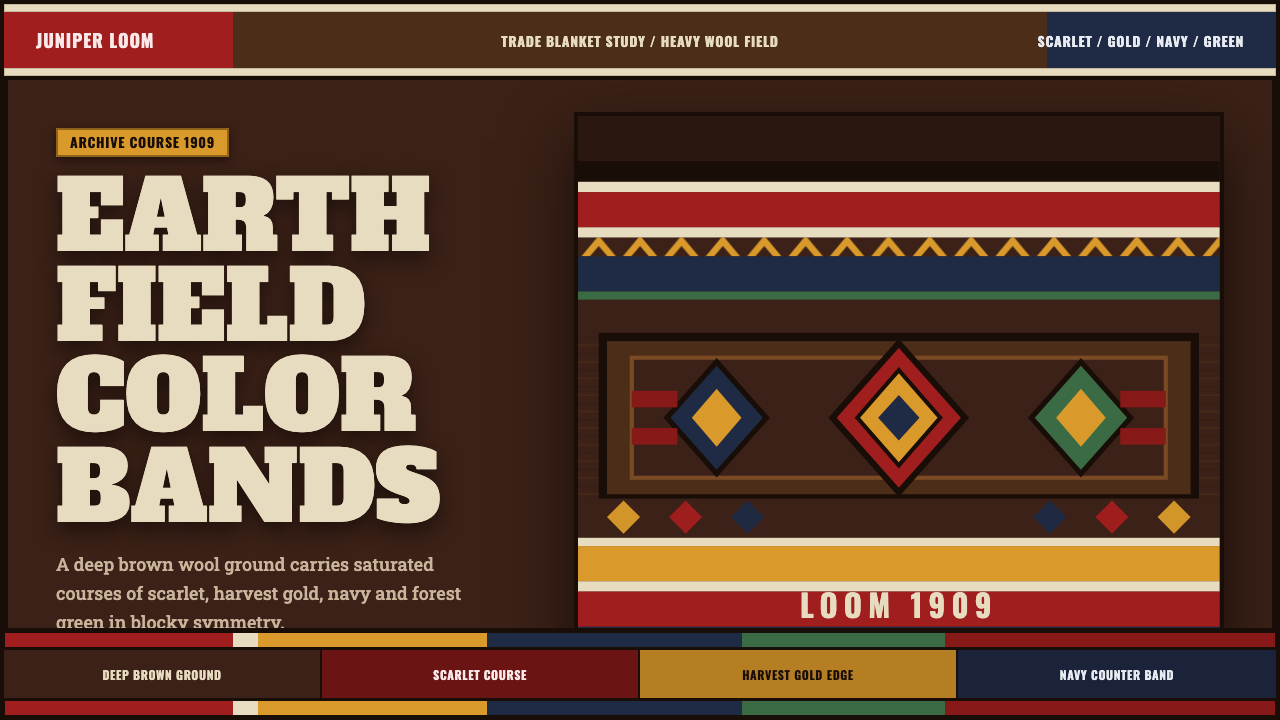 Pendleton Wool BlanketWoven authority. Scarlet-gold-navy bands lock into diamonds on dark brown woo…织出的权威:深棕羊毛底上,猩红、金黄、藏青色带锁成菱形。
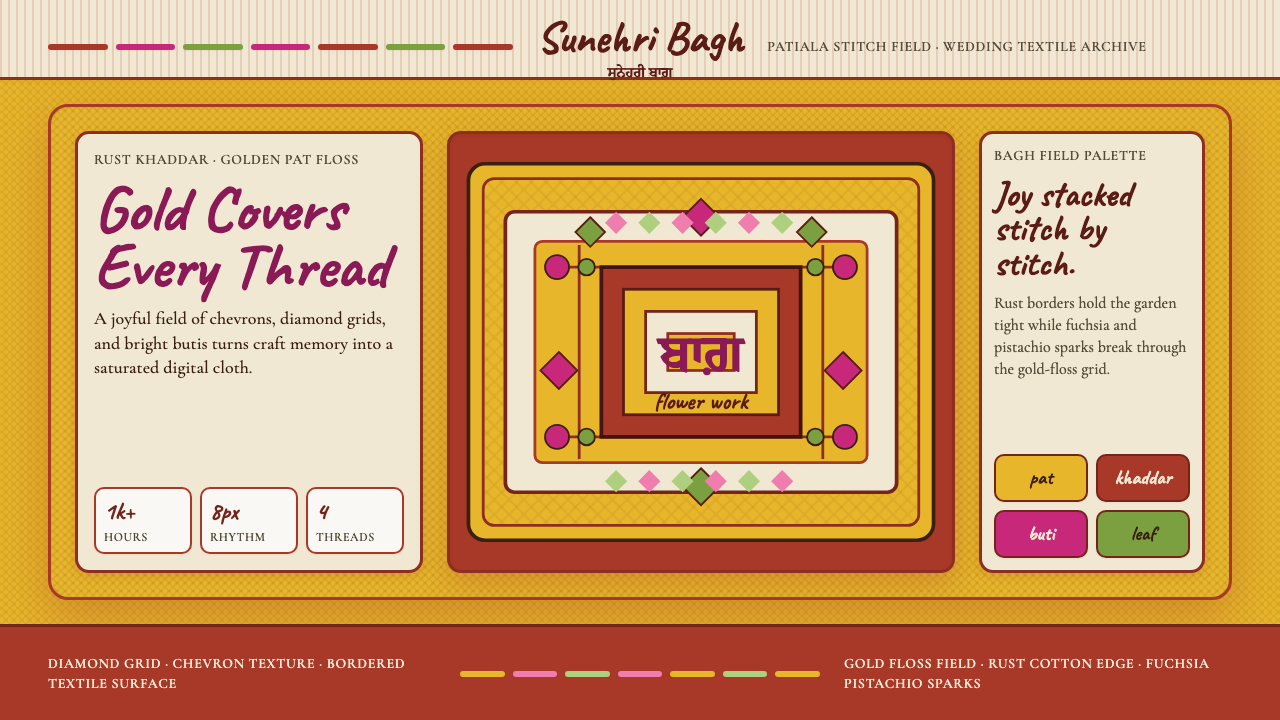 Punjabi Phulkari (Floral Bagh)Joyful density wins. Gold chevrons, rust borders, fuchsia-pistachio butis fil…喜庆密度取胜。金色人字纹、锈红边框与紫红开心果花点铺满画面。
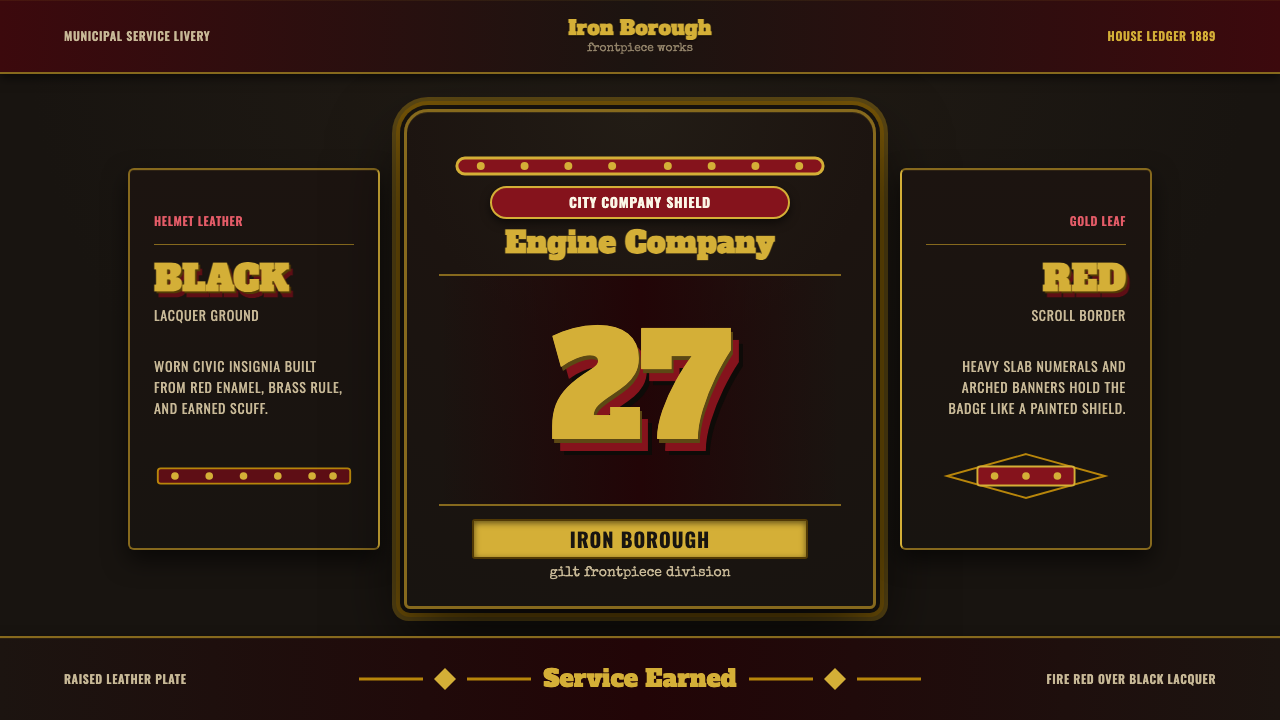 Fire Brigade ShieldEarned civic armor. Gold leaf numerals, fire-red borders, black leather symme…像服役挣来的徽章:黑皮底、金箔数字、消防红边框。
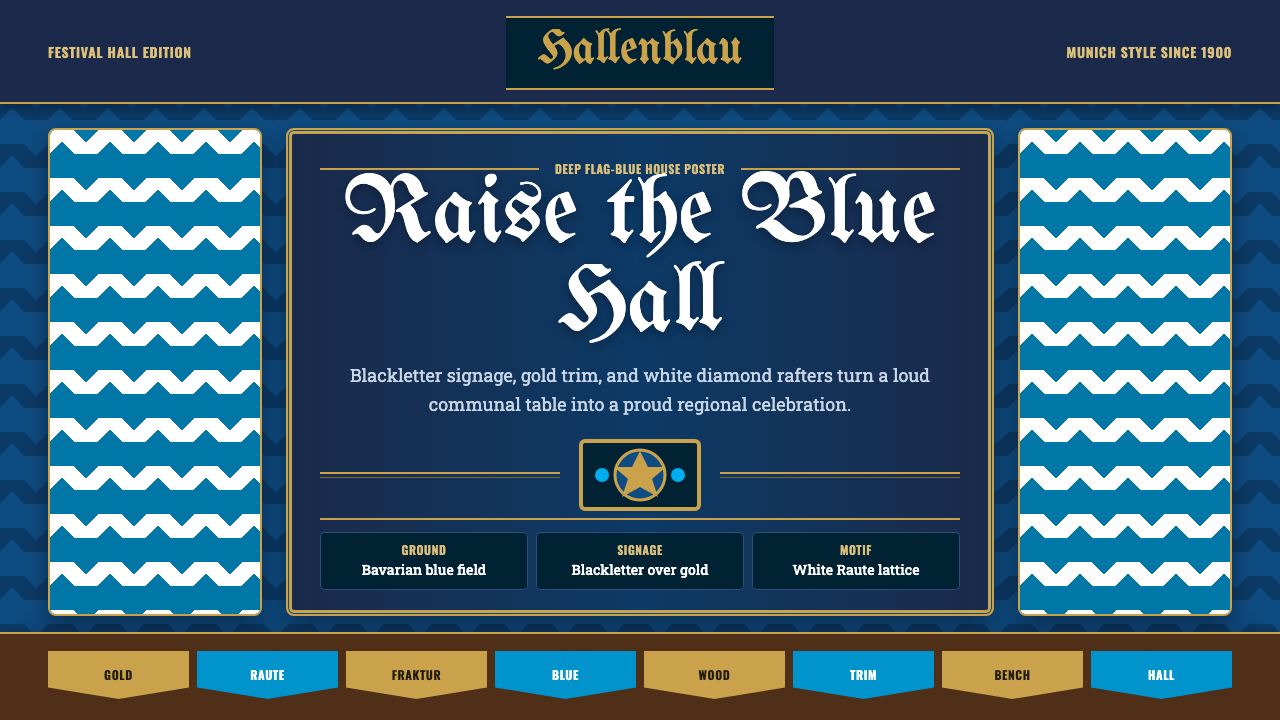 Bavarian Beer HallHearty regional ceremony. Deep flag-blue, Fraktur signage, gold trim, and whi…豪迈地域庆典:深旗蓝、哥特招牌、金色饰边与白色菱格。
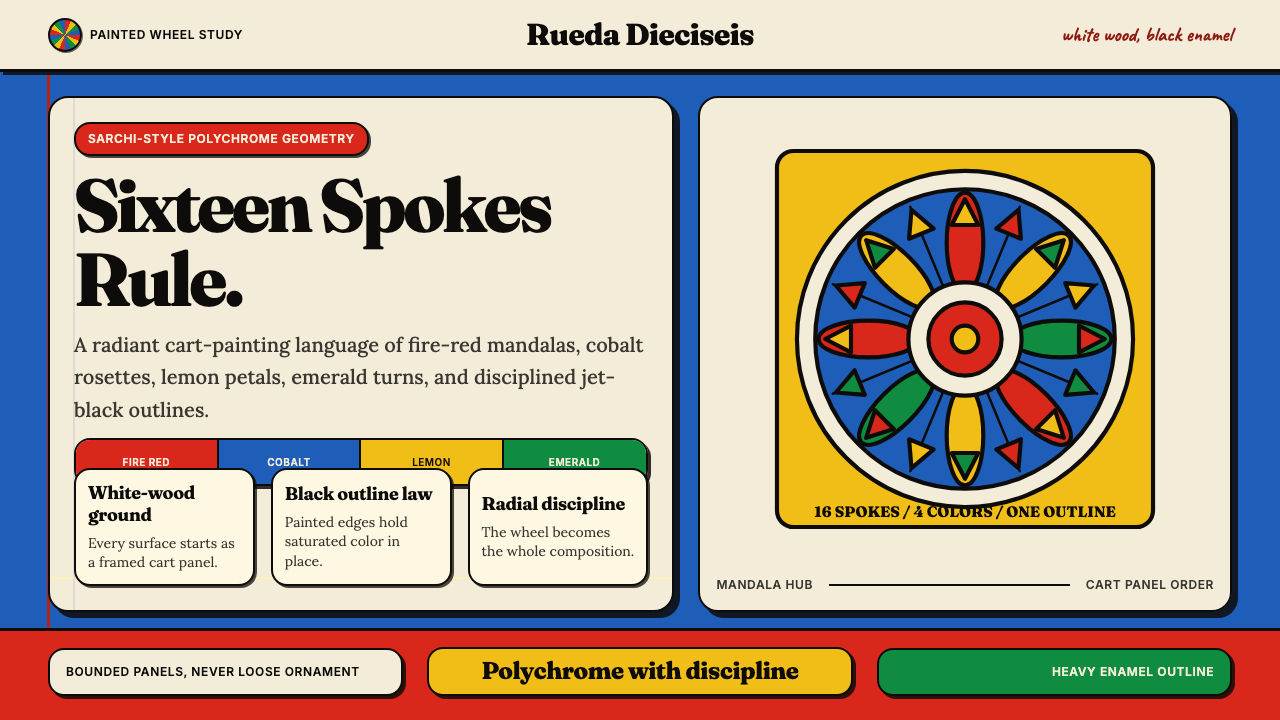 Costa Rican Oxcart Sarchí 1900Geometry sings. Fire red, cobalt, lemon and black outlines turn the wheel int…几何在歌唱。火红、钴蓝、柠黄与黑描边让车轮成为法则。