What is Tiwi Pukumani Pole?什么是 Tiwi Pukumani Pole?
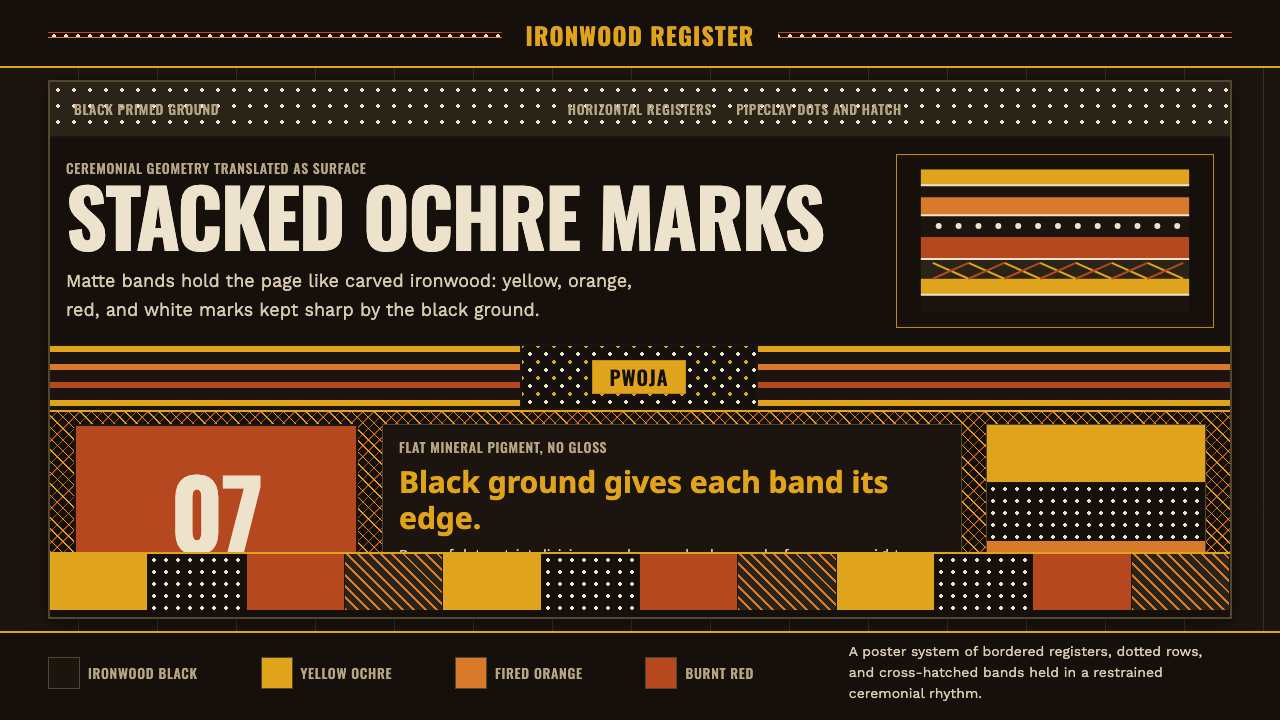
A Tiwi pukumani pole stands as a carved, banded record of ceremony — black ironwood layered with rings of ochre and pipeclay that read like rows of quiet, deliberate speech.一根蒂维图蒂尼柱,是一段以雕刻条带记录仪式的立柱——黑色铁木层层缠绕着赭石与白土的环带,读起来像一行行沉静而郑重的言语。
Tiwi Pukumani Pole in briefTiwi Pukumani Pole 速览
Tiwi Pukumani Pole is a design system built from the carved ironwood tutini poles, also called pukumani poles, raised during mortuary ceremonies on the Tiwi Islands off the coast of northern Australia. These are tall, freestanding wooden columns, their bodies primed black and then painted in stacked horizontal registers of dotted lines and cross-hatch, combining hot red and orange ochre with cooler yellow and white pipeclay, everything carried on a black ground.蒂维图蒂尼柱(又称pukumani柱)是一套取材于澳大利亚北部海域蒂维群岛丧葬仪式上竖立的雕刻铁木柱的设计系统。这些是高大、独立竖立的木质立柱,柱身以黑色打底,再绘上层层堆叠的横向条带,条带内是点线与交叉网纹,炽热的红与橙赭石与较冷的黄与白瓷土相结合,一切都承载于黑色之上。
The defining structural principle of the style is the horizontal band, or register — the pole's surface is organized into a strict sequence of stacked stripes, each filled with its own pattern of dots, hatching, or solid color, rather than a single continuous image running the length of the pole. This banded structure gives the style a rhythmic, almost architectural quality, closer to a stack of carefully differentiated layers than a single flowing composition.这种风格最核心的结构原则,是横向条带(或称「层」)——柱身表面被组织为一套严格堆叠的条纹序列,每一层都填充着自己的点纹、影线或纯色图案,而非一幅沿柱身通长贯穿的单一连续图像。这种条带式结构赋予了这种风格一种富有节奏、近乎建筑感的品质,更接近一叠精心区分的层次,而非一幅流动的构图。
This design system translates the upright, banded pole into a flat interface language: a black ironwood ground occupying the majority of any composition, strict horizontal registers of dotted and hatched fill used to organize content, and a flat matte ochre palette in which yellow, burnt further in the firing process that produces it, deepens toward orange-red — never a smooth gradient, always a series of distinct, deliberately bounded bands.这套设计系统把这根竖立的条带柱转化为一种扁平的界面语言:黑色铁木底色占据构图的绝大部分,严格的横向条带以点纹与网纹填充来组织内容,扁平哑光的赭石色板中,黄色经过烧制过程进一步加深,趋向橙红——绝非平滑的渐变,而始终是一系列彼此分明、刻意界定边界的条带。
See the Tiwi Pukumani Pole design system查看 Tiwi Pukumani Pole 完整设计系统
Where does Tiwi Pukumani Pole come from?Tiwi Pukumani Pole 从何而来?
The Tiwi Islands, comprising Bathurst Island and Melville Island off the northern coast of Australia, are home to the Tiwi people, whose culture and language are distinct from mainland Aboriginal Australian traditions in a number of significant respects, having developed with a degree of geographic separation from the mainland. Tutini or pukumani poles are among the most visually striking and internationally recognized elements of Tiwi material culture, carved from ironwood and raised as part of an elaborate mortuary ceremony known as pukumani, which marks the end of a mourning period following a death.蒂维群岛由澳大利亚北部海域的巴瑟斯特岛与梅尔维尔岛组成,是蒂维人的家园,他们的文化与语言在诸多重要方面都不同于澳大利亚大陆的原住民传统,这在一定程度上是由于该群岛在地理上与大陆相对隔绝而独立发展所致。图蒂尼柱(或称pukumani柱)是蒂维物质文化中视觉上最为醒目、也最广为国际所知的元素之一,以铁木雕刻而成,作为一场名为「pukumani」的繁复丧葬仪式的一部分而被竖立起来,标志着某人去世后守丧期的结束。
The pukumani ceremony itself involves an extended period of ritual obligation and mourning observed by specific kin relations of the deceased, culminating in a ceremony where carved and painted poles are erected around the burial site as a memorial. The poles are typically commissioned and carved by kin who stand in a specific relationship to the deceased under Tiwi kinship law, a role governed by strict cultural protocol rather than open artistic choice, and the carving and painting of a pole is understood as fulfilling genuine ceremonial obligation rather than producing an artwork for its own sake.pukumani仪式本身包含一段由逝者特定亲属遵守的延长仪式义务与哀悼期,最终以一场仪式作为高潮——雕刻并彩绘的立柱被竖立在墓地周围,作为纪念。这些立柱通常由在蒂维亲属制度下与逝者具有特定关系的亲属受托雕刻,这一角色受严格的文化规范约束,而非自由的艺术选择,雕刻与彩绘一根立柱被理解为履行一项真实的仪式义务,而非单纯为艺术本身而创作。
The visual design of each pole — the specific sequence of banded patterns, colors, and dotted or hatched motifs — carries meaning connected to the deceased, their kin relationships, and the particular ceremony, rendered through a shared visual vocabulary developed and maintained within Tiwi culture across generations. The black priming of the wood, achieved through charring or the application of dark pigment, provides the ground against which the ochre bands are built up in careful, deliberate registers from top to bottom of the pole.每根立柱的视觉设计——条带图案、色彩与点纹或网纹母题的具体序列——都与逝者、其亲属关系及特定仪式相关联,通过蒂维文化世代发展并延续的一套共通视觉词汇来呈现。木材的黑色打底,通过炭化或涂敷深色颜料实现,为赭石条带自上而下精心、郑重地层层构建提供了底面。
Contemporary Tiwi art centres — including Jilamara Arts and Crafts, Munupi Arts, and Ngaruwanajirri — continue to support Tiwi artists working in this tradition and related visual idioms today, providing infrastructure for the production, exhibition, and sale of contemporary Tiwi art while maintaining strong connections to the ceremonial and cultural knowledge that originally shaped the pukumani pole tradition. These centres have played a significant role in bringing Tiwi visual culture to wider Australian and international audiences over recent decades.当代蒂维艺术中心——包括吉拉马拉艺术工艺中心、蒙努皮艺术中心与恩加鲁瓦纳吉里艺术中心——至今仍支持从事这一传统及相关视觉惯用语的蒂维艺术家,为当代蒂维艺术的制作、展览与销售提供基础设施,同时与最初塑造图蒂尼柱传统的仪式与文化知识保持紧密联系。近几十年来,这些中心在把蒂维视觉文化带向更广泛的澳大利亚及国际观众方面,发挥了重要作用。
What defines the Tiwi Pukumani Pole look?Tiwi Pukumani Pole 的视觉特征是什么?
Black Ironwood Ground黑色铁木底色
The base is a deep, primed black, echoing the charred or pigmented ironwood surface of the pole itself. This ground should feel dense and material rather than a flat neutral black — it is the surface everything else is built upon, never inverted to a light background.底色是一种深沉、经过打底的黑色,呼应立柱本身经过炭化或涂敷颜料处理的铁木表面。这种底色应显得致密而有材质感,而非一块平面的中性黑——它是其余一切建立其上的表面,绝不应反转为浅色背景。
Horizontal Registers横向条带层次
Content and pattern are organized into a strict stack of horizontal bands, each with its own distinct fill, rather than a single continuous composition. This banded structure should be treated as the primary organizing logic of any layout drawing on this style.内容与图案被组织为一套严格堆叠的横向条带,每一层都有自己独特的填充,而非单一连续的构图。这种条带结构应被视为任何采用这种风格的版面的首要组织逻辑。
Dotted Line Fill点线填充
Rows of evenly spaced dots fill many of the horizontal registers, providing a rhythmic, textured density distinct from the cross-hatched bands. Dots should be regular and evenly spaced within a given register, not scattered randomly.均匀排列的点纹行填满许多横向条带,提供一种与交叉网纹条带截然不同的、富有节奏感的密度。同一条带内的点纹应规整、均匀分布,而非随机散布。
Cross-Hatch Fill交叉网纹填充
Other registers use fine cross-hatched line work, alternating with the dotted registers to create visual variety within the disciplined banded structure. Hatching should remain tight and controlled, never loose or gestural.其他条带使用细密的交叉网纹线条,与点纹条带交替出现,在严谨的条带结构内营造视觉变化。网纹应保持紧密、可控,绝不松散或随性。
Fire-Deepened Ochre Range火烧加深的赭石色域
The warm end of the palette runs from a burnt yellow ochre through to deep orange-red, reflecting how the pigment itself deepens through the firing process used to produce it. This range should always be treated as a fixed sequence of distinct bands, not a blended gradient.色板的暖色端从烧制的黄赭石延伸至深橙红,反映了这种颜料本身在制作它的烧制过程中会加深的特性。这一色域应始终被当作一套固定的分明条带序列来处理,而非融合的渐变。
Cool Pipeclay White and Yellow冷调白瓷土与黄色
Cooler pipeclay white and lighter yellow tones alternate with the hot ochre bands, providing contrast and pacing within the register sequence. These cooler bands should read as a deliberate pause against the warmer registers, not as a dominant field.较冷的白瓷土与较浅的黄色调,与炽热的赭石条带交替出现,在条带序列中提供对比与节奏。这些较冷的条带应读作对暖色条带的刻意停顿,而非占主导地位的场域。
Flat Matte Finish扁平哑光质感
Every band and fill pattern is rendered in a flat, matte finish with no gloss, gradient, or simulated reflectivity, consistent with the natural pigments and carved wood surface the style draws from.每一条色带与填充图案都以扁平、哑光的质感呈现,没有光泽、渐变或模拟反光,与这种风格所取材的天然颜料及雕刻木面质感保持一致。
See the Tiwi Pukumani Pole design system查看 Tiwi Pukumani Pole 完整设计系统
Who shaped Tiwi Pukumani Pole?谁塑造了 Tiwi Pukumani Pole?
The artists responsible for carving and painting tutini poles are typically kin of the deceased holding a specific relationship defined by Tiwi kinship law, fulfilling ceremonial obligation rather than acting as independent artists in the conventional sense. Their work embeds the pole with meaning tied directly to the person being mourned and the ceremony itself.负责雕刻与彩绘图蒂尼柱的艺术家,通常是逝者按蒂维亲属制度所规定具有特定关系的亲属,履行的是仪式义务,而非以传统意义上独立艺术家的身份创作。他们的作品将与被哀悼者及仪式本身直接相关的意义嵌入立柱之中。
A contemporary Tiwi art centre supporting artists working in the pukumani pole tradition and related visual idioms, providing infrastructure for the production and exhibition of Tiwi art while maintaining connection to the cultural knowledge underlying the practice.一家当代蒂维艺术中心,支持从事图蒂尼柱传统及相关视觉惯用语创作的艺术家,为蒂维艺术的制作与展览提供基础设施,同时保持与这项实践背后文化知识的联系。
Another Tiwi Islands art centre supporting the production and continuation of Tiwi visual traditions, including pole carving and painting, connecting contemporary artists with collectors and institutions beyond the islands.蒂维群岛的另一家艺术中心,支持包括立柱雕刻与彩绘在内的蒂维视觉传统的制作与延续,将当代艺术家与群岛之外的收藏者及机构联系起来。
A Tiwi art centre and community organization that supports artists, including those with disability, in continuing to practice and pass on Tiwi visual traditions such as the pukumani pole idiom.一家蒂维艺术中心与社区组织,支持包括残障人士在内的艺术家,继续实践并传承蒂维视觉传统,如图蒂尼柱这一惯用语。
How do you use Tiwi Pukumani Pole today?今天怎么用 Tiwi Pukumani Pole?
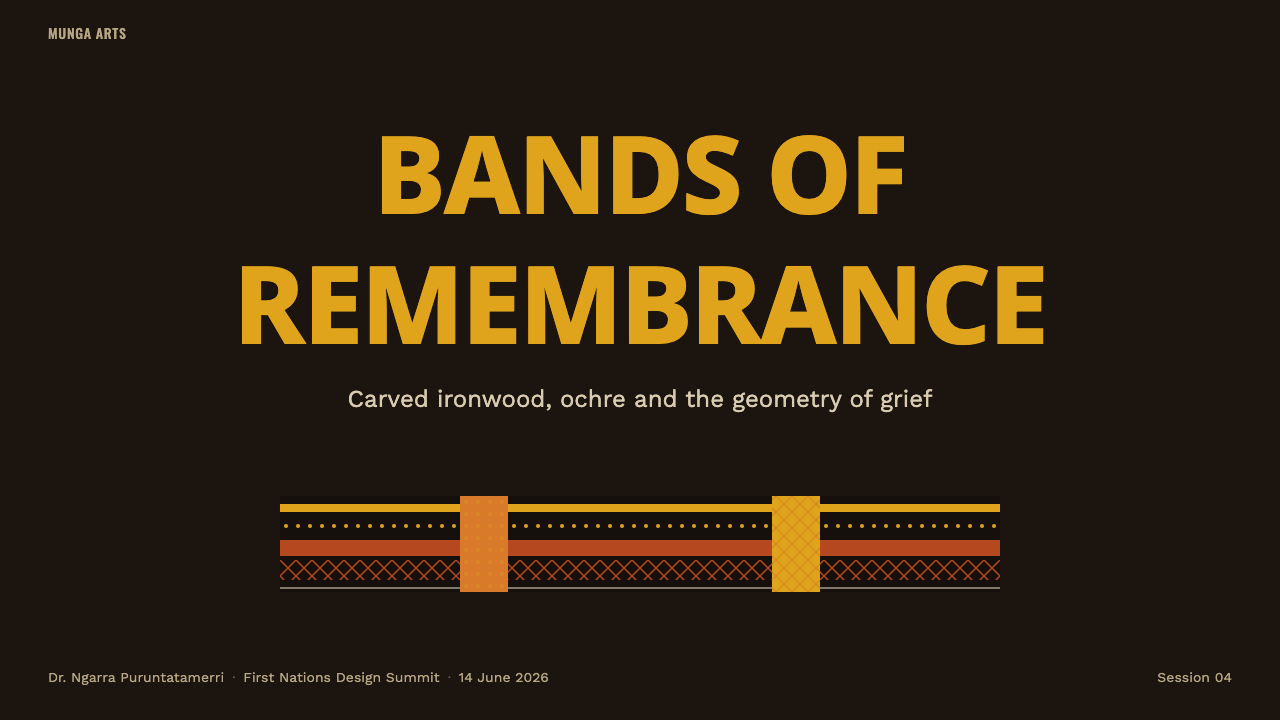
On presentation slide covers, the style delivers a striking, ceremonial gravity: a black ground filling most of the frame, one or two horizontal registers of dotted or hatched ochre pattern anchoring an edge, and title type set cleanly within an uncluttered black area rather than over the patterned bands. Content slides should organize information into horizontal bands echoing the pole's register structure, using the ochre-to-red range sparingly for the most important highlighted register rather than across every section.在演示文稿封面上,这种风格能传达一种醒目的仪式庄重感:黑色底面填满大部分画面,一到两条点纹或网纹赭石图案的横向条带锚定某一边缘,标题文字干净地置于不杂乱的黑色区域内,而非叠加在图案条带之上。内容页应将信息组织为呼应立柱条带结构的横向色带,把赭红色域节制地用于最重要的高亮条带,而非用于每个部分。
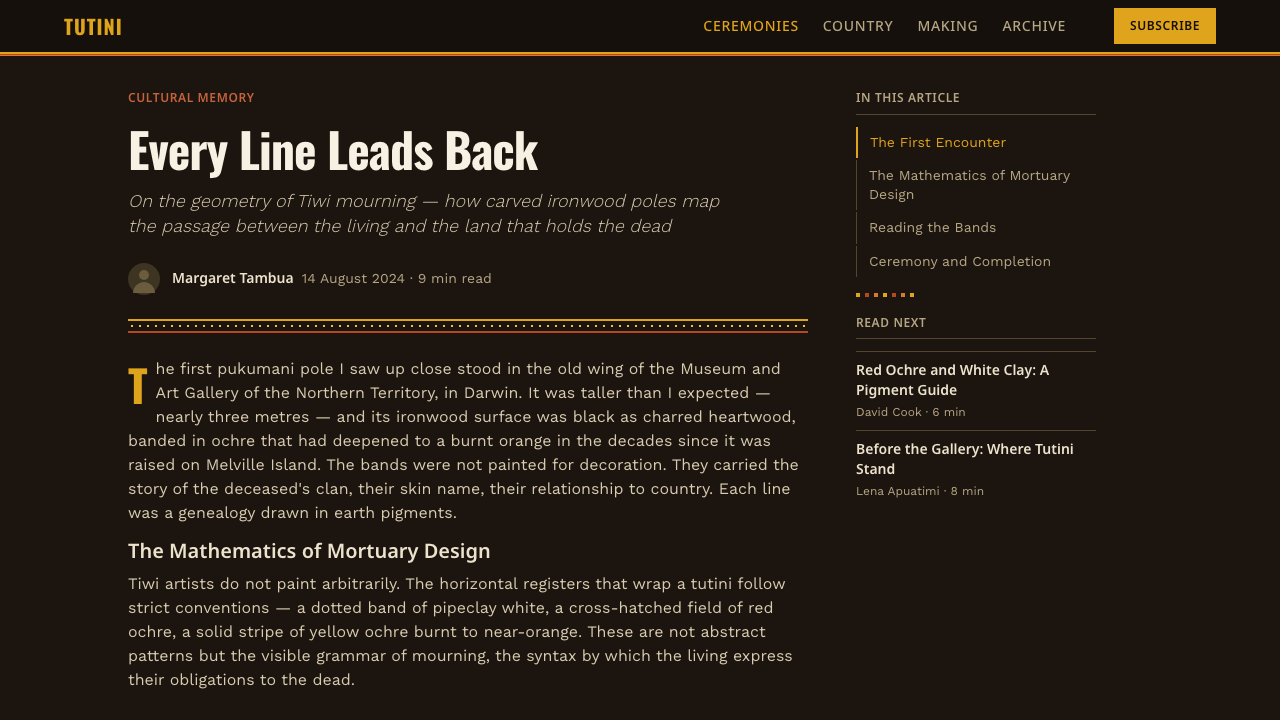
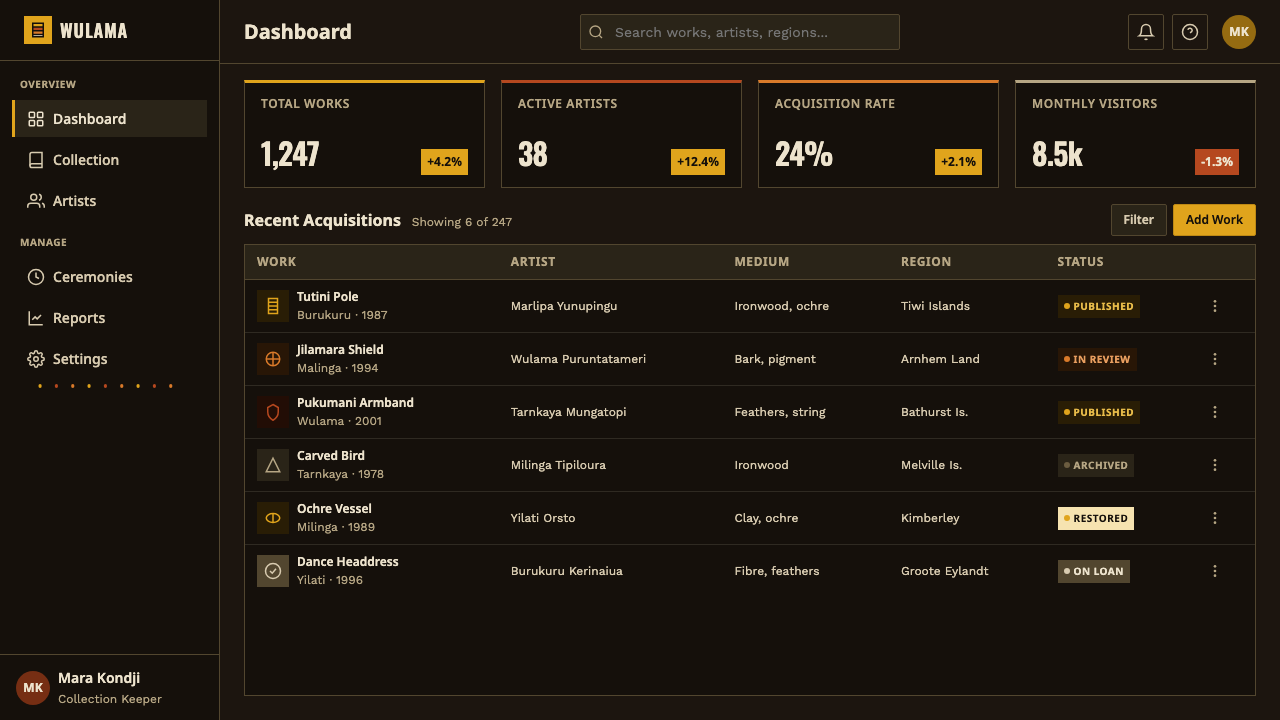
For web interfaces, the banded structure translates naturally into stacked content sections — a black-ground page with horizontal dividers rendered as thin ochre or pipeclay-toned bands, useful for products wanting to project cultural depth, craft, and ceremonial seriousness. Dashboards can borrow the register logic for organizing distinct data categories into visually separated horizontal bands, though the dense pattern fill should be reserved for framing elements rather than covering areas where data must remain highly legible.对于网页界面,这种条带结构自然地转化为堆叠式内容区块——一个黑底页面,横向分隔线以细窄的赭石或白瓷土色调条带呈现,适合想要传达文化厚度、工艺感与仪式庄重感的产品。仪表板可以借用这种条带逻辑,将不同的数据类别组织进视觉上分明的横向区块,但密集的图案填充应保留给框架元素,而非覆盖需要保持高度可读性的数据区域。
In pricing pages, distinct horizontal bands can differentiate tiers cleanly, with the hottest orange-red band reserved for the most important or recommended tier, echoing how the most intense colors in an actual pole tend to mark the most significant registers.在定价页面中,分明的横向色带可以清晰地区分等级,最炽热的橙红色带保留给最重要或最推荐的等级,呼应真实立柱中最强烈的色彩往往标记最重要条带的方式。
For editorial and marketing content about ceremony, craft, heritage, or cultural depth, full-bleed hero sections built from the black ground with a tall vertical arrangement of banded pattern can evoke the pole's actual upright form, provided the cultural origin, ceremonial significance, and living ownership of the tradition are acknowledged with care.对于关于仪式、工艺、传承或文化厚度的编辑与营销内容,通栏主视觉区块以黑色底面搭配高大竖直排列的条带图案构建,能唤起立柱本身竖立的实体形态,前提是要谨慎地承认这一传统的文化来源、仪式意义,以及在蒂维社群中持续存在的所有权。
The most common mistake is treating the banded pattern as a purely decorative all-over texture rather than respecting the register structure — bands should remain distinct and legible as separate layers, not blended into a busy, undifferentiated pattern. A second frequent error is lightening the ground away from black, which removes the foundational contrast the ochre bands depend on, and a third is applying this style without any acknowledgment of its specific ceremonial origin and continuing cultural ownership within Tiwi communities.最常见的错误,是把条带图案当作纯粹的装饰性满铺纹理,而不尊重其条带结构——各条带应保持分明、可辨的独立层次,而非融合成一片繁杂、无区分的图案。第二个常见错误,是把底色调离黑色调浅,这会消除赭石条带所依赖的基础对比;第三个错误,是在没有承认这一传统特定的仪式来源及其在蒂维社群中持续存在的文化所有权的情况下,随意应用这种风格。
See the Tiwi Pukumani Pole design system查看 Tiwi Pukumani Pole 完整设计系统
Tiwi Pukumani Pole — FAQTiwi Pukumani Pole · 常见问题
Are all pukumani poles painted with the same pattern, or does each one differ?所有的pukumani柱都绘有相同的图案吗,还是每根都不同?
Each pole's specific sequence of bands, colors, and motifs carries meaning tied to the individual deceased, their kin relationships, and the particular ceremony, drawing on a shared visual vocabulary maintained within Tiwi culture rather than a single fixed template repeated identically each time. A design system inspired by this tradition should reflect the structural principles — banding, the fixed palette, dot and hatch fill — rather than attempting to reproduce any specific pole's actual pattern.每根立柱条带、色彩与母题的具体序列,都承载着与特定逝者、其亲属关系及具体仪式相关的意义,取材于蒂维文化维系的共通视觉词汇,而非每次都重复使用的单一固定模板。取材于这一传统的设计系统,应体现其结构性原则——条带、固定色板、点纹与网纹填充——而非试图复制某根具体立柱的实际图案。
Why is the ground always black rather than a lighter neutral tone?为什么底色总是黑色,而非较浅的中性色调?
The black priming of the ironwood is a genuine, foundational part of the actual pole-making process, achieved through charring or dark pigment application before the ochre and pipeclay bands are painted on top. Shifting the ground to a lighter tone would misrepresent this material process and remove the strong contrast the tradition's bright bands depend on to read clearly.铁木的黑色打底,是实际制柱工艺中真实、基础的一环,通过在赭石与白瓷土条带绘制之前进行炭化或涂敷深色颜料而实现。把底色改为较浅的色调,会歪曲这一材料工艺过程,也会消除这一传统鲜明条带清晰可读所依赖的强烈对比。
How many horizontal bands should typically appear in a composition?一个构图中通常应该出现多少条横向色带?
There is no single fixed count, but the key principle is that bands should remain clearly distinct from one another rather than blurring together — each with its own defined fill and color, stacked in a legible sequence. A composition with too few bands loses the rhythmic, stacked quality central to the style, while one with too many undifferentiated bands can become visually chaotic.并没有一个单一固定的数量,但关键原则是各条带应彼此清晰分明,而非模糊混作一团——每条都有自己明确的填充与色彩,以可辨读的顺序堆叠。条带太少的构图会失去这种风格核心的节奏感与堆叠感,而条带太多且缺乏区分的构图则可能显得视觉混乱。
Is it appropriate to use this style for commercial products unrelated to Tiwi culture or ceremony?把这种风格用于与蒂维文化或仪式无关的商业产品是否合适?
This requires genuine care. The pukumani pole tradition is tied to specific, ongoing ceremonial practice and kinship obligation within a living community, and its imagery is not a generic decorative motif free for unrestricted use. Applications should ideally connect to heritage, craft, or cultural documentation in some genuine way, acknowledge the tradition's origin, and avoid reproducing any specific pole's actual protected pattern.这需要真正的谨慎。图蒂尼柱传统与一个在世社群中特定、持续的仪式实践及亲属义务紧密相连,其图像并非一种可被无限制自由使用的泛泛装饰母题。应用理想情况下应以某种真实的方式与传承、工艺或文化记录相连,承认这一传统的来源,并避免复制任何具体立柱真正受保护的图案。
What is the difference between the dotted and cross-hatched registers in practical design terms?从实际设计角度看,点纹条带与交叉网纹条带有什么区别?
Dotted registers create a more even, granular texture and tend to feel slightly calmer, while cross-hatched registers introduce a denser, more directional energy through their intersecting lines. Alternating the two across a stack of bands gives the composition rhythm and variety while staying within the disciplined banded structure — using only one fill type throughout tends to feel monotonous by comparison.点纹条带营造出一种更均匀、颗粒感的质感,往往显得略微平静;交叉网纹条带则通过交叉的线条引入更致密、更具方向性的能量。在一叠条带中交替使用这两种填充方式,能为构图带来节奏与变化,同时保持在严谨的条带结构之内——相比之下,全程只使用一种填充方式往往显得单调。
Related design styles相关设计风格
 Russian Khokhloma Wood-Red LacquerKiln-fired ornament. Lacquer black, scarlet dots, and Playfair gold curls cro…窑火般华丽:漆黑底、猩红圆点与金色卷草挤满画框。
 Russian KhokhlomaOrnament is the message. Antique gold curls and crimson dots crowd a black la…纹饰即宣言:黑漆网格上,古金卷草与朱红圆点铺满画面。
 Tibetan Butter SculptureDevotion made dense. Cinnabar, lapis, and gold relief glow from altar black.繁密即供养。朱砂、青金与金色浮雕从坛城黑中发光。
 Arnhem X-Ray Bark PaintingShimmers without gloss. Ochre rarrk lines vibrate on dark stringybark.无光泽却闪烁:赭色rarrk线在深树皮底上振动。
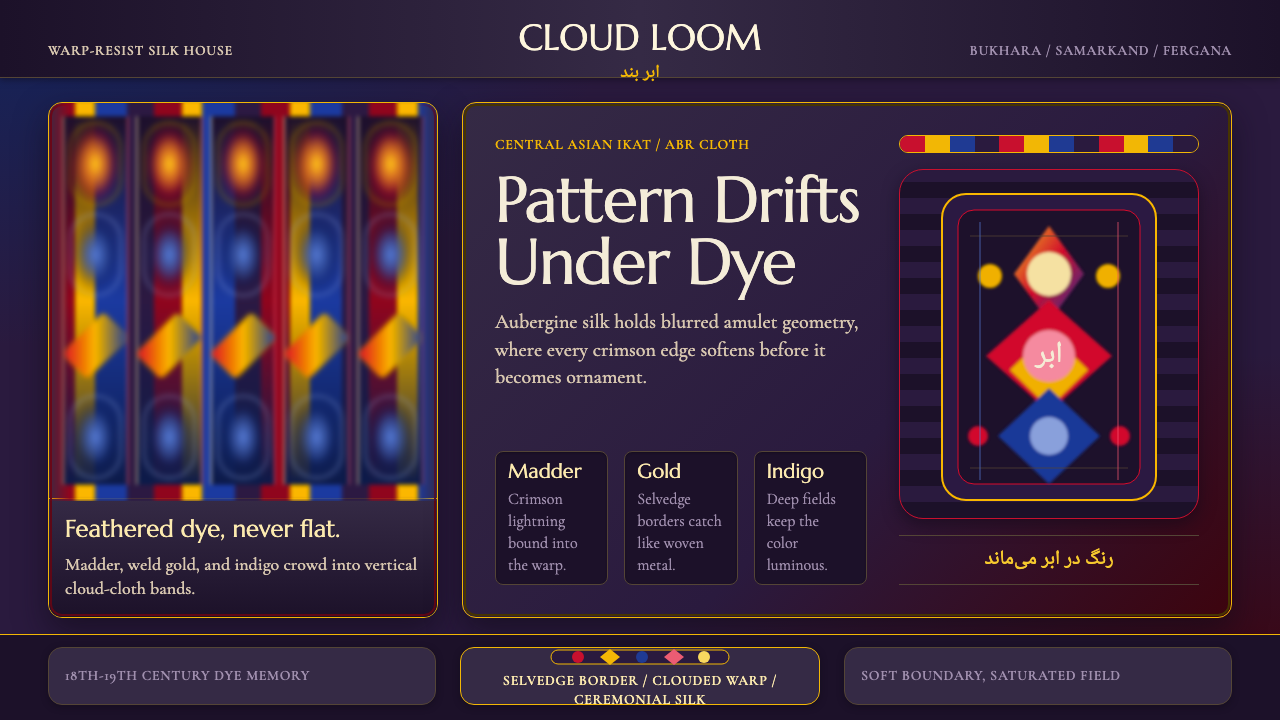 Central Asian IkatMaximal silk haze. Madder, gold, and indigo warp bands feather across aubergi…极繁丝绸雾感。茜红、金黄、靛蓝经带在茄紫底上羽化。
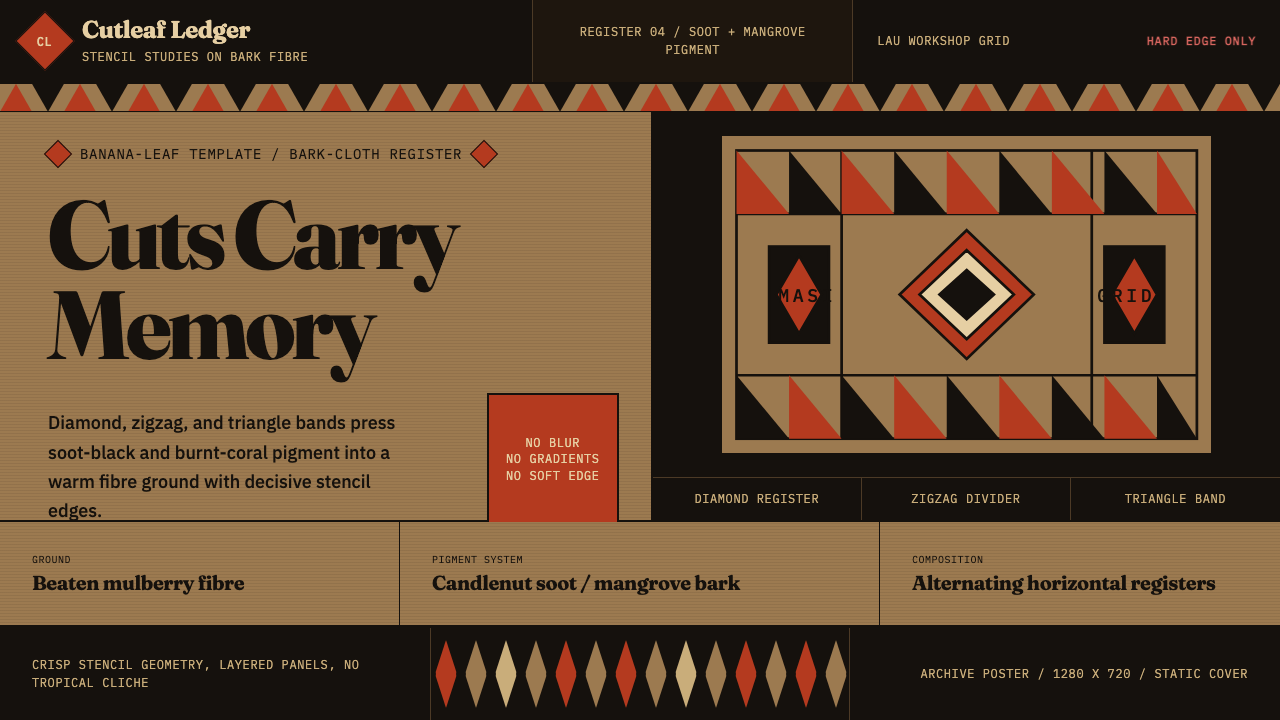 Fijian Masi (Bark Stencil)Stencil memory stays sharp. Soot black and burnt coral strike bark-fibre band…模板记忆锋利:烟黑与焦珊瑚红压入树皮纤维横带。